
OTTAWA — The Conservatives and NDP sit on opposite sides of the spectrum, but they’re voicing similar concerns about the trajectory of Canada’s medical assistance in dying (MAID) regime.
The two opposition parties could be moving toward an unlikely alliance against further expansion, with a report on extending MAID eligibility to the mentally ill expected by summer.
Conservative MP Michael Cooper, a member of the joint House-Senate committee putting together the report, reiterated his party’s opposition to the expansion of MAID for the mentally ill last week.
“I think the evidence is very clear that the expansion for MAID and mental illness cannot go forward,” Cooper told reporters on Wednesday .
Cooper said that there were “two fundamental issues” making the expansion untenable: the challenge in diagnosing which mental illnesses are irremediable and the difficulty in determining whether those requesting MAID are of sound mind.
The Liberal government, which first introduced MAID for terminal illnesses in 2016, has twice delayed its expansion to individuals whose sole underlying condition is a mental disorder. The expansion was initially set to take effect in March 2023, after the government accepted a Senate proposal for a sunset period on the exclusion of MAID from the mentally ill.
This was subsequently pushed back to March 2024 and, most recently, March 17, 2027.
Cooper said the Liberals’ appropriate course of action would be to introduce a bill delaying the expansion indefinitely.
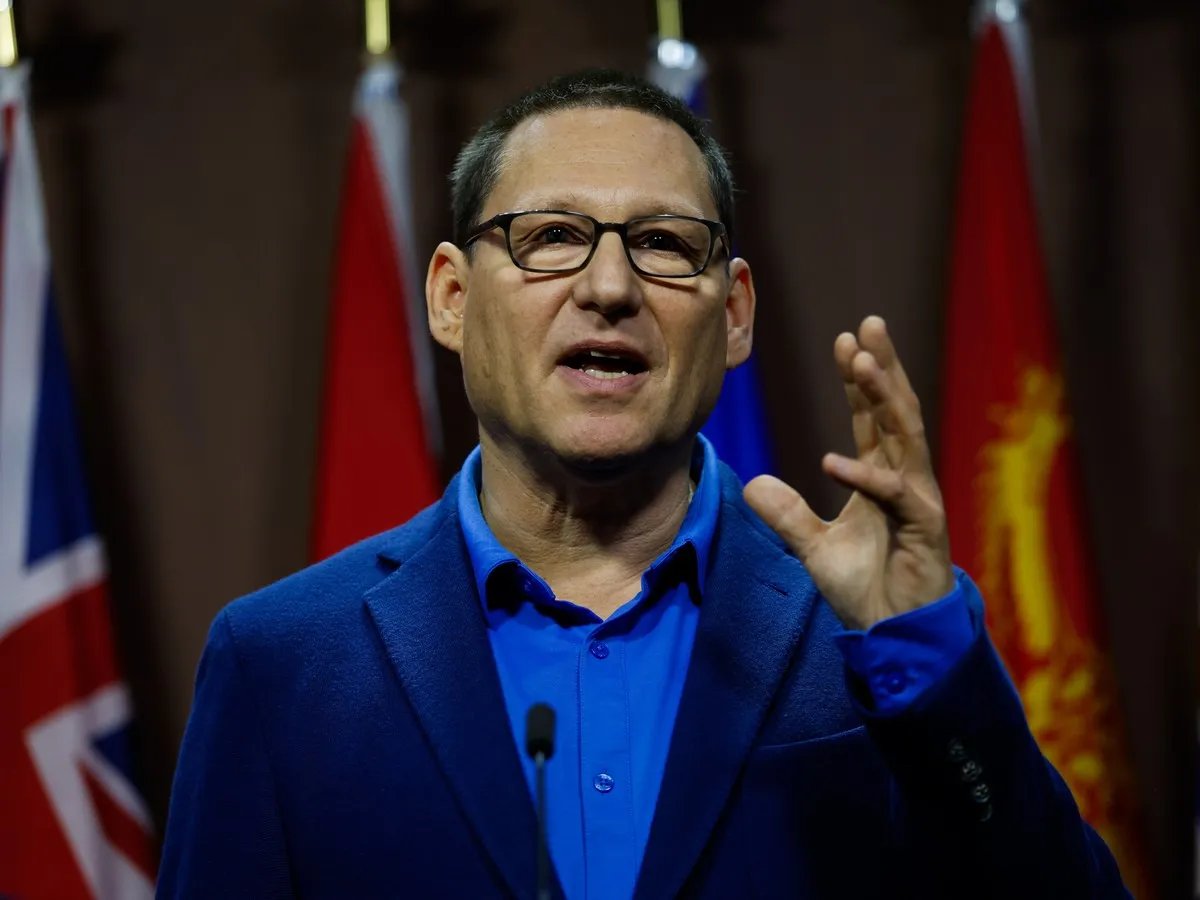
He and his fellow Conservatives may have an unlikely ally in upstart federal NDP leader Avi Lewis.
Speaking to reporters in Ottawa one week earlier, Lewis said he was concerned by recent reports of mentally vulnerable Canadians choosing MAID “out of desperation.”
“People in mental health crisis should be getting the supports that they need,” said Lewis. “If people are choosing MAID, choosing to die, because they can’t get the supports they need in life, something is broken in our system.”
He also said he was concerned that the chronic underfunding and under-resourcing of disability supports could be steering disabled Canadians toward MAID.
Lewis, who doesn’t have a seat in Parliament, said that the NDP caucus will be discussing the matter internally.
The NDP, which lost official party status in last year’s election, does not have any representation on the ad hoc MAID committee or any other committee of Parliament.
Brian Dijkema, the head of faith-based think tank Cardus, called Lewis’s comments on MAID a “throwback” to the NDP’s roots in the Social Gospel.
“The NDP is a party built on public service and providing care for the vulnerable… this is actually fairly old-school left-wing policy,” said Dijkema.
Dijkema said that MAID is one of a handful of social policies where Conservative positions overlap with traditional NDP viewpoints.
Michelle Hewitt, head of the advocacy group Disability Without Poverty, said she was encouraged to hear Lewis critique MAID from a disability lens.
“That is the absolute concern of disability organizations, that people are choosing MAID because they can’t get adequate supports they need in other ways,” said Hewitt.
Hewitt said there are common pressures pushing the disabled and mentally ill toward MAID, noting that disability and mental illness often coincide.
She added that she’d strongly encourage the Lewis-led NDP to join the Conservatives in calling for the ban on MAID for mental illness to be extended indefinitely.
Prime Minister Mark Carney said last week that he’d await the committee’s findings before making a decision on the expansion of MAID for mental illness. The committee’s Liberal majority is reportedly split on the issue.
Also on the committee is Bloc Québécois MP Luc Thériault. Thériault has been a staunch advocate of expanding MAID, including for the mentally ill .
National Post
rmohamed@postmedia.com
Our website is the place for the latest breaking news, exclusive scoops, longreads and provocative commentary. Please bookmark nationalpost.com and sign up for our daily newsletter, Posted, here.
