
There’s major news this week in Guadalajara, as the new director of SIAPA, the public water agency, has unveiled an emergency 3-month water plan. Good news has also been announced regarding the 2026 fire season, and new details have emerged for Guadalajara’s World Cup fan festival.
New details emerge on Guadalajara’s World Cup fan experience
If you failed to snag a ticket to the upcoming World Cup games in Mexico, you are in good company. Fortunately, there are still numerous (more affordable) ways to enjoy the action with your family, friends and neighbors.
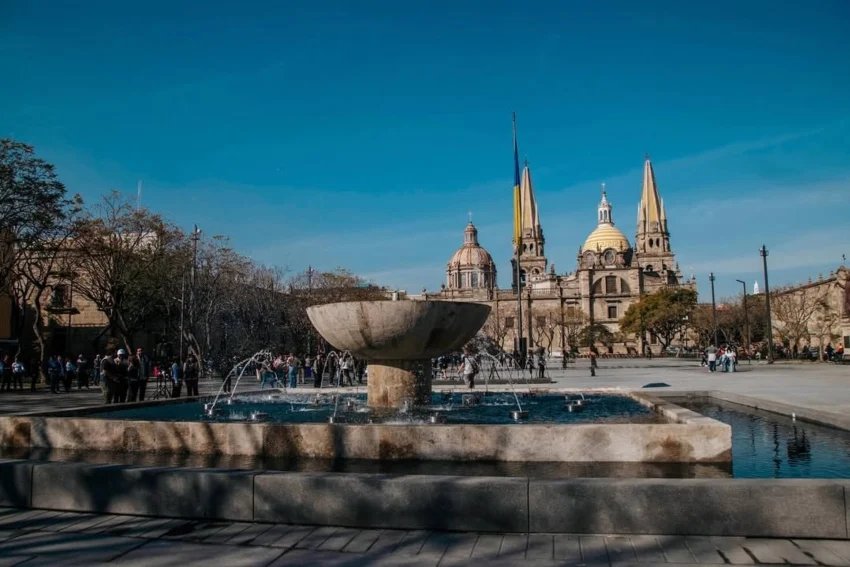
The FIFA Fan Festival at Plaza de la Liberación will be the epicenter of Guadalajara’s World Cup celebration. Located between the Cathedral and Teatro Degollado, it is one of Jalisco’s most iconic public spaces, surrounded by history on all sides, with the Government Palace and Regional Museum as its backdrop.
Plaza de la Liberación has a capacity of 40,000 people. Admission to the Fan Festival will be free, but advance registration will be required on FIFA’s digital platform. As of press time, this feature had not yet been added to the website.
Guadalajara’s Fan Festival will run daily, Monday through Sunday, from June 11 to July 19, 2026. Operating hours have yet to be confirmed.
While host cities such as Monterrey, San Francisco, Miami, and Vancouver have scaled back their fan festivals due to escalating costs, Guadalajara and Mexico City will publicly broadcast all 104 matches from start to finish.

Unlike Mexico City’s Zócalo, alcohol sales will be permitted at Guadalajara’s Fan Festival, according to Juan José Frangie, coordinator of the Guadalajara 2026 World Cup Organizing Committee.
Where to watch the World Cup in Guadalajara
First and foremost, there will be giant screens for viewing the game. But much more is planned to keep fans busy in between live play. Plaza de Armas will transform into a showcase for Guadalajara’s cuisine. Expect to find birria, tortas ahogadas, red pozole and jericallas, alongside dishes from other corners of Jalisco.
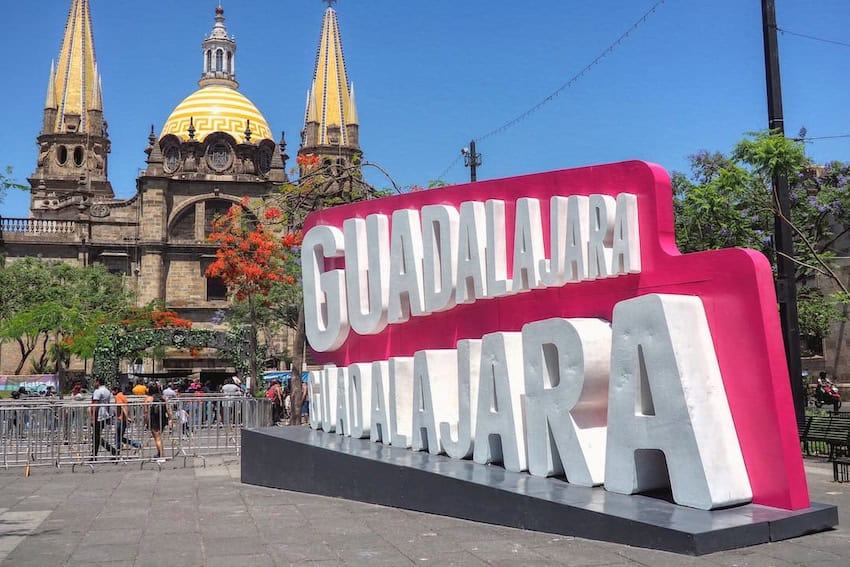
Teatro Degollado will host several live music performances on World Cup game nights by top-tier artists. These include local favorites Maná, returning to Guadalajara from their recently concluded world tour, rock legend Carlos Santana (who was born in Autlán de Navarro) and Mariachi Vargas de Tecalitlán, the renowned mariachi group from southern Jalisco.
There will also be hospitality spaces for sponsors, official tournament merchandise for sale and an interactive game zone. To show support for Mexico’s national team, the surrounding streets will be painted in green, white and red.
Alongside the FIFA Fan Festival at Plaza de la Liberación, additional fan zones will operate in Parque Rojo, Parque La Mujer, Parque de Las Niñas y Los Niños and Plaza Las Américas. Each will reportedly feature large-screen match broadcasts, family activities, and cultural programming. These gathering spots are also expected to offer free admission.
Jalisco has seen a significant reduction in drought and forest fires in 2026
Through late April, a total of 393 fires have been reported across the state of Jalisco, impacting roughly 18,400 hectares of forest, according to numbers provided by the National Forestry Commission (Conafor). This is a significant reduction from the same period in 2025, when 925 fires occurred.
This positive trend exists throughout the country, with forest fires down 26% compared to 2025 in all 32 states. In addition, 95% of fires in the year to date have been classified as low severity.
The intense rainy season that hit the state last year continues to provide benefits, resulting in fewer fires and reduced severity when fires do occur. According to the National Water Commission, 96% of the state of Jalisco remains drought-free, with sufficient moisture in local forests.
Fewer fires have also meant better air quality in the Guadalajara Metropolitan Area. So far this year, only eight air quality alerts have been issued in Jalisco, with those affecting the municipalities of Zapopan, Tlajomulco, Puerto Vallarta, Mascota and others.
The fires that have occurred
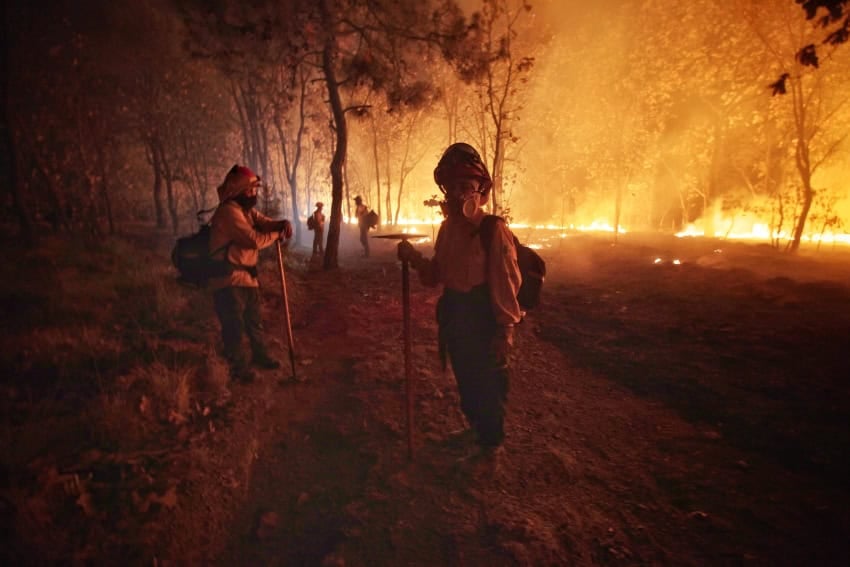
Despite the positive trend, the GMA has suffered several serious fires in the past two weeks. On April 28, a severe fire broke out at La Venta del Astillero immediately west of the Technology Park of Guadalajara, prompting the Ministry of Environment and Territorial Development (Semadet) to issue an atmospheric emergency for several neighborhoods in Zapopan and central and western Guadalajara. It also prompted the suspension of in-person classes on Wednesday, April 29, in parts of Zapopan.
On May 5, another fire broke out in Bosque Los Colomos in Guadalajara’s Providencia neighborhood, burning more than five hectares of the park before it was brought under control. The causes of both fires are still under investigation, but arson is suspected in the Colomos incident, which was sparked by burning trash on an adjacent property.
While water service failures persist, Siapa promises a fix within 90 days
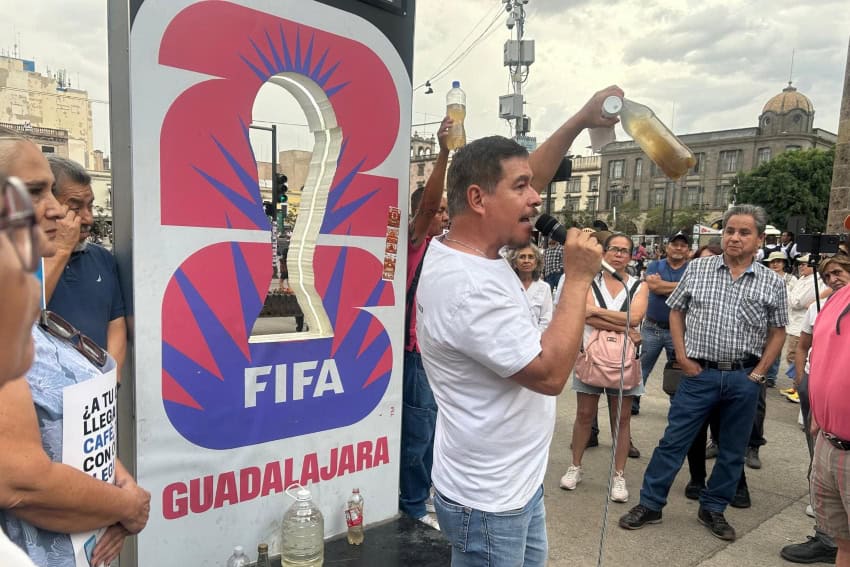
Siapa recently announced a 3-month emergency plan to wash and sterilize water treatment tanks around metro Guadalajara to improve the cleanliness of water being delivered to area homes and businesses. This initiative aims to make up for long-neglected maintenance under prior agency leadership.
According to Siapa’s new director, Ismael Jáuregui Castañeda, work on this project began on April 1 and should be finished by the end of June. While work is ongoing, there is likely to be reduced water pressure and cuts to service in some neighborhoods, since each tank must be emptied, repaired and put back online.
During a visit to the College of Civil Engineers of the State of Jalisco (Cicej) in April, Jáuregui acknowledged the magnitude of the task he faces attempting to provide clean and reliable water service to the GMA. “Many say (that I won) ‘the tiger raffle’ … but it’s an old tiger, toothless, clawless, flea-ridden and however you want to put it,” he joked.
In Mexico, “a tiger raffle” refers to a high-stakes role, often in public service, that is difficult, risky or contains the strong possibility of failure.
Meanwhile, Cicej president Mirna Avilés Mis stressed the importance of Siapa taking a more proactive, strategic approach to solving the metropolitan water system’s needs. “We cannot continue with a reactive approach. We cannot continue to address the urgent needs of each day without tackling the underlying problem.”
Dawn Stoner is reporting from Guadalajara.
