
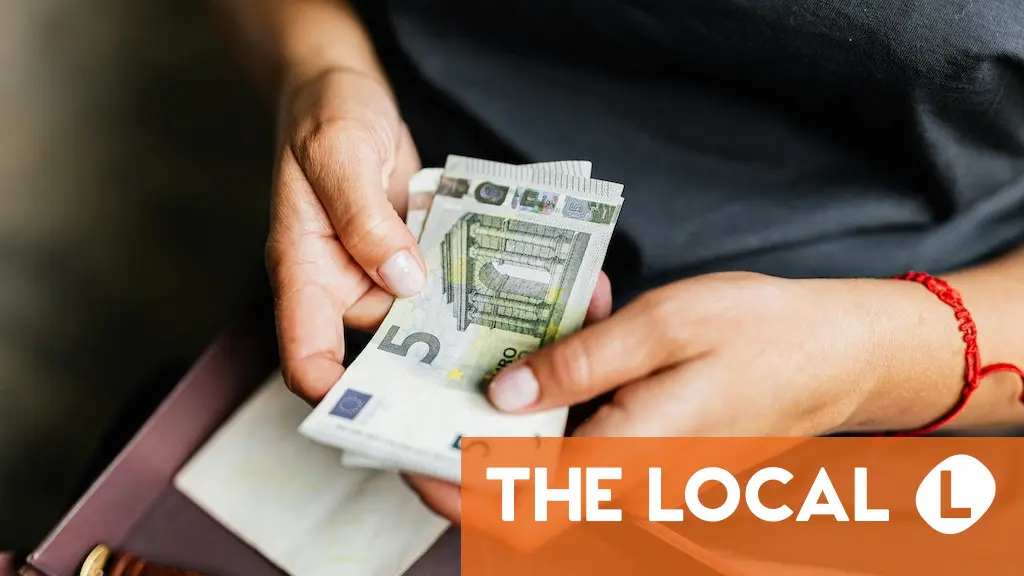
Are you the type of person who only pays by card or via mobile app these days? Here’s why you should consider keeping some cash at home and how much the Bank of Spain believes you should have stashed away.
For the past few years, Spaniards have been changing their means of payment. Whereas cash was once king, every year that passes it becomes the less common.
In 2025, 57 percent of Spaniards paid for items in shops with dinero en efectivo (cash), down two percent compared to the previous year.
How one chooses to pay in Spain often comes down to the age group in which the person is.
Two in every three over-55s use cash. Among 35 and 54 years olds, the first option is also cash, but it’s an age range where credit cards are used a lot.
And among those under 35, mobile phones – through payment services such as Bizum – are the preferred payment method for percent of people, according to survey data from The Bank of Spain.
So what does Spain’s main financial institution make of this shift to a more cashless society? Do they think it’s risky to rely entirely on digital or card payments?
When a nationwide blackout struck mainland Spain and Portugal on April 28th 2025, many people had no means of paying for items, as cards and bank machines weren’t working and mobile payment options experienced problems too.
On this day, card transactions fell by nearly 55 percent in Spain, and mobile payments were unavailable for many until the blackout ended. Many bank branches also had to limit their activity and close early.
READ ALSO: What’s the maximum amount you should have in a current bank account in Spain?
People found themselves unable to pay for food or their tickets home.
Luckily, this historic apagón (blackout in Spanish) lasted less than a day, but the event revealed just how reliant we are on not just electricity, but also the internet when it comes to paying.
On the first anniversary of the blackout, the Bank of Spain published a blog post, maintaining that cash remains an essential backup system.
READ ALSO: Can establishments in Spain force you to pay by card?
“We cannot guarantee that another blackout or similar situation will not occur,” the organisation warned, recommending that people always carry some cash both on their person and at home.
In its post, the Bank of Spain also recommended that people in Spain keep between €70 and €100 (per person) at home in case of emergencies.
The European Central Bank have also recommended that people keep cash at home and while they don’t give specific figures, they have endorsed the recommendations of the authorities in the Netherlands, Austria and Finland, which also suggest keeping amounts between €70 and €100 per person, or enough to cover essential needs for about 72 hours.
READ ALSO: What are the rules on tipping in Spain?
The Bank of Spain has also said it is working on new alternatives that would allow payments to be made even without an internet connection or in the absence of electricity.
One of the proposals on the table is a future offline digital wallet, designed to function in emergency situations.
READ ALSO: How much does it cost on average to live in Spain in 2026?
