
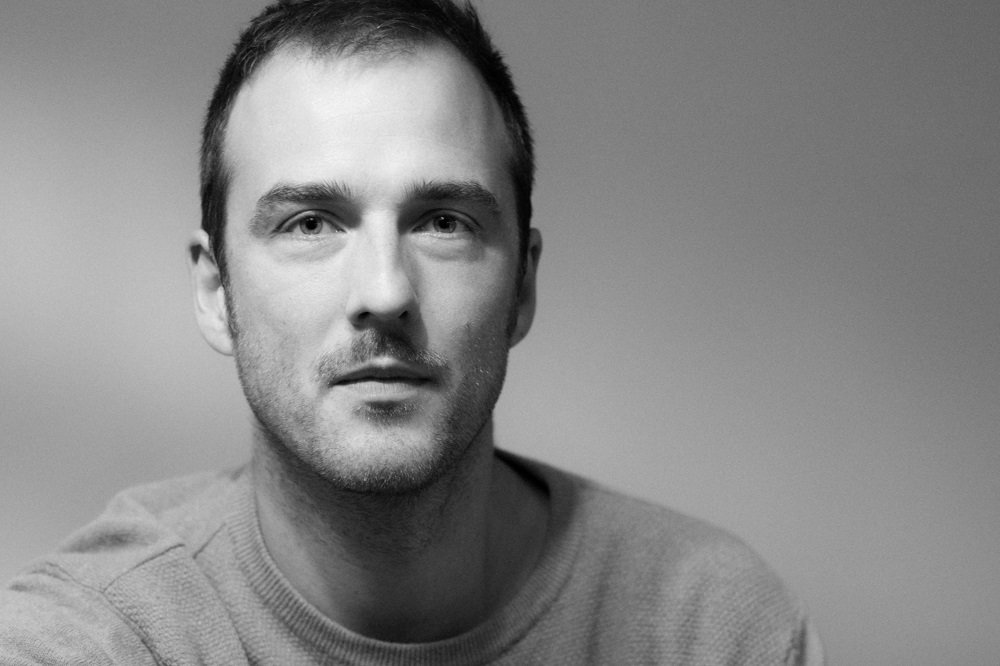
– CANNES 2026: The French documentary filmmaker reveals the secrets behind the making of a film chronicling ten years in the life of a young man, the son of a butcher and a farmer from northern France
(© Gabrielle Denisse)
Screened at the 58th Directors’ Fortnight (which takes place as part of the 79th Cannes Film Festival), the Franco-German-Swiss co-production Gabin is Maxence Voiseux’s debut feature film.
Cineuropa: How did you come to know the Jourdels, Gabin’s family?
Maxence Voiseux: In 2014, whilst studying documentary filmmaking, I was set the task of making a 13-minute film and I thought of creating a portrait of a place. I’m from the North and I’d heard a lot about the livestock market in Arras. I went there several times; it fascinated me, but it’s quite a closed community. One day, a man asked me what I was doing there. I explained, and he told me to come to his farm the following week and that he’d show me everything; how the cows are loaded, what people hope for from the market, the journey, the abattoir, and so on. That was André, Gabin’s grandfather. So I made Des hommes et des bêtes and got to know the whole Jourdel family, particularly André’s three sons (who have since passed away): Hubert, a livestock dealer; Dominique, the butcher; and Thierry, who is a farmer.
I then felt the desire to make a film about this sibling group: the medium-length film The Heirs, which travelled widely on the festival circuit and won an award at Cinéma du Réel in 2016. The central figure was Dominique, Gabin’s father, who is quite obsessive about the question of passing things on. As I also wanted to film the children a little, the first rushes of the film Gabin actually came from that project, and something immediately happened with Gabin, who was eight at the time: he was irreverent, funny, and understood what was at stake with the camera. I thought I would stop there, but I stayed in touch with the family, and two years later I went to see Dominique at the butcher’s shop. Gabin was there, older, a little chubby, somewhat uncomfortable in his body, but with the same generosity and complete sincerity. He had just signed up for a breakdancing class and wanted to show me some moves, while his father was asking him to help cut the meat. Gabin wasn’t especially keen on doing that, but he knew his father would eventually put pressure on him over the possible takeover of the butcher’s shop. He started breakdancing anyway and his father shouted at him, though with a certain tenderness. I found the scene so beautiful that it created a kind of obviousness, an incredibly strong desire to film him again.
How did you decide on the film’s exceptional timeframe?
If I was going to make another film, the gamble had to be somewhat mad, particularly in terms of time. I filmed for around a hundred days between 2019 and 2025, across between two and seven sessions a year (each lasting four to six days), at every key turning point in Gabin’s life: the end of secondary school, his arrival at agricultural college, his work placements (particularly in the mountains while preparing for his final exams), and so on. I also spent a great deal of time preparing between shoots, particularly around the question of dialogue. In fact, I probably spent more time with the Jourdel family not filming than filming.
The editing process was very long because the material was colossal. We had to work on the question of time, but also undertake a process of subtraction in order to create off-screen space, absence and a greater sense of narrative richness. What I did not want was for Gabin’s physical changes to become a central narrative device. Obviously, it is a film about time, but also about changing bodies, about parents, about a territory — yet none of that is foregrounded.
The film traces Gabin’s development, but his parents are also important figures. Was that something you had planned from the outset?
When I started filming, my references were not Richard Linklater, but rather great novels and family sagas such as The Thibaults by Roger Martin du Gard. Since I felt that Gabin was somewhat constrained and angry about what was being imposed on him, I decided to frame him in 4:3, with the adult world — obligation, authority — remaining off-screen yet constantly pressing into the film. I did not want to make an ensemble piece, but during the first year I spent a great deal of time wondering how to integrate his parents, because I did not want them to simply be his parents, but real characters within the film. After all, we would be moving through time with them, watching Gabin grow up and eventually leave, making choices under a certain social pressure as the youngest child in the family. So I filmed a few sessions without Gabin, just to see what would happen, and it immediately felt incredibly powerful because, with them, the conversation always came back to Gabin and to this new generation, which is different from their own.
What were your main intentions behind such a carefully crafted mise-en-scène, while never losing the power of realism?
I do not know how to make documentaries in the tradition of direct cinema. I write progressively, following the desires of my characters and according to what is happening in their lives. I put things in place with their trust, their consent, sometimes even their own ideas. But, especially with characters like the Jourdels, documentary cinema ultimately blows all of that apart: they are far stronger than the formal device, and things constantly overflow it, shifting towards something else.
(Translated from French)
