
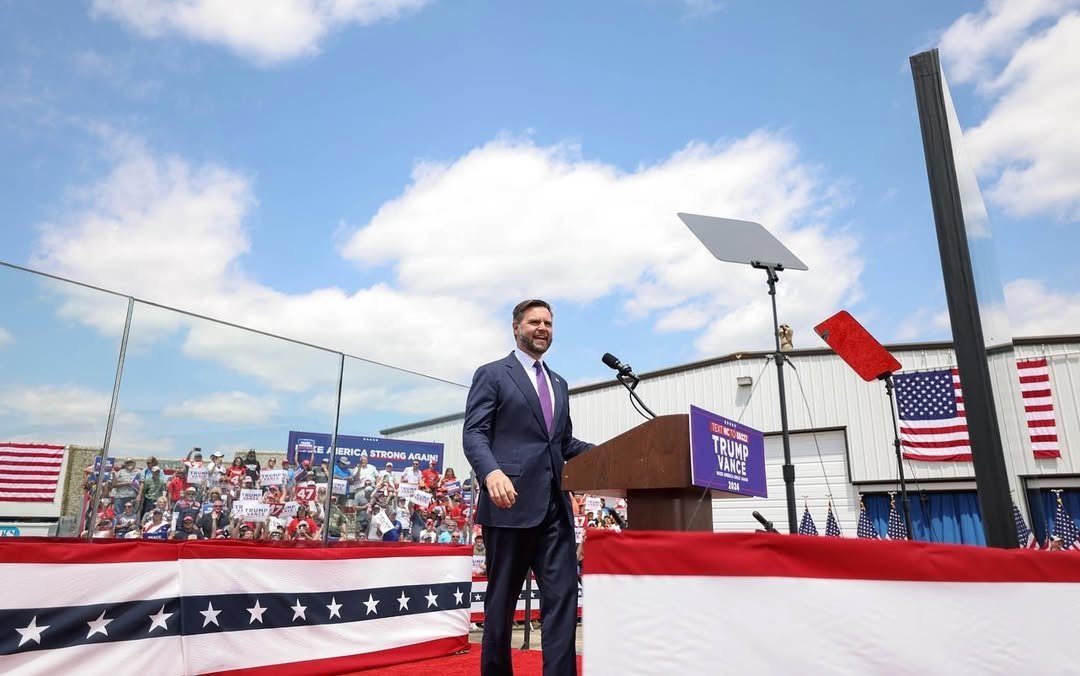
Vice President J.D. Vance traveled to Maine on Saturday to campaign alongside Paul LePage, the former two-term governor now seeking a seat in the U.S. House of Representatives.
Vance shared a post on Instagram after the event. “The good people of Maine are fired up and ready to stop the fraudsters. Great event with my friend @lepageforcongress,” he wrote. That’s his characterization. LePage’s campaign had not issued a separate public statement by the time of publication.
The rally’s central theme, per Vance’s account, was alleged fraudulent activity in Maine. The post gave no details about the type of fraud involved. No state agencies or systems were named. By Saturday, independent reporting on those specifics had not yet appeared.
For those who support Vance and LePage, the appearance carries real political weight. A sitting Vice President doesn’t show up at a congressional rally without purpose. National party attention on a state-level race tends to draw fundraising interest and press coverage. LePage’s campaign will likely benefit from both.
For critics, the fraud framing raises legitimate questions. What specific activity is being described? What evidence supports it? Those are fair things to ask. The answers aren’t yet in the public record. Anyone who wants the full picture should follow the story as more reporting emerges.
LePage is one of the more recognizable names in Maine politics. He served as the state’s governor from 2011 to 2019 and was a polarizing figure throughout. Fiscal conservatives backed him consistently. Democrats and most independents pushed back just as consistently. His style was blunt and direct, and it generated strong reactions in both directions.
Running for a congressional seat is a different challenge. The job and the scope are different from what he knew as governor. The political environment has also shifted in recent years. His base may remain intact. Expanding it enough to win is a harder question.
Vance has been a regular presence at Republican campaign events across the country. This kind of visible support signals that the White House sees the Maine race as worth competing for. It also gives the administration a stake in the state-level politics that shape congressional majorities.
The Instagram post received roughly 3,000 likes. That’s a modest number for a Vice Presidential account. Congressional races in individual states rarely generate large national social media responses, so that’s not surprising.
What matters is what happens in Maine when voters go to the polls. Vance made his position clear. LePage is making his case. Maine voters will hear both and decide.
The facts are on the table. Draw your own conclusions.
