
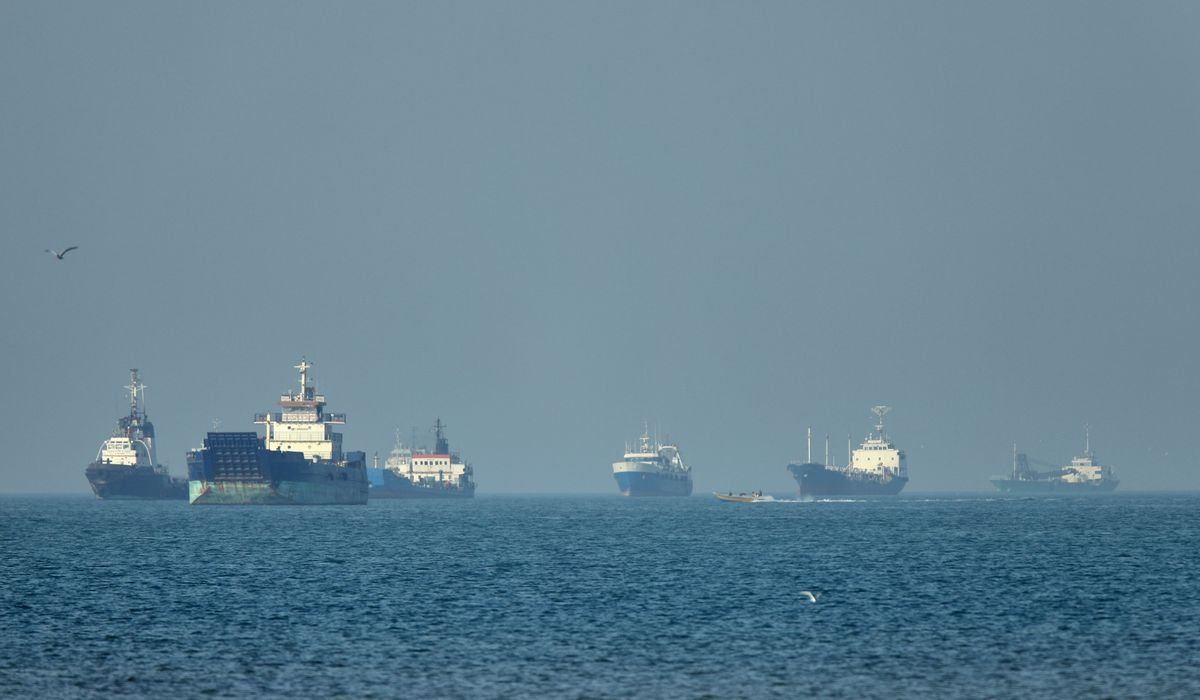
Secretary of State Marco Rubio said Tuesday the Strait of Hormuz will be reopened “one way or another,” as the U.S. and Iran work through the final stage of peace negotiations despite rising tensions in the region.
Mr. Rubio, while traveling overseas, said no country in the world supports a tolling system in the strait except for Iran.
“They’re going to be open one way or the other. So they need to be open, what’s happening there is unlawful, it’s illegal, it’s unsustainable for the world, it’s unacceptable,” Mr. Rubio told reporters. “I don’t know of any country in the world that does it.”
Mr. Trump is working with Middle East partners on a draft deal that would extend a ceasefire with Iran and give space for negotiations over Tehran’s nuclear ambitions.
“I think there’s strong alignment and agreement on what a preliminary draft should look like,” Mr. Rubio said, adding it could take “a couple of days” to settle on the wording. “It’s either going to be a good deal or there isn’t going to be one.”
U.S. officials expressed hope for a deal despite a new flare-up in the region.
SEE ALSO: U.S. conducts ‘defensive’ strikes in response to ‘threats posed by Iranian forces’
U.S. forces struck missile launch sites and other targets in southern Iran on Monday, a move the military described as defensive to protect American troops.
Iranian Supreme Leader Ayatollah Mojtaba Khamenei responded to the strikes by saying U.S. military bases in the Middle East will no longer be safe, according to state media.
Over the weekend, Mr. Trump said he wants countries such as Saudi Arabia, Qatar, Pakistan, Turkey, Egypt and Jordan to join the Abraham Accords as part of any deal. The accords are a series of pacts normalizing relations between Israel and Arab or Muslim-majority nations in the region, though the demand could complicate negotiations.
The U.S. and Israel launched a military campaign against Iran on Feb. 28 to prevent Iran from obtaining a nuclear weapon and constrain its missile program and support for Middle East terror proxies.
Mr. Trump is squeezing Iran economically with a blockade of maritime ports.
U.S. consumers, meanwhile, are seeing higher gas prices due to rising oil prices caused by reduced traffic through the Strait of Hormuz.
SEE ALSO: Trump, Rubio confirm Iran peace deal is in the works despite U.S. ‘defensive’ strikes
The U.S. average price of a gallon of gas stood at $4.49 on Tuesday, down from $4.53 a week ago but up 51% from when the war started, according to the AAA motor club.
The White House says gas prices will plummet when the war is resolved. It pointed to pent-up oil supplies around the world.
“As soon as the straits are open, then energy prices are going to plummet like nothing you’ve ever seen before,” National Economic Council Director Kevin Hassett told “Mornings with Maria” on Fox Business on Tuesday. “There’s so much oil sitting in the Gulf, there’s so much excess capacity in Saudi Arabia and [the United Arab Emirates] that prices should drop very, very quickly.”
U.S. stocks opened in positive territory on Tuesday, a sign that investors are hopeful that a deal with Iran is within reach.
Mr. Rubio said the world agrees with the U.S. in its demand to reopen the strait without tolls.
“The Russians are not in favor of a tolling system, the Chinese are not in favor of a tolling system. I mean, there’s no country in the world that’s in favor of a tolling system, except for the regime in Iran. So that’s not acceptable, that cannot happen,” he said. “The straits need to be open, unimpeded, without tools. And obviously, that needs to happen immediately as soon as anything is agreed to.”
