
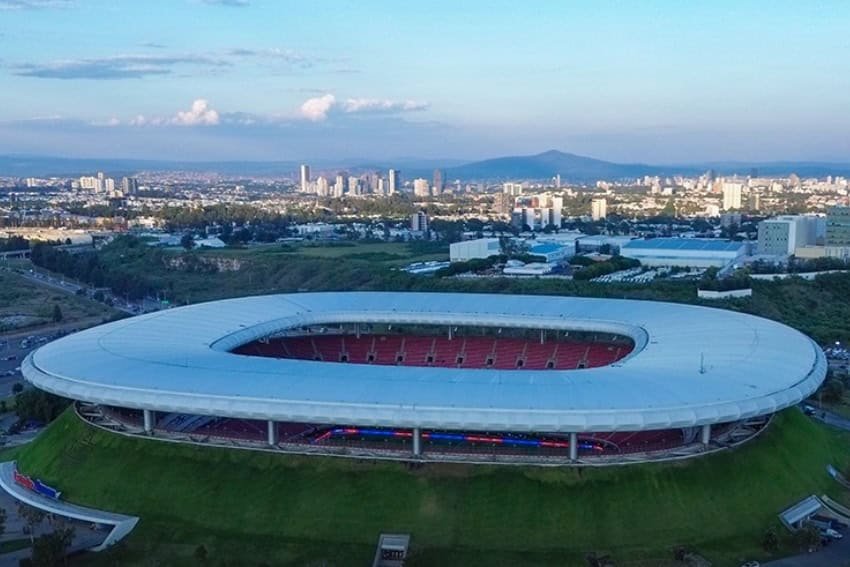
Moving around Guadalajara is about to become much more challenging, with several million visitors expected for the 2026 FIFA World Cup, which begins in about two weeks.
An event of this magnitude naturally requires extensive security preparation and protocols to ensure the festivities remain safe. Below are key details to be aware of if you live in the Guadalajara Metro Area (GMA) or have plans to visit during the World Cup in June.
Details emerge on security protocols for the World Cup in Guadalajara
The new government General Security Plan focuses on protecting popular travel routes (including routes to and from the airport), sports venues, equipment, local training camps, fan festivals that broadcast live matches, team hotels and the movements of dignitaries planning to attend matches at Guadalajara Stadium (Estadio Akron).
The following four matches will be played at Guadalajara Stadium:
- June 11 at 8 p.m.: South Korea vs. the Czech Republic
- June 18 at 7 p.m.: Mexico vs. South Korea
- June 23 at 7 p.m.: Colombia vs. Democratic Republic of Congo
- June 26 at 6 p.m.: Uruguay vs. Spain
The following four areas are the highest priority: the stadium, the Fan Festival, critical travel routes and the Guadalajara Airport. These areas will receive heightened security and resources. Special security teams will also be deployed to hotels used by VIP guests, tourist sites and popular public spaces to help deter crime.
Logistics around Guadalajara Stadium
There are three exclusion zones planned around the Guadalajara Stadium. In these areas, the priority will be to avoid bottlenecks and overcrowding to maintain a steady flow of pedestrians.
Zone 1: Transportation to and from the stadium
In the area between the Pereférico (the outer ring road), the Avenida del Bosque and the Avenida del Bajío (the massive disembarkation point of MiMacro (the bus rapid transit system), public and private transport will be managed by local authorities to avoid interference with pedestrians.
Zone 2: The ‘last mile’
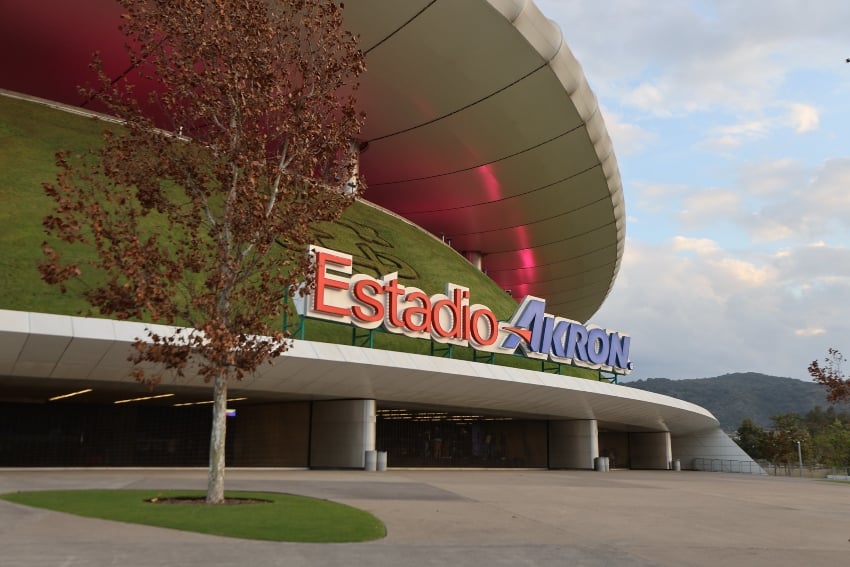
The last mile between disembarkation points and the stadium on Bosque de la Primavera Avenue will be a dedicated walk zone that excludes vehicular traffic.

For guests with limited mobility, the official shuttle bus service “Ride al Estadio” is their best option to reach the stadium. Ride al Estadio operates from ten different pick-up points around the city and drops off riders at the closest FIFA authorized access point to the stadium.
This service still requires users to walk approximately 800 meters to enter the stadium. Tickets for the shuttle cost 500 pesos, with advance ticket purchase required. For more information on getting to and from the stadium on game days, go to this page from Visit GDL.
Zone 3: Security checkpoints and ticket screening
Around the entrances to the Guadalajara Stadium, there will be physical screening and ticket validation checkpoints before fans are permitted to enter the venue.
FIFA Fan Festival protocol
As reported previously, the FIFA Fan Festival will take place in Plaza de la Liberación in downtown Guadalajara, with a maximum capacity of approximately 40,000 attendees at a time.
In a change from previous reporting, access to the Fan Festival will be free with no advance registration required. Security at the Fan Festival will be on hand to optimize crowd flow and safety.
Real Estate prices are surging in Guadalajara
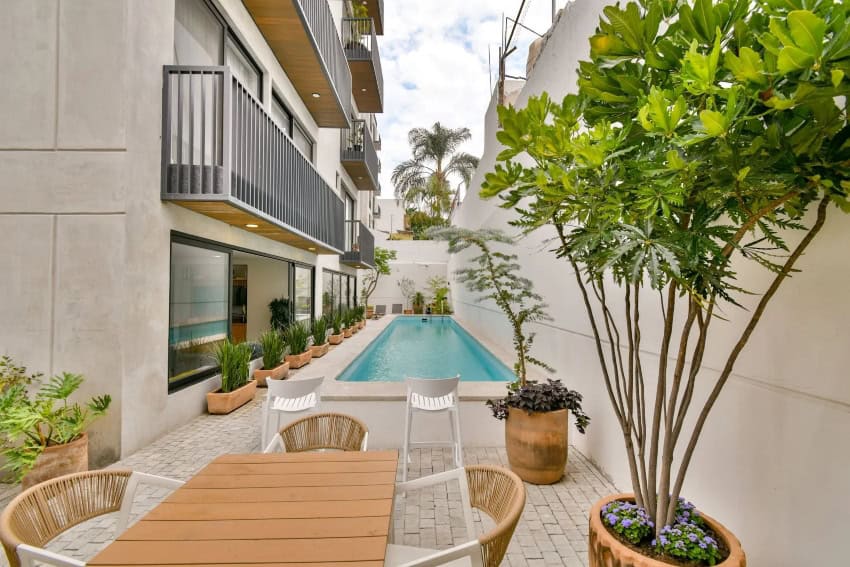
The real estate market in the GMA is experiencing a price surge lately that has outpaced other major cities. According to the most recent Economic Analysis Bulletin from the ITESO Business School, housing inflation in Jalisco has far exceeded the national average in recent years.
Nationwide, house prices were increasing at 8.9% in the third quarter of 2025, with Guadalajara seeing annual home price increases of 12.5%, well above the growth rates in Mexico City (5.1%) and Monterrey (9.5%).
While home prices in Mexico City and Monterrey are not rising as fast, nominal housing prices in those markets remain higher than in Guadalajara.
Several factors have put pressure on housing prices in Guadalajara in recent years. First, there has been widespread real estate speculation by wealthy locals and foreign investors, who tie up property in the short-term rental market at prices that are out of reach for most residents. Second, there is a shortage of quality housing in desirable, amenity-rich locations.
According to The Latin Investor, a real estate research firm, middle-class families in Guadalajara today are smaller and seeking well-priced, low-maintenance properties in walkable neighborhoods, with easy access to mass transit.
Buying a home in the GMA costs 7.4 million pesos, based on ITESO’s analysis of asking prices, while average rents have risen to nearly 30,000 pesos per month.
As housing inflation accelerates, affordability declines
Since wage increases have failed to keep pace with housing inflation in Guadalajara, affordability has worsened.
According to Jahaziel Castañeda, president of the Guadalajara chapter of the Mexican Association of Real Estate Professionals (AMPI), acquiring a home through savings or cash purchases has become much more difficult for most Mexicans.
“The traditional way is what our parents and grandparents taught us: save up so you can buy your house outright; nowadays that’s extremely complicated,” Castañeda told El Economista.
Reflecting those challenges, the average age of first-time property buyers in Mexico has drifted upward from 30 years in the past to nearly 40 today.
And though casual observers will notice plenty of homes for sale in Guadalajara, its market suffers a financial mismatch, with homes for sale concentrated at higher price points — and beyond what the average home buyer can afford.
Remedying the situation will require increasing the supply of affordable homes and expanding financing options at lower interest rates, as the current Mexican mortgage averages around 11%.
MND Writer Dawn Stoner is reporting from Guadalajara.
