
“The simple act of using humor on these topics today is, in itself, an act of activism”
– CANNES 2026: Two of the people behind the adult-oriented animated film spoke to us about the origins of the project and the deeper meanings behind its story
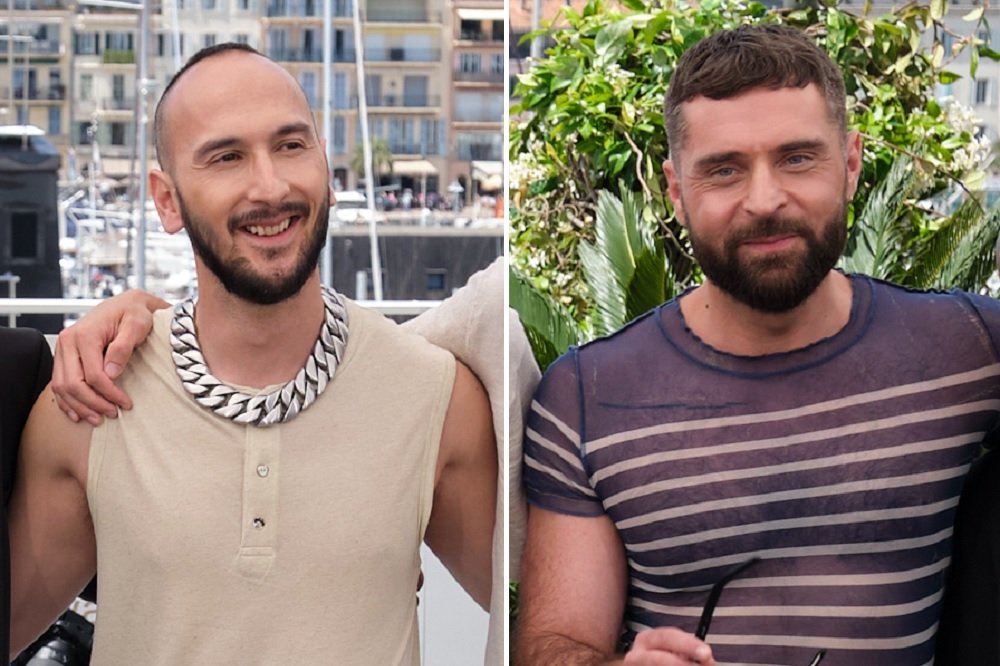
Marco Nguyen (left) and Simon Balteaux (© 2026 Fabrizio de Gennaro for Cineuropa – fadege.it, @fadege.it)
We met co-director Marco Nguyen and co-screenwriter Simon Balteaux at the 79th Cannes Film Festival to discuss the adult animated film Jim Queen, co-directed by Nicolas Athane and co-written by Brice Chevillard and the two directors, which was screened in the Midnight Screenings section.
Cineuropa: Did the character of Jim come about after the idea of heterosis, or did the idea of heterosis come about after Jim?
Simon Balteaux: The concept of heterosis was the idea that came first. Our initial aim was to showcase the beauty and richness of the queer community. One screenwriting technique for highlighting something is to remove it, so that we realise we’re missing it. There was, of course, also a link to the AIDS epidemic. Marco and I grew up in the 1980s and were literally traumatised by it, like so many people. So we blended these concepts to give meaning to our project. Jim then came along to bring that meaning to the screen.

Marco Nguyen: Above all, we wanted to talk about our lives. Going out, bars… we wanted to show that our lives were cool too. We asked ourselves: what would happen if all that came to an end? That’s how we came up with the idea, almost as a joke: a disease that would make gay people disappear. It became a sort of metaphor that wasn’t necessarily very political at first.
Is presenting this film at Cannes a way for you to spark a debate?
SB: I think Marco and I have the same approach to politics. We want to get strong and important messages across, but in a gentle way. We realised that humour is a powerful tool for conveying these messages.
MN: I don’t think we set out to spark a debate. The simple act of using humor on these topics today is, in itself, an act of activism. These are subjects that people don’t necessarily dare to tackle with humour, and we did so with a great deal of freedom. When writing, we didn’t set ourselves any limits apart from not preaching. The aim of this satire is to show situations and let people make up their own minds. That’s our way of engaging with politics.
The film is intended for adults due to the sex scenes, but the other scenes could serve as an educational tool. Have you ever considered making a film aimed at children?
SB: It’s funny because Bobbypills, the studio producing the film, has also made a series called Peepoodo & the Super Fuck Friends. It’s aimed at adults, but presented as sex education lessons for children. By toning down certain aspects, the film could become a genuine sex education tool for younger children.
MN: Personally, I don’t necessarily see it that way. I think it’s a film with adult themes, and you need a certain amount of life experience to fully understand it. It becomes relevant when young people start asking themselves certain questions. Today, it’s mainly aimed at an audience that’s already aware of these issues, or looking for answers. But I realise there’s plenty to be done in the area of education, and that might be an interesting avenue for a future project.
Speaking of future projects…
MN: We’re right in the middle of the promotional tour… I haven’t had time to think about anything else yet. But I’ve enjoyed this experience so much, and the atmosphere on the road is so lively, that there’s still plenty more to tell. Things are always changing and we still want to have a laugh, take the mickey and poke fun at everyone. So if people like it and want more, I’m ready to carry on.
SB: I’ve had a bit more time than Marco, because as a screenwriter, you finish your work earlier. I’ve got several projects on the go, all exploring the same themes that highlight the LGBTQIA+ community. And we’re also saving some ideas for Jim Queen 2. I think people are finally ready. In fact, this year at Cannes, there are 21 films in the running for the Queer Palm. That’s a real sign of diversity.
(Translated from French)
