
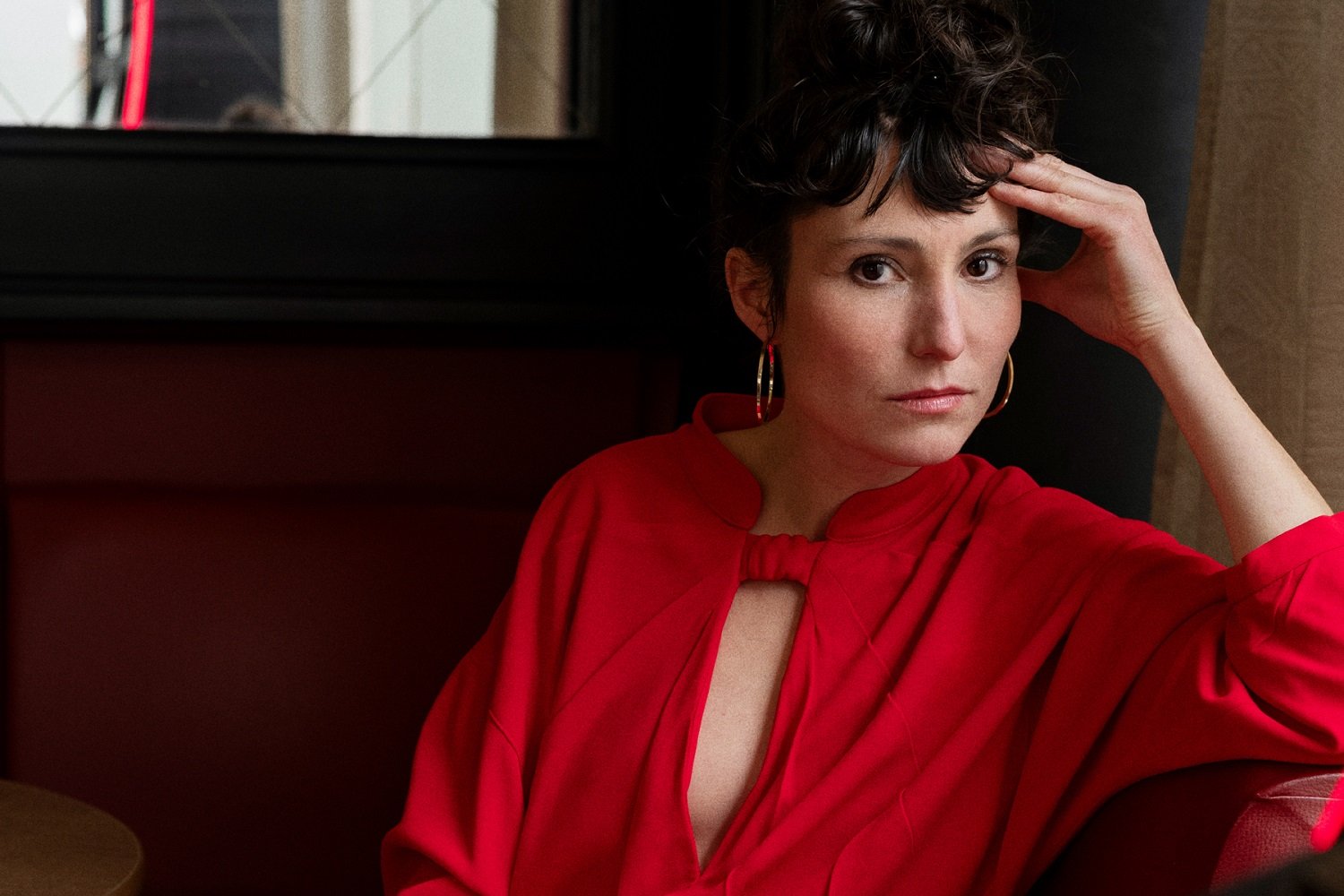
“I wanted to make a spy film with a female lead, exploring the profession in its most practical sense, far removed from the James Bond-style characters”
– We sat down with the French filmmaker to discuss her third feature film, in which she returns to her signature style whilst venturing into new territory
(© Lydie Nesvadba)
Rachel Lang tries her hand at the spy thriller genre with Mata, whilst ensuring this third feature film remains true to her filmography. She talks to us about this extraordinary project, which is released today in France, where she returns to her cinematic roots whilst venturing into new territory.
Cineuropa: How did this project come about?
Rachel Lang: As a child, I loved The Famous Five, Fantômette and detective stories, and I’d wanted to direct a thriller for a long time, but I wanted to make a spy film with a female lead, tackling the profession in its most practical sense, far removed from James Bond-type characters. I’m a military reservist, and one day I found myself in a small plane flying over Chad, with everyone in combat gear except for one man at the very back. He could have been a journalist, but I knew there weren’t many civilians in the area, and at the end of our conversation, I asked him how many people stood between him and the President of the Republic and he replied: “just one person – my boss”. The principle of the DGSE (General Directorate for External Security) is that they operate with a very tight chain of command, where people are compartmentalised and isolated. It’s very different in the army. I was intrigued to explore these behind-the-scenes professions. What does it mean to be alone and to carry out missions for which you’re given no explanation, only orders? I find it a dizzying arena.
It’s both a thriller and an anti-thriller; the film plays with the conventions of the genre.
I spent five years working on the screenplay; it’s a very technical process to devise an investigation, to write about people who lie, who manipulate, who play roles that aren’t their own – you have to constantly gauge the audience’s understanding of the plot. In fact, my aim wasn’t to make a spy thriller where the truth is revealed at the end; I wanted to create a setting that was out of place, unhinged. The thriller was really just a pretext for portraying a woman and her loneliness. Her commitment is undermined by a clash between her sincerity and the opacity of her mission. When her partner suddenly disappears, it becomes difficult for her to keep the faith. For military personnel, and spies, people are at the heart of their work. We think we’re committing ourselves to the country, but in fact we’re always committing ourselves to our comrades; when we fight, it’s so we can all come back together, not so the country can win.
We get a glimpse of the behind-the-scenes world of espionage…
I wanted to create a stark contrast between the field and the offices, with settings ranging from Africa to the Alps. And I wanted to show the agents’ daily lives too – the work, the waiting, the inactivity, and so on.
At the heart of this game of deception, however, there is an action scene, the narrative’s pivotal moment – is that a staple of the spy film?
The scene takes place during the Basel carnival, which is quite unique: in the dead of night, everyone is wearing masks. I worked with a stunt coordinator who is no stranger to Hollywood films and a close dialogue developed between the coordinator and the director of photography to adapt to the reality of the setting and work out the shot sequence. In the editing room, I worked with a team: Sophie Vercruysse, who edited my previous films and was in charge of the more psychological scenes, and Matthieu Jamet-Louis, who has edited films such as Night Call and took charge of the action scenes.
Why did you choose Eye Haïdara as your lead actor and how did you work with her?
I first saw Eye in C’est la vie! and I wrote the part with her in mind straight away. I had a rather cold character in mind; I kept saying that I wanted Mata to be emotionless. But I think that in the end, Eye brought something else to the role and elevated the character, whilst remaining very credible in her profession. Along with the other actors, she undertook a work placement with the DGSI, spending three days on a mission, without a phone or a bank card, and I know that it really enriched them – and impressed them; they still talk about it!
(Translated from French)
