
Cinema has the power to shape perceptions of entire groups of people. People with AIDS are Tom Hanks in Philadelphia (1993); trans women are Norman Bates in Psycho (1960) or Buffalo Bill in The Silence of the Lambs (1991); both are Jared Leto in Dallas Buyers Club (2013). Autistic people are Raymond Babbitt, played by Dustin Hoffman in Rain Man (1988) – the archetypal “retard”, as his brother played by Tom Cruise repeatedly calls him, who is later exploited for his savantist capabilities. Here, neurodivergence was established as superhuman; as socially detrimental, but fodder for capitalistic enterprise.
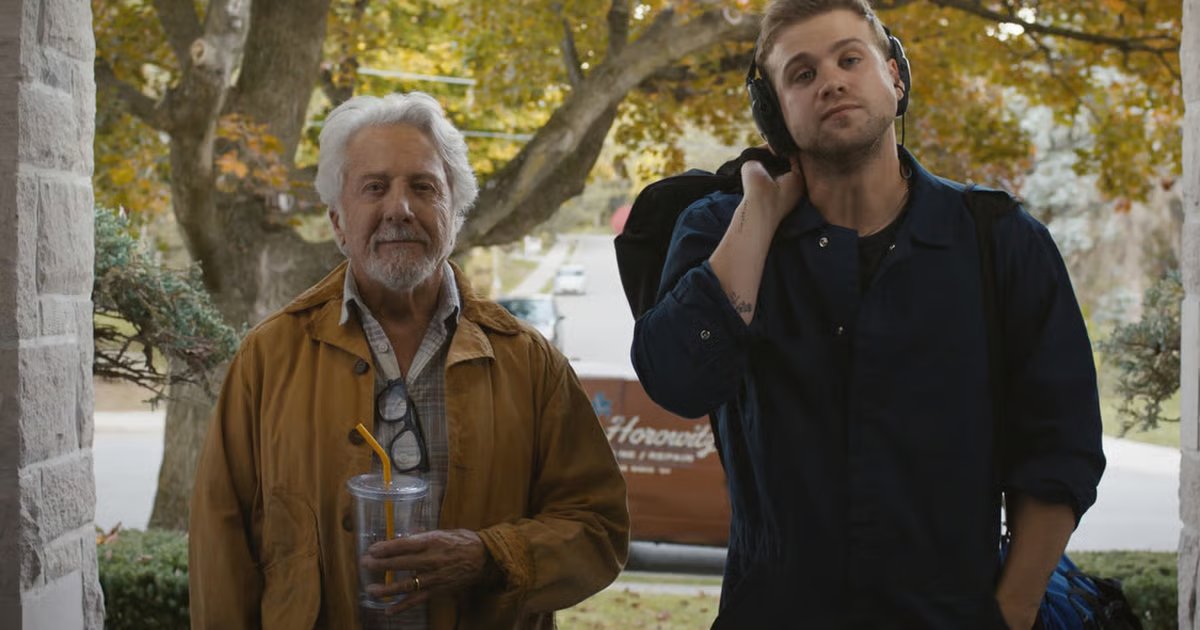
Leo Woodall’s Niki White in Tuner, directed by Daniel Roher, is never described as autistic, only as having a heightened sensitivity to sound diagnosed as hyperacusis. It is a condition which is very often concurrent with neurodivergence, including autism, and is relatable to other conditions seen in Highly Sensitive Persons, such as misophonia – yet in Tuner hyperacusis seems to exist in isolation from other conditions. Niki is a classic savant, debilitated by his sensitivity to the extent that he needs to wear noise-cancelling headphones to function in the world, but perfectly suited to tune pianos thanks to his perfect pitch. Once a gifted pianist, he no longer plays.
Get more Little White Lies
One night while working at a wealthy client’s instrument, Niki is disturbed by a criminal gang attempting to break into the household safe – a task which, miraculously, Niki is able to crack through sound detection alone. It is effectively a less slick rehash of Edgar Wright’s Baby Driver (2017), with fewer needle drops and the rather crucial distinction that car chases make for much more entertaining viewing than Woodall twiddling with metal knobs. In case the parallel to Rain Man needed to be more explicit, Hoffman himself plays Niki’s mentor and confidant, standing aside to allow Woodall to make savantism sexy.
The only compelling part of the film is the ethereal Havana Rose Liu, who plays pianist and composer Ruthie. She is determined to impress Marius Maissner, a crude stereotype of the elusive European maestro played by Jean Reno, which leads to an extraordinarily convoluted instance of a coincidence which really needs to be seen to be believed. Her romance with Niki is deftly played, although one gets the impression that this subplot is what deters Roher from ever asserting his neurodivergence – as is well known, autistic people don’t have sex. What could have been a bold step forward concedes to fall back into the fears of the past.
Beyond representational qualms, Tuner is simply a bad film. The first safe-cracking sequence might be reasonably entertaining, but repeated over and over it becomes extremely dull. The sound design makes no sense, becoming muffled as though Niki is deafened by hyperacusis when the condition very much heightens noise. Roher and Robert Ramsey’s script plods along with painful predictability, managing to cram in every tired note in the heist genre and the “disabled” film. Rather than a rousing new composition, Tuner is a discordant rhapsody on a broken theme.
