– We spoke to the French professional to learn more about the company’s diversified approach, including the acquisition of animation distributor Gebeka
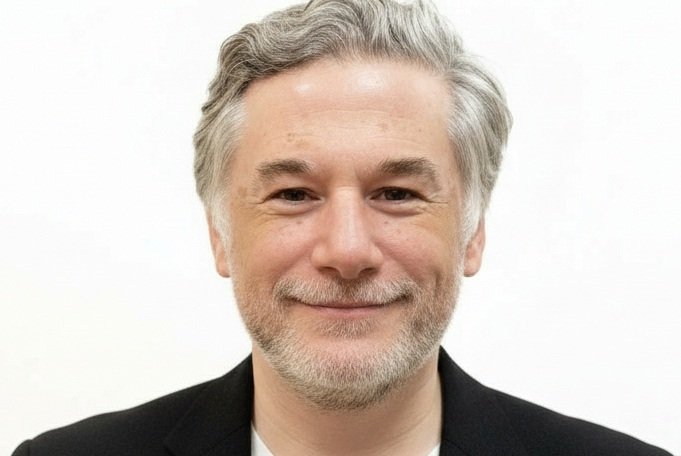
For the newest edition of Distributor of the Month, we spoke to the CEO and founder of France’s KMBO, Vladimir Kokh. Kokh founded the independent distribution company in 2007, building up a brand marked by a commitment to animated films, young audiences, and promising new talent and markets – but also much more, as we learned in our conversation.
Cineuropa: What do your editorial policy and approach look like?
Vladimir Kokh: KMBO is a mix of very commercial, family-audience-orientated animation, arthouse animation and live action. We have several strong upcoming titles. In live action, we had three titles in the main competition at the Berlinale: Rose, Soumsoum, the Night of the Stars and The Loneliest Man in Town. We have also just released Silent Friend and had Iron Boy in Un Certain Regard at Cannes, which will also be in the official competition at Annecy – and we have many films at Annecy.
In animation, we are well known. For live action, when we are fighting with other distributors, we need to really prove that we also know how to work with a movie. Slowly, we’ve been stepping up. For me, animation is too broad [of a category]. Other distributors sometimes tell me that I do animation and am always looking for animation. But the fact is, it’s the same as for live action – it’s all so different. You have sub-categories like kids’ animation, stop-motion, cut-out, shorts and features. We have released some Chinese animation in France as well, like Deep Sea, which has more of a focus on teenagers. It’s another target audience to work on and is very different. When I look at acquisitions, there are so many markets, and we have an interest in developing them.
Sometimes, even producers don’t know exactly what KMBO is doing in the different fields. It’s not very clear to them, but for me, it’s very clear: it’s really about the discovery of auteurs and markets. For instance, I’m excited to try to find a new market for Chinese animation. When you see the result of movies such as Ne Zha 2, which topped the worldwide box office, it’s great.
You recently acquired Gebeka, a well-known French distributor working exclusively with animation. What was the strategy behind this acquisition?
KMBO has existed for almost 20 years, releasing 15 films a year and remaining very focused on animation, kids’ audiences and so on. Gebeka is really a historical distributor and will celebrate 30 years since it was founded next year. They were one of the pioneers of animated film for young audiences in France, with titles like Kirikou and the Sorceress and My Life as a Courgette.
We had the opportunity to acquire Gebeka, but as I see it, it’s not KMBO buying the company. We want to really retain the identities of the two firms. The idea is not to merge the teams, but to have two tools to develop even more animation for young audiences. Gebeka is based in Lyon, with a team of five or six people. We’ll keep the team, and we’ll develop the company. KMBO knows the industry well, so we will do our best to try to bring Gebeka back to its historical line-up: really high-quality animation, short films for young audiences, feature-length animation films and, from time to time, live-action features for young audiences as well.
You’re involved with other activities that supplement your work as a theatrical distributor. Tell us about these.
With Little KMBO [an outfit for young audiences], we’ve developed a magazine called Séances Scolaires to promote school screenings as a pedagogical tool for audiences, teachers and children. A total of 30,000 copies of the magazine are circulated every trimester and are sent to schools. We developed a national cinema prize for schools so that kids can vote for the best movie, the best posters and the best characters. We’ve also created a little film festival taking place over the summer, with 600 theatres involved in the partnership. The idea is to have all of these tools to develop l’éducation à l’image [media literacy], which is an important topic in France and Europe.
Can you speak about a distribution strategy that you found particularly unique or successful?
We had the German film Super Grand Prix, a CGI-animated work for a family audience based on Europa-Park [located between Strasbourg and Freiburg]. The theme park came to us years ago, telling us that they were doing a very ambitious animated film based on the park characters – a bit like Disney. We worked with their entire team on the marketing of the park. It took us one year of work and of meetings to prepare the campaign, and we went there several times to do the collaboration. We also brought around 100 exhibitors to discover the park with their families, as it was the best way to introduce it. The movie reached around 450,00 admissions.
Silent Friend went to many festivals, and Tony Leung came to France for the promotion of the film. As a distributor, it’s very different working on an arthouse film compared to a big animation title. It’s refreshing – and it’s almost not the same job. For arthouse, you are looking for a festival, for critics, for the director to come in for interviews. For a big family animation, it’s more about partnerships and digital sponsoring.