
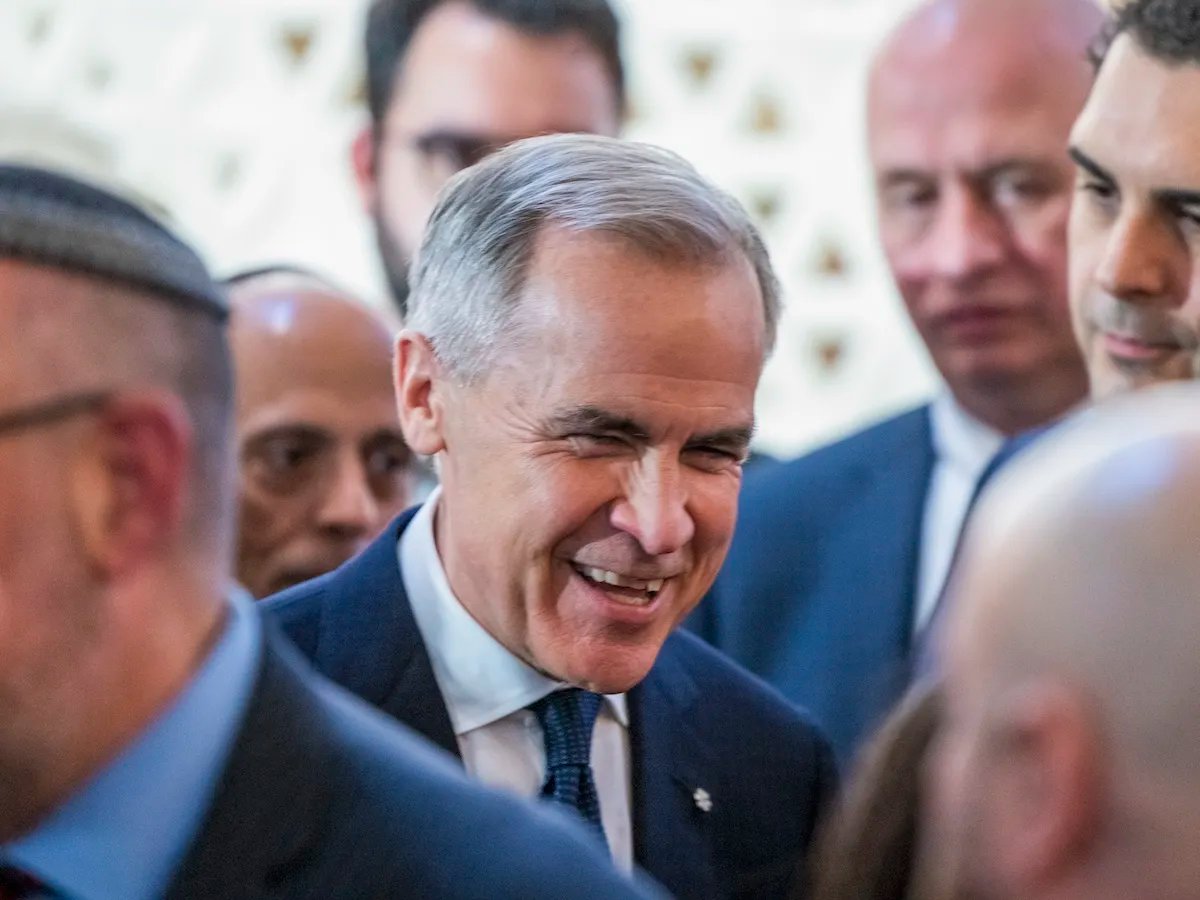
A week after Mark Carney’s June 1 speech at Toronto’s Holy Blossom synagogue, Jewish Canadians have had a chance to come up for air, many coming to terms with the grim possibility that even a prime minister finally naming a “crisis of antisemitism” may not translate into the protection they need, or the country they thought they lived in.
Carney was moved to reassure the Jewish community, yet, according to many leaders, he largely failed.
The prime minister acknowledged “Canada’s civic compact is failing Jewish Canadians,” but his answer is yet another committee, another study — involving no one with a deep familiarity on the topic — that some community members said leaves them just as exposed as before.
Canadian Jews, already traumatized and angry, are now wondering more than ever: what now? What is next?
Rabbi Adam Cutler, of Toronto’s Adath Israel synagogue, concluded that “we have to be open-eyed that the government is not a reliable partner.”
With four police cars now surrounding the synagogue, he told the Post, “security is foundational, but insufficient. I don’t want to be a hostage in my own shul the rest of my life.”
And in a sentiment echoed by many others, he said the Jewish community is now on its own.
“In terms of standing up for Jewish rights – for Jews to be proudly and openly Jewish, and proud Zionists — that’s something we have to support ourselves. It’s not that long ago that prime minister Trudeau stood up and proclaimed he was a Zionist. But his successor did not say the same thing, and that’s telling.”
Matthew Taub, who attended the speech, said Carney “scattered crumbs of concern, and acted like it was a feast.” The director of Canadian advocacy group Unapologetically Jewish said the prime minister was “playing a politically-charged 4D chess game. He moved his knight, and now we respond, as a Jewish community, by moving our queen,” he told the Post.
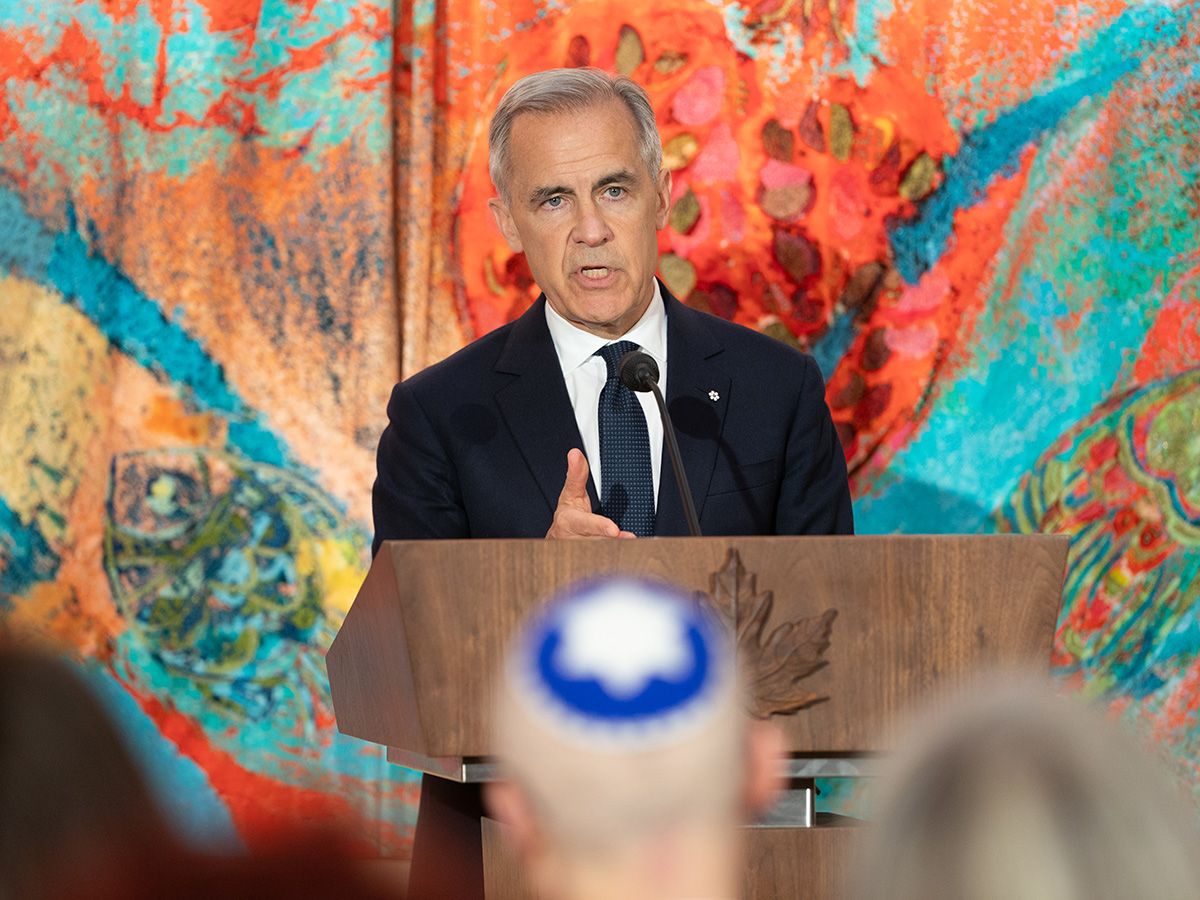
The counter-play he proposed: whereas Carney “came on our turf to lecture us, to have us listen to our own problems,” Taub wants community leaders, as a group, to meet Carney on Parliament Hill, and “have him sit and listen to us, while we tell him the real roots of the problems, and offer our own recommendations. All with the cameras on, too.”
Amir Epstein, director of Toronto-based pro-Israel advocacy group Tafsik, said Carney’s speech vindicated the idea that it’s time for Jews in Canada to start thinking about Plan B: moving elsewhere, as things get worse.
“We have nothing to expect from this government. They’ve made it very clear they’re not interested in supporting the Jewish community. They’ve made it very clear that they don’t really even see much of a problem,” he said. The U.S., though compelling for many as a next stage, could face worsening Jew-hatred, he believes, and so his suggested choices would be Israel or Panama “because it’s been incredibly friendly towards the Jewish community for over 100 years.”
He says all of this with a caveat: “It doesn’t mean that they need to pack their bags and run. It means be prepared. We’ve seen this before. And if we pretend like nothing’s happening, and we go home, and we watch our hockey games, and pretend like everything’s fine, eventually you’ll be too late, and you won’t be able to go anywhere.”
He added: “Until regular Canadians realize the threat that they are facing, the fires will continue to burn. And the worst thing that can happen is we find a nation filled with boiled frogs.”
Michael Teper, president of the Canadian Antisemitism Education Foundation, said the speech was the latest in a “series of slaps in the face” from the prime minister.
All within May, Carney issued back-to-back official statements admonishing Israel, had a “cordial phone call” with Palestinian leader Mahmoud Abbas, and a call to Israeli President Isaac Herzog that, by Carney’s own description, sounded like “he left the conversation having given Israel more carpet burns,” as Tepper puts it.
The Prime Minister also chose Louise Arbour as Canada’s next governor-general. As UN human rights chief, Arbour drew sustained criticism from UN Watch and other NGOs, who argued that she repeatedly singled out Israel, lent support to a regional human‑rights charter that equates Zionism with racism, and applied double standards that, in their view, emboldened Israel’s enemies and undermined its claim to self‑defence.
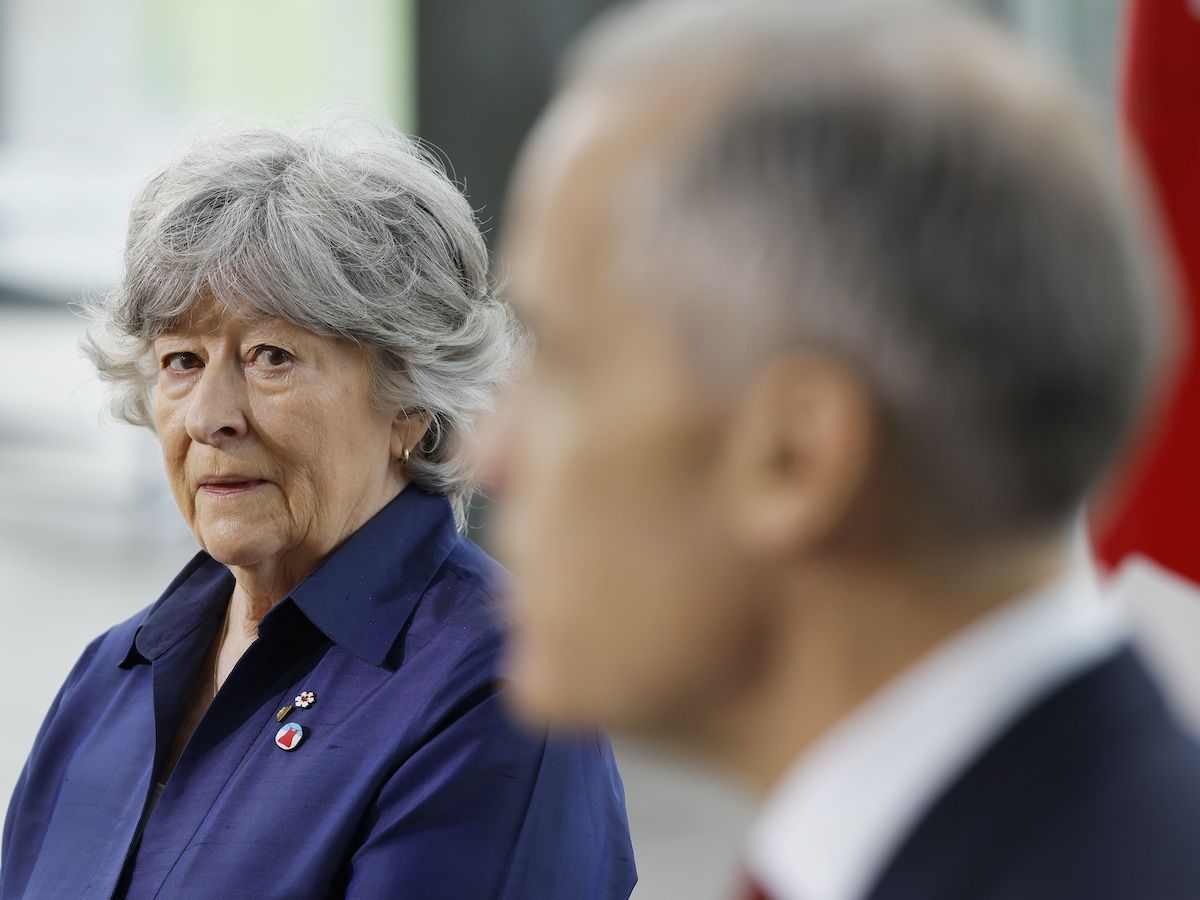
As such, Teper concludes the Jewish community is now on its own, in light of “betrayal after betrayal.” Of the federal funding package for security, “they threw us a little bone.”
“We don’t need little consolation prizes,” he said. “We don’t need nickels and dimes thrown at us.”
He said it’s time Jews took matters into their own hands. “It’s all up to us now,” said Teper. “I would like to see the community proactively mobilized, for sure.”
“I think that what we’re failing to do is show up in large numbers … I think that this is partially the failure of our own leadership. When the encampments went up, what was the reaction? Hand-wringing and feeling terrible. But the number of people who actually showed up to confront the people involved in the encampment was minimal,” Teper told the Post.
“It’s just that our own numbers stay home. Maybe it’s exhaustion, but we’re not, to be honest, doing our part to defend ourselves. If we want to have standing in the community, it’s not going to be given to us. We have to stand up and demand it.”
Rabbi Yael Splansky, of Holy Blossom Temple — where Carney gave his speech — also encouraged individual action.
“Every peace-loving, democracy-loving Canadian ought to make antisemitism their concern, and make their voices heard by their own elected leaders,” she said. “The Jewish community has been doing this work for years, but we cannot do it alone. Because antisemitism has been allowed to seep into Canadian waters, only a groundswell response can turn back the tide.”
In a June 5 statement , the Centre for Israel and Jewish Affairs (CIJA), with cross-Canada signatories of United Jewish Appeal offices, said the next step is for Ottawa to “name the problem clearly … antisemitism in Canada is being driven in significant part by anti-Israel and antizionist hatred.”
Among their recommendations is to “ensure that terrorist organizations, their proxies, and their adherents cannot operate here.” They also demanded that “public funds do not support organizations or initiatives that promote hatred against the Jewish community. This must include addressing the weaponization of national institutions, including the Canada Revenue Agency and the Canadian Museum for Human Rights.”
Noah Shack, chief executive officer of CIJA, told the Post, “This isn’t a time to shrink back, but to further engage elected officials. It’s time for all of us to be active and make sure that they’re hearing directly from us, and that we are doing our part in the equation to push them to do their part.
“Regardless of what party they’re from, regardless of what part of the country you’re in, their job is to listen to you, and represent you in the parliament or the legislature or city hall.”
Our website is the place for the latest breaking news, exclusive scoops, longreads and provocative commentary. Please bookmark nationalpost.com and sign up for our newsletters here.
