
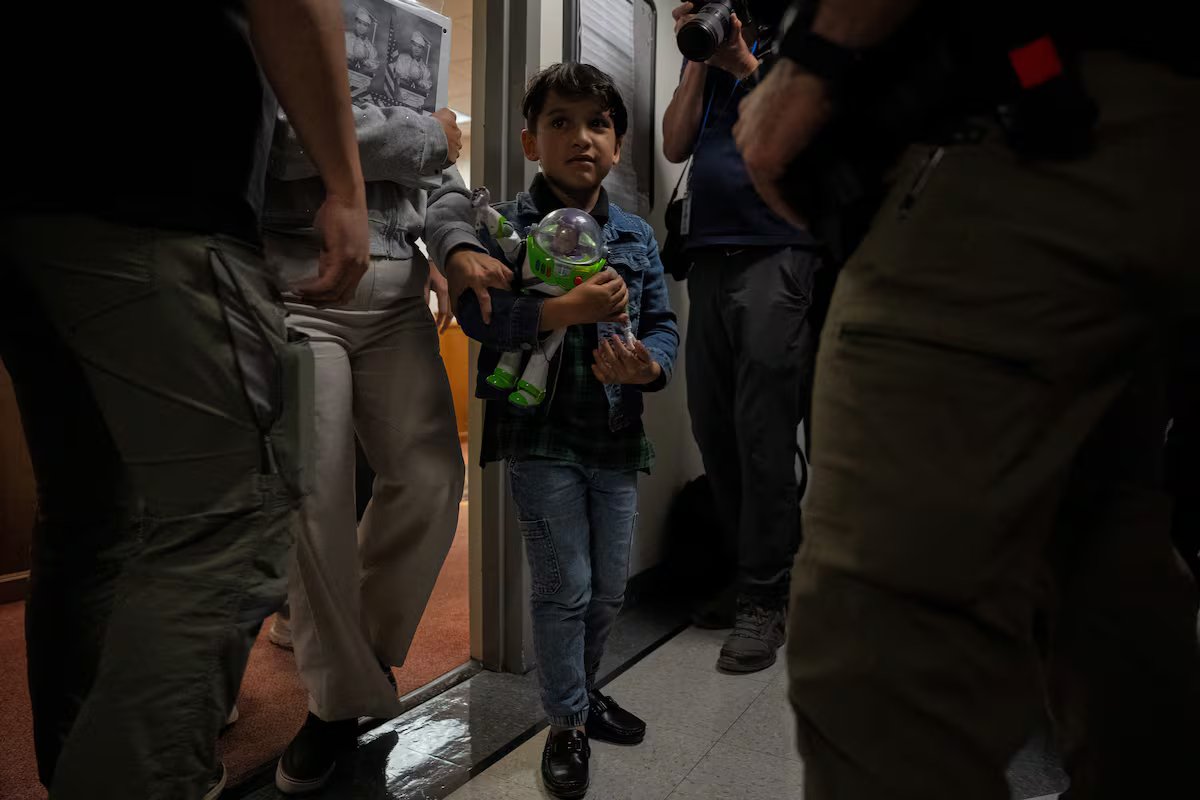
Infants and toddlers are also being targeted by immigration agents. An investigation by The Marshall Project and MS NOW found that at least 500 children under the age of three have passed through Immigration and Customs Enforcement (ICE) detention centers since January 2025, a surge that coincides with Donald Trump’s return to power and the resumption of the detention of migrant families.
The analysis, based on records obtained by the Deportation Data Project, concluded that between January 20, 2025, and March 2026, ICE held an average of 25 infants and toddlers in detention per day — a figure 10 times higher than that recorded during the final 12 months of the Joe Biden administration, when the average was fewer than three minors per day.
Researchers attribute the increase to the resumption of family detention pushed by Trump shortly after he returned to the White House. The measure included the reopening of the Dilley Immigration Processing Center in Texas, the main facility used to house migrant families with young children.
The investigation documents several cases of children who, according to their families, suffered physical and emotional consequences during their detention. Among them is Kaleth, a two-year-old who stopped eating for nearly two weeks after being separated from his father, and Amir, a one-year-old Russian boy whose parents say he spent four months in immigration custody and experienced setbacks in language development. The testimonies collected also describe difficulties accessing medical care, feeding problems, and signs of stress and isolation among the detained children.
The experts consulted by the researchers warn that the early years of life are a particularly critical period for brain development. Marsha Griffin, a pediatrician and professor at the University of Texas who specializes in migrant children’s health, stated that early childhood is “probably the most harmful time of their lives to have them in detention.” The expert argued that stress, uncertainty, and the disruption of essential routines can have lasting effects on children’s development.
The investigation also found that many children were detained for prolonged periods. Between January 2025 and March 2026, at least 175 infants and young children were held in custody for more than 20 days — the limit established by a judicial interpretation of the so-called Flores Agreement, which regulates the treatment of detained migrant children. During the final year of the Biden administration, no children under the age of three were detained beyond that time limit.
In addition to the emotional consequences, the testimonies collected describe recurring medical problems. Parents interviewed reported that their children suffered from fever, vomiting, diarrhea, and respiratory illnesses while in detention. Lawyers and organizations that have visited the facilities state that many parents reported difficulties in obtaining timely medical care for their young children.
ICE rejected the allegations regarding conditions at its facilities. The agency stated that families receive adequate food, drinking water, and medical care, and maintained that it works to release minors as soon as possible. CoreCivic, the company responsible for operating the Dilley center, also stated that it provides formula, appropriate food, and clean water for infants and young children.
However, lawyers and migrant rights organizations dispute these claims. Some argue that detention conditions are incompatible with the needs of children at a critical stage of development, regardless of the services available within the facilities.
The research is published amid growing concern about the impact of immigration policies on minors. Another recent study by the Brookings Institution estimated that more than 200,000 children were affected by the detention of at least one of their parents between January 2025 and April 2026.
Although many of the children mentioned in the study have already been released along with their families, the researchers note that it is still too early to determine what the long-term consequences will be. The main unknown, experts argue, is what effects the experience of detention will have on hundreds of minors who went through one of the most important stages of their development within the U.S. immigration system.
