
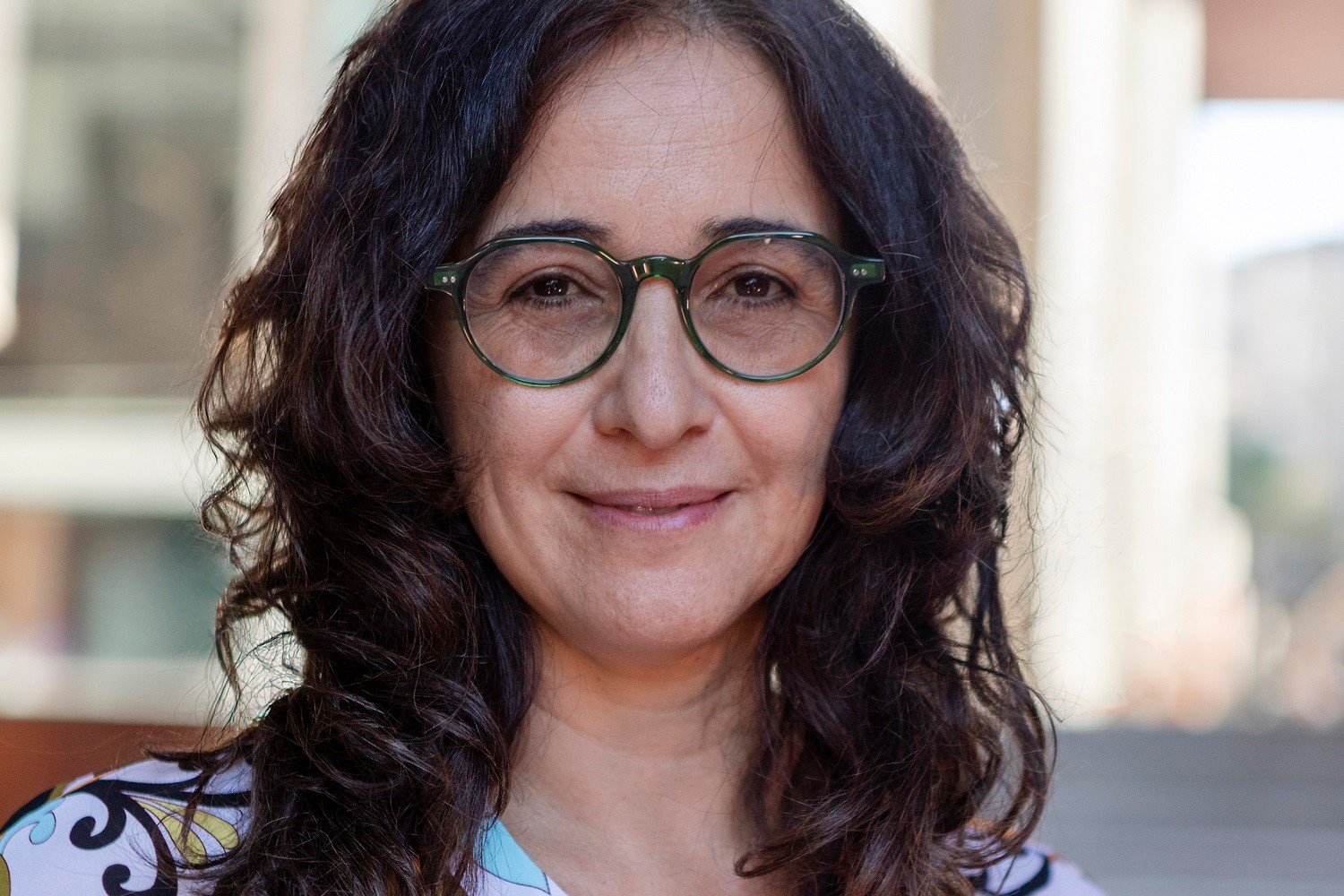
“It’s always a bit of a mystery how you capture a specific tone – it’s mysterious in literature, and it’s just as mysterious in cinema”
– The Chilean director adapts Roberto Bolaño’s The Third Reich with her latest film, in which the shadow of Pinochet’s dictatorship hangs over a man’s seemingly carefree holiday
(© Andrés Larraín Araneda)
Alicia Scherson’s Summer War, which premiered in Tribeca’s International Narrative Competition, adapts Roberto Bolaño’s novel The Third Reich. The director reshuffles the novel’s context and narrative pieces to create a unique result with a distinctly Chilean reference point, following Udo Berger, a wargame-obsessed man on holiday with his girlfriend.
Cineuropa: I’m curious about the transposition of the novel’s German characters in Spain into American characters holidaying in Chile, and the corresponding shift in historical context. Which thematic elements did you feel were most important to preserve, and where did you feel you had more freedom to make changes?
Alicia Scherson: What I really wanted to preserve was the atmosphere, the tension and the tone of the book – and, of course, the plot. The plot remains exactly the same. However, I felt that bringing the story to Chile added an extra layer without altering the plot, simply by setting it in 1989 – the year the book was written, which was the final year of the dictatorship there. I felt this setting was highly coherent with the tone of the story, as well as with Bolaño’s subsequent body of work.
Initially, I started without a voiceover, but I felt the film lacked Udo’s distinct perspective. His way of seeing things is incredibly strong in the book and it proved very hard to get rid of. I decided to adapt Udo’s journal entries [from the book] into a voiceover. It’s not used extensively, but I had a lot of fun with it because writing those passages was a great experience.
The film feels very novelistic in the way it entwines its different characters. As a writer, how did you approach structuring the film as an adaptation and were there different ideas you explored along the way?
The book is structured as a journal – a personal diary written by the main character. It unfolds chronologically, beginning in a carefree manner as he describes his holiday. That was the first structural element I wanted to capture: the natural arc of a holiday, where you don’t know anyone at first, then gradually meet some people, get into trouble and so on. There is also the progression of the game itself: first, he needs a table, then he sets up the board and finally, he finds a rival.
Additionally, the book’s structure is split right down the middle. I initially tried to avoid that. In the end, I embraced splitting the narrative into two movies. Of course, it’s a bit challenging for the audience because they spend about an hour with one film, and then the main character is left completely alone. All the characters you grew to like in the first half are gone and you almost have to start over. I think that’s challenging, but I like that challenge.
Characters drift in and out of the story, often reflecting Udo’s perception – and sometimes his fantasy – of them. Do you have any particular anecdotes about the casting process, or about ensuring that each character felt distinct?
The most complicated casting challenge was finding Udo. I was terrified because the entire film depended on finding someone who could balance this obsessive, irritating personality with a sense of tenderness, so that audiences would still like him as a character. That was pretty tricky to pull off. Once we cast him, the rest of the process was smooth. One thing I enjoyed noticing was that the characters of Lobo and Cordero are direct parallels to characters in my previous Bolaño adaptation, Il Futuro, where they are called Libyan and Bolognese. You realise that Bolaño originally wrote these characters for this book, but because it was not published during his lifetime, he transposed them to Italy for that other novel.
Despite the politico-historical shadow that lingers over Udo’s holiday, he retains a playful, happy-go-lucky attitude. What were you thinking about most when it came to cultivating the tone of the novel?
As I mentioned, tone was my main concern. It’s always a bit of a mystery how you capture a specific tone – it’s mysterious in literature and it’s just as mysterious in cinema. Of course, casting and performance play a massive role, as does the dialogue, which has to embody that precise mixture while also being funny at times. It was wonderful to see the audience’s reaction when they started laughing, allowing themselves to laugh despite the weight of the subject matter. For me, it’s very important to maintain a certain lightness – lightness in the best sense of the word, where you can detach yourself slightly and recognise the inherent ridiculousness of the situation, like this man-child playing war games.
Could you speak a bit about the production design in the film, which plays a huge role in cementing the sense that we’re right on the cusp of the 1990s?
I work with the same production designer on all my films, Sebastián Muñoz, who is also Chilean. We have a really strong connection. And, of course, you need a great director of photography – Alejo Maglio, in this case. Otherwise, it simply doesn’t work. One inspiration for the look of the film was an American photographer we discovered named Don Terpstra. He went to Chile in the ’80s and took photos by the beach, which we used heavily as visual references. In terms of aesthetics, we mixed an ’80s look with a ’40s aesthetic, which evokes the Second World War and films from that period. The hotel is much more classical – as though it has come straight out of the 1940s. It is as if two eras are clashing and coexisting: a classical 1940s wartime film meets the saturated pop imagery of the late 1980s, filled with swimsuits and sun-tanned skin.
