
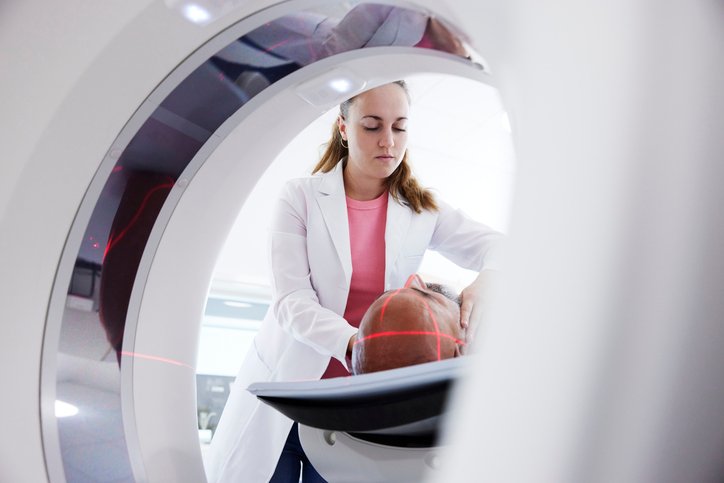
A growing number of Americans are paying thousands of dollars out of pocket for elective whole-body MRI scans, drawn by the promise of catching fatal diseases early.
The companies offering these MRIs — including Prenuvo, SimonMed and Ezra (part of Function Health) — have collectively scanned more than 100,000 patients, as well as garnered hundreds of millions of dollars in venture funding.
These scans don’t come cheap. Prenuvo charges $2,499 for a full-body scan, while SimonMed’s whole-body MRI starts at around $1,299 depending on location. Ezra has offered scans starting at $1,350 for a partial body scan and upward of $2,500 for a full-body option. None of these are covered by insurance — because no major medical society endorses this practice, payers are under no obligation to reimburse them.
Some radiologists and healthcare researchers are calling on people to think twice before paying for these elective tests. Last month, Dr. Matthew Davenport of the University of Michigan and Dr. Scott Reeder of the University of Wisconsin published an editorial in JAMA arguing that this fast-growing industry is marketing a product without being able to prove that the benefits outweigh the harms.
Drs. Davenport and Reeder — vice chair of radiology at Michigan and chair of radiology at Wisconsin, respectively — believe that the intuitive appeal of early detection is obscuring a more complicated and potentially dangerous reality for the average healthy person who undergoes these scans. They think the scans are more likely to trigger harmful downstream procedures than to catch anything that needs catching. Many physicians and researchers agree with their editorial, saying that patients aren’t being given the full picture about what a positive finding on one of these scans actually means for their health or their wallet.
The companies selling elective whole-body MRI scans deny the charge that the downstream risks outweigh the benefits.
They argue the JAMA piece uses an overly narrow framework that focuses on cancer findings while excluding the broader range of other conditions these tests can detect. One leader at a preventive MRI company also noted there are significant quality differences between providers — and that lumping together scans done on different machines with different protocols by radiologists with varying expertise has led to misleading conclusions about the practice as a whole.
Buyer beware
Dr. Davenport is quick to point out that he’s not anti-screening. He fully supports colonoscopies, mammograms and the other evidence-based tests that have been proven to save lives through clinical trials.
But he thinks the math stops working when you take an extremely sensitive imaging test and apply it to a large population of people with no particular risk of serious disease.
“About 20-40% of these tests, when performed, are going to find something — and that something creates uncertainty that then drives a bunch of additional testing and interventions and such to try to investigate what it is, or someone is signed up for lifelong surveillance of the finding. And there’s just no convincing evidence that it improves either the quality or the quantity of somebody’s life,” Dr. Davenport remarked.
He also noted that preventive MRI companies don’t have much incentive to conduct the trials needed to prove these scans save lives.
If a randomized study proved that this model of testing works, then payers would be required to cover them — and the pricing would collapse. And if the trial fails, then the product is dead, Dr. Davenport explained.
He noted that early detection is not automatically good. For example, South Korea launched a thyroid cancer screening program in the 2000s that increased diagnoses 10-15 fold but saved zero lives.
The cancers being detected were low-risk and slow-growing, so treating them — which involved removing thousands of thyroid glands, causing nerve damage, hormone deficiencies and surgical complications — provided no survival benefit whatsoever, Dr. Davenport said.
Research on ovarian cancer screening offers another cautionary data point, he added. Screening programs can detect cancers that are missed among unscreened patients — but these programs fail to decrease mortality while sending women into unnecessary surgery. Such surgeries have a complication rate of around 15%.
Dr. Davenport was careful to note that none of this is an argument against patient choice. He believes that people have the right to make their own medical decisions — what he objects to is people making those decisions without accurate information.
“My message to the average consumer would be: they are not selling novel intellectual property. This is not a unique test that only these companies have access to. The testing that they’re offering is available right now at basically every healthcare system — what they’re offering is a willingness to ignore baseline risk in the decision to screen,” he declared. “They’re selling a willingness to not take responsibility for the downstream complications because the test is not evidence-based — it’s basically just a belief that it may work.”
He contrasted preventive MRI screening with GLP-1 drugs, both of which rely heavily on consumer marketing and celebrity endorsers.
Stars including Kim Kardashian, Gwenyth Paltrow and Paris Hilton have promoted Prenuvo, similarly to GlP-1s being hawked by the likes of Serena Williams, Oprah Winfrey and John C. Reilly. However, the pharma companies selling GLP-1s still had to go through rigorous clinical testing to prove efficacy before going to market. Diagnostic tests face no such requirement, Dr. Davenport noted.
The downstream problem
Dr. Reeder — Dr. Davenport’s co-author for last month’s JAMA piece — said that the journey from scan to diagnosis is rarely as straightforward as whole-body MRI companies’ marketing suggests.
He painted the following picture: say the scan turns up an ambiguous finding, such as an abnormality in the kidney or pancreas. The provider doesn’t know what it is, so they order a biopsy. Maybe the biopsy comes back benign, or maybe it causes bleeding that lands the patient in the hospital. Or perhaps it finds a low-grade cancer that would never have shortened the patient’s life — but now they had a kidney removed.
That type of outcome isn’t an edge case to Dr. Reeder — he thinks it’s a foreseeable and preventable result of overscreening.
In addition to his concerns about downstream harm, Dr. Reeder also has some qualms about resource allocation.
To him, it begs the question of what it means for the healthcare system, and for society, when healthy, wealthy people consume thousands of dollars of diagnostic capacity that could be directed elsewhere.
“Think about the number of screening mammograms that you could do with $4-5,000 for patients who don’t have health insurance. The number of lives that you probably could save? Quite a few. So it’s an interesting allocation of resources,” Dr. Reeder remarked.
Screening isn’t always saving
Few physicians have spent more time studying what happens when screening programs go wrong than Dr. Otis Brawley, an oncologist and outcomes researcher at Johns Hopkins University. He agreed with Drs. Davenport and Reeder, arguing that whole-body MRI companies have no incentive to run trials and likely wouldn’t be able to anyway.
A mortality-endpoint trial requires 50,000-150,000 participants and a study period of 10-30 years, Dr. Brawley noted. He added that he doubts small screening companies are capable of funding those lengthy trials. It’s also easier and faster to prove patient harm than to prove benefits — another reason Dr. Brawley cited as to why investors would prefer no trial at all.
What troubles him most, though, isn’t what happens to the person getting the scan. Dr. Brawley thinks these screenings clog up the broader healthcare system’s resources, making wait times longer for people who are actually sick.
“You end up with a lot of people consuming healthcare, and the folks who get elbowed out of the system are the poor folks. So you end up increasing disparities,” he declared.
Overall, Dr. Brawley sees the whole-body MRI debate as a familiar story. In his decades of research, he has repeatedly documented how screening programs that seemed intuitively worthwhile caused net harm once subjected to scientific scrutiny, but the long-held belief that earlier detection is inherently better still resonates with most physicians.
To Dr. Brawley, the overscreening problem runs deeper than any single program.
“Early detection is a message that is so in the fabric of our country, it’s like a prejudice, meaning that we have difficulty questioning it,” he explained.
Dr. Brawley believes preventive MRI companies have benefited from the widespread belief that detecting disease as early as possible is always better — and he thinks that assumption is these companies’ most powerful sales tool.
Another healthcare expert — Dr. Ateev Mehrotra, a physician and researcher at Brown University — seconded this view.
Dr. Mehrotra thinks the whole-body MRI industry’s staying power comes down to a basic failure of intuition. Most people can easily grasp why finding a problem early might save their life — but their minds usually don’t then jump to how that same discovery could set off a cascade of procedures and complications that might leave them worse off than if they’d never known.
Intuitively, the harm side of the equation just doesn’t compute the same way the benefit side does.
Costs could ripple
Dr. Mehrotra stopped short of saying that whole-body MRI screening definitely causes net harm — but in the absence of evidence showing otherwise, he wouldn’t recommend it.
“My hypothesis or guess would be that it’s likely harmful, because in many populations who are otherwise feeling well, the false positive rate usually grossly exceeds the true positive. In other words, most of the stuff you’re going to find on this test is going to end up being fine, and it’s just going to lead to a lot of other testing, etc.,” he remarked.
In order to get better answers on whether this method of screening does more harm than good, Dr. Mehrotra is calling for NIH-funded research rather than expecting companies to do it themselves — which he said would make “no sense” from a business perspective.
He also pushed back on the idea that all of this simply boils down to a question of personal choice. When a cash-pay scan turns up something ambiguous and sends a patient into the diagnostic system, the costs of everything that follows typically plays into the broader system, Dr. Mehrotra noted.
“This isn’t just some rich person frivolously spending their money. Potentially, it also has societal impact,” he declared.
A different view
Not surprisingly, the companies selling whole-body MRI scans see things very differently. Dr. Dan Durand, chief medical officer of Prenuvo, the market leader, noted the JAMA article was written by authors who don’t provide full-body MRIs.
“I think it’s hard to opine on a brand of medicine that one doesn’t practice to begin with, and I think the opinion piece is littered with those misunderstandings,” Dr. Durand stated.
In Dr. Durand’s view, Drs. Davenport and Reeder center their argument around whether whole-body MRIs can find cancer in low-prevalence populations. By focusing only on cancer, he argued that they are misrepresenting what these scans actually do.
Preventive MRIs don’t just look for cancer — Dr. Durand pointed out they can also identify fatty liver disease, aneurysms, cardiac abnormalities, early signs of MS and other conditions that have nothing to do with cancer.
He also took issue with how the editorial defines “false positive,” saying that the authors use the term so broadly that it sweeps in real, actionable diagnoses simply because they aren’t cancer.
Precancerous lesions, actively growing benign masses and fatty liver disease would get counted as harmful noise under this framework, even though surgeons regularly operate on these kinds of findings, he noted.
As for evidence, Dr. Durand argued Prenuvo has a strong interest in generating studies to back up its model. He said the company has published 50 papers — though none of them are randomized controlled trials with mortality endpoints, which is the standard bar for proving that a screening test saves lives.
Still, Dr. Durand thinks the critics are trying to shut down a promising technology before the evidence has had time to develop — a mistake he said has been made before in medicine. He drew a comparison to mammography, which faced fierce opposition in its early years before accumulating the evidence base it has today.
“If somebody had been writing this type of stuff about mammography in the 80s or 90s, would we have access to it today?” Dr. Durand asked.
He believes Drs. Davenport and Reeder are conflating the absence of proof with proof of absence.
Context is everything
Dr. Daniel Sodickson — chief medical scientist at Function Health, which owns Ezra, another whole-body MRI provider — pointed out that this debate often overlooks the fact that there is no single standardized definition of “whole-body MRI,” as well as the significant differences in how imaging is performed and integrated into care.
In a statement emailed to MedCity News, Dr. Sodickson distinguished Function’s approach from the “scan everything and flag everything” model that critics are targeting. Rather than looking at the whole body indiscriminately, the startup focuses on highest-risk cancers across a select group of organs and returns a risk-stratified assessment rather than a raw list of findings, he explained.
“We are also developing AI algorithms that will incorporate multifaceted longitudinal context to reduce false positives still further, and we are committed to documenting outcomes and building evidence around the value of earlier disease detection,” Dr. Sodickson wrote.
Another leader in the whole-body MRI space, Dr. Sean Raj — chief medical officer and chief innovation officer at SimonMed, which pioneered this type of scanning more than 20 years ago — noted that the JAMA editorial did not analyze preventive MRIs across a wide range of settings. The op-ed references the industry broadly rather than calling out specific companies by name.
“All these conclusions are based on different scanners, different protocols, different reader expertise, different workflows,” Dr. Raj said. “When you combine all this into one study, it just leaves you with a completely mixed message.”
Dr. Raj noted that SimonMed applies AI at every stage of its screening process, as well as uses subspecialty-trained radiologists rather than one generalist reading the entire body. He believes this combination produces fewer false positives than what the JAMA article captures.
He also pointed to patients who came in asymptomatic and left knowing they had a silent aneurysm. Those are the kind of findings he thinks no amount of academic skepticism can easily dismiss.
But in the eyes of researchers like Drs. Davenport, Reeder, Brawley, and Mehrotra, it isn’t clear if individual stories like this — however compelling — can hold up against population-level data.
To them, the only way to know whether whole-body MRI screening saves more lives than it harms is to conduct the trials. But right now, nobody with the means to do so has a clear incentive to run those trials.
Until that changes, American consumers will continue paying out of pocket for a product that might help them or might harm them — and has not yet been proven to do either definitively.
Photo: Solskin, Getty Images
