
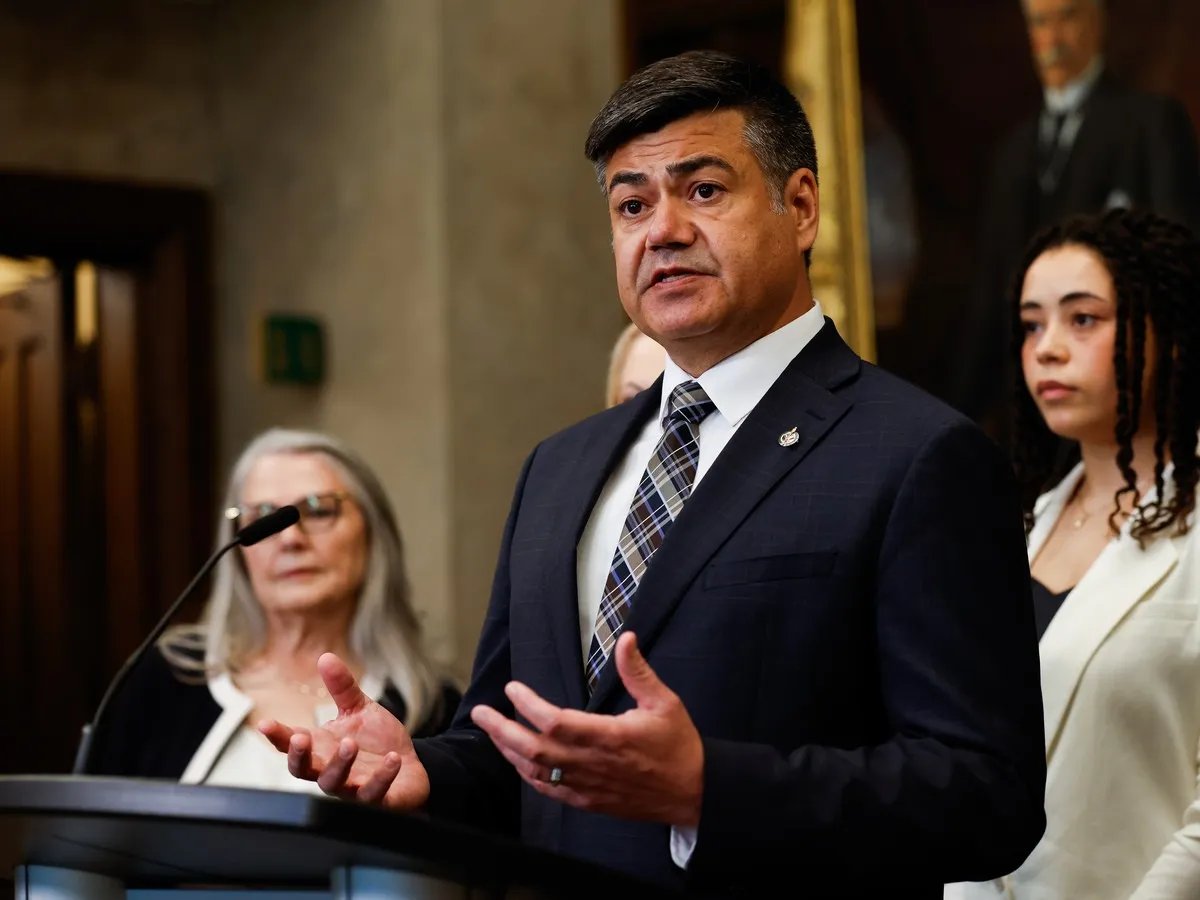
OTTAWA — It took Corey Tochor three years to get to this week.
The Conservative MP turned heads on Parliament Hill when, in the midst of the House of Commons’ final dizzying days of passing legislation before adjourning for the summer, he emerged with an idea: What if psilocybin and psilocin, the active ingredients in what are otherwise known as magic mushrooms, were easier to access for those using it in therapy?
“I didn’t get involved in politics for this,” Tochor told National Post in an interview. “But Thomas came into my office and really tweaked me that, wait a minute, there might be something more to this.”
Thomas Hartle was a constituent of the Saskatoon MP’s who became the first person in Canada to legally use psilocybin, which he did as part of therapy to deal with the anxiety stemming from a life-altering Stage 4 colon cancer diagnosis.
Psilocybin remains illegal in Canada, so the federal health department must grant special permission for someone to access it legally. Initially, patients and prescribers had to apply for an exemption under section 56 of the Controlled Drugs and Substances Act, which Hartle first did.
By 2022, Health Canada added psilocybin, along with MDMA, to its list of drugs that can be accessed through its “special access program,” due to “the growing interest in the use of psychedelic-assisted psychotherapy.”
Hartle successfully applied to obtain psilocybin through that program, designed for drugs not legally approved in Canada but that can be provided under certain circumstances. He received three doses, which Hartle took over a series of months.
However, the second time he applied to receive additional doses, he was denied.
That is a common experience among patients, according to John Gilchrist, a spokesman for TheraPsil, a not-for-profit advocating for psychedelic-assisted psychotherapy, which helped advise Tochor on his bill, after first working with Hartle, who died in 2024.
The group also has taken the federal government to court over the issue of allowing access to psilocybin, winning a Federal Appeal Court case against Ottawa last year for denying an exemption request for health-care providers that sought it for training.
While Health Canada states that clinical trials involving psilocybin “have shown promising results,” as advocates and other researchers tout its potential in treating anxiety and depression, including in a palliative care setting, as well as for substance-use disorders, the department cites the risks associated of having a “bad trip” with the hallucinogen that alters the mind.
Gilchrist says psilocybin-based therapy is practiced where a patient takes a dose under supervision, with talk therapy staged before and after the experience.
He says the process for individuals applying to use psilocybin under Health Canada’s program requires that a patient work with a doctor to prove they have exhausted all of their treatment options, including antidepressants and listing out what medications they have taken in the past.
“We’ve even seen stories and cases where Health Canada tells a terminal patient … you want to use psilocybin, have you tried electroconvulsive therapy first?”
Once an application is submitted, Gilchrist says waiting to receive a response can vary between weeks to months. In the case of one terminal patient, he says the wait took upwards of 11 months only for their application to be denied.
Gilchrist contrasts the experience individuals have seeking legal psilocybin for therapy to the explosion of mushroom retailers that have popped up in major cities geared towards recreational use that Canadians can walk in and out of any time.
“The cruel irony is that the only people who can’t get the safe supported access that they need are the patients who actually need psychedelics the most,” he said.
Tochor, who hails from the province where the term “psychedelic” was coined by a British psychiatrist working at a former mental hospital in Saskatchewan known for its research in the field, met Hartle after he was cut off from his legal access to psilocybin and resorted to travelling to the Caribbean three times a year to continue his therapy.
From there, the MP says he has met many others like him who saw similar benefits from psilocybin-based therapy, as well as researchers and doctors, including taking two trips to Washington over the past year, one to a summit on psychedelic medicine where he spoke.
Tochor’s pitch in his private member’s bill, which he named “Thomas’ Bill,” is to allow doctors to directly prescribe patients with psilocybin by seeing it regulated as a narcotic, as opposed to its current label as restricted, which requires Health Canada approval. He also wants to see psilocybin and similar submissions prioritized for review. He is not proposing legalizing it for non-therapeutic treatment.
PsyCan, the association representing companies involved in psychedelic-assisted therapies, said it has data showing that the number of approvals for psilocybin by Health Canada’s program have dropped dramatically, while interest and wait times have only increased.
Alberta is the only province that has ushered in a regulated path for those practicing psychedelic therapy, a change made under its United Conservative Party government.
Much of the focus of campaigns to ease access to psilocybin and other psychedelics in the U.S. have revolved around military veterans using it to treat post-traumatic stress disorder.
Mega-famous podcaster Joe Rogan has been among one of the biggest proponents. In April, U.S. President Donald Trump also signed an executive order aimed at boosting research in the area of psychedelics and mental illness as well as ordering that the Food and Drug Administration take additional steps to facilitate simpler access.
Tochor points to how Democrat and Republican lawmakers have regarded the issue as non-partisan, one he hopes will be the approach within Canada. He has some early hopes after he says Government House Leader Steve MacKinnon agreed to work with Conservative House Leader Andrew Scheer to get Tochor’s bill on the agenda before the House rose for summer.
As for why he believes greater access to psilocybin has not yet been contemplated in Canada, he points to stigma being a barrier.
“It took me three years (to feel) comfortable enough to bring this forward,” he said. “At first blush, you know, Conservatives are against drugs, hard drugs that are toxic, that are addictive. We got to get them off our streets.”
Tochor sees psilocybin as medicine, which researchers say does not show signs of being addictive and is non-toxic.
“The war on drugs made an error, including psilocybin in their efforts to keep drugs off our streets, and I’m doing everything in my powers to get Thomas’ bill passed and to break that stigma, so that we can talk about innovative treatments, such as psilocybin counselling,” he says.
One of the reasons Tochor felt comfortable bringing his initiative forward was not just his constituent’s experience and the ongoing crisis of mental health and addictions, but stories he says he heard from his own Conservative colleagues.
One of those colleagues shared with him an experience about a relative that was “missing for over a decade.”
“But after one session of psilocybin counselling in Toronto, they got their sister back.”
Although he hopes to see his legislation passed, a rarity when it comes from an opposition MP, Tochor says he is open to seeing Liberals make the regulation change themselves.
“We will carefully review the bill and its assessment before providing further comment,” wrote Alexandre Bergeron, a spokesperson for Health Minister Marjorie Michel.
“Our government remains committed to working with all parties to better protect the health of Canadians.”
Gilchrist says their group receives “dozens” of emails from people every week asking for help finding a psilocybin prescriber and therapists.
He admits it was a bit surprising to see advocacy for better access come from a Conservative, a fact that he says counters any argument that what is being proposed amounts to “a fringe left-wing drug agenda narrative that opponents might reach for” or see psilocybin as “some hippie dropout drug.”
“What’s more intrusive than a government telling a dying person that they can’t access the medicine that their doctor has recommended?”
National Post
Our website is the place for the latest breaking news, exclusive scoops, longreads and provocative commentary. Please bookmark nationalpost.com and sign up for our daily newsletter, Posted, here.
