
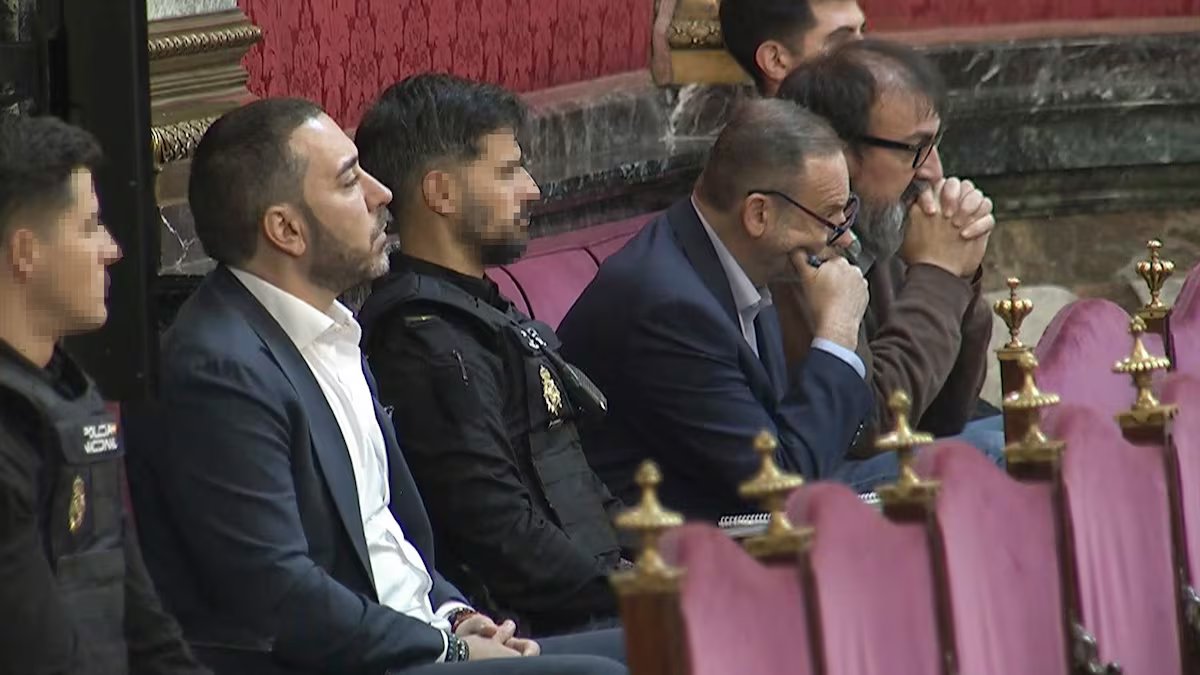
Spain’s Supreme Court has delivered a decision in the first trial of the so-called Koldo case, focused on alleged corrupt practices in the public purchase of facemasks during the Covid-19 pandemic. The court’s Criminal Chamber has sentenced José Luis Ábalos, who was the minister overseeing the department in charge of the contracts, to 24 years and three months in prison. Two other key figures in the case, former ministerial adviser Koldo García and businessman Víctor de Aldama, were sentenced to 18 years and a half and four years and a half, respectively, for running “a criminal organization” whose aim was to obtain a profit “by virtue of the office held by Ábalos.”
The decision was handed down unanimously after 14 hearings in which more than 70 people testified, including public officials, government employees, businesspeople, expert witnesses, members of law enforcement and associates of the defendants, who were found guilty of bribery of public officials, embezzlement and influence peddling.
The court agreed with prosecutors on nearly the entire chain of crimes with which the defendants were charged, including the awarding of a contract for the supply of 13 million face masks to a company linked to Aldama; a monthly payment of €10,000 for Ábalos’ “fixed expenses”; the hiring of two women with ties to Ábalos for jobs in public companies; one of these women additionally had her apartment payments covered by the criminal association, which also dabbled in real estate in Madrid and Marbella, among other activities.
The ruling will be decisive for the other offshoots of the Koldo case, which has put the Socialist (PSOE) government of Pedro Sánchez on the ropes, ending not only the career of Ábalos — who also served as the PSOE’s organization secretary, a top post — but also that of his successor, Santos Cerdán. The sprawling investigation has extended into the alleged rigging of public works contracts in exchange for commissions, and into allegations of cash payments to the PSOE.
The minority government is also dealing with the fallout from another high-profile probe into former prime minister José Luis Rodríguez Zapatero, also a Socialist, who is accused of using his influence to secure a government bailout for a small failing airline. And in a separate case, a judge this past weekend decided to bring corruption charges against Sánchez’s wife, Begoña Gómez, and ordered her to surrender her passport.
For now, despite the pressure from the opposition, Sánchez insists he will not hold early elections. Spaniards are scheduled to vote in 2027.
Sign up for our weekly newsletter to get more English-language news coverage from EL PAÍS USA Edition
