
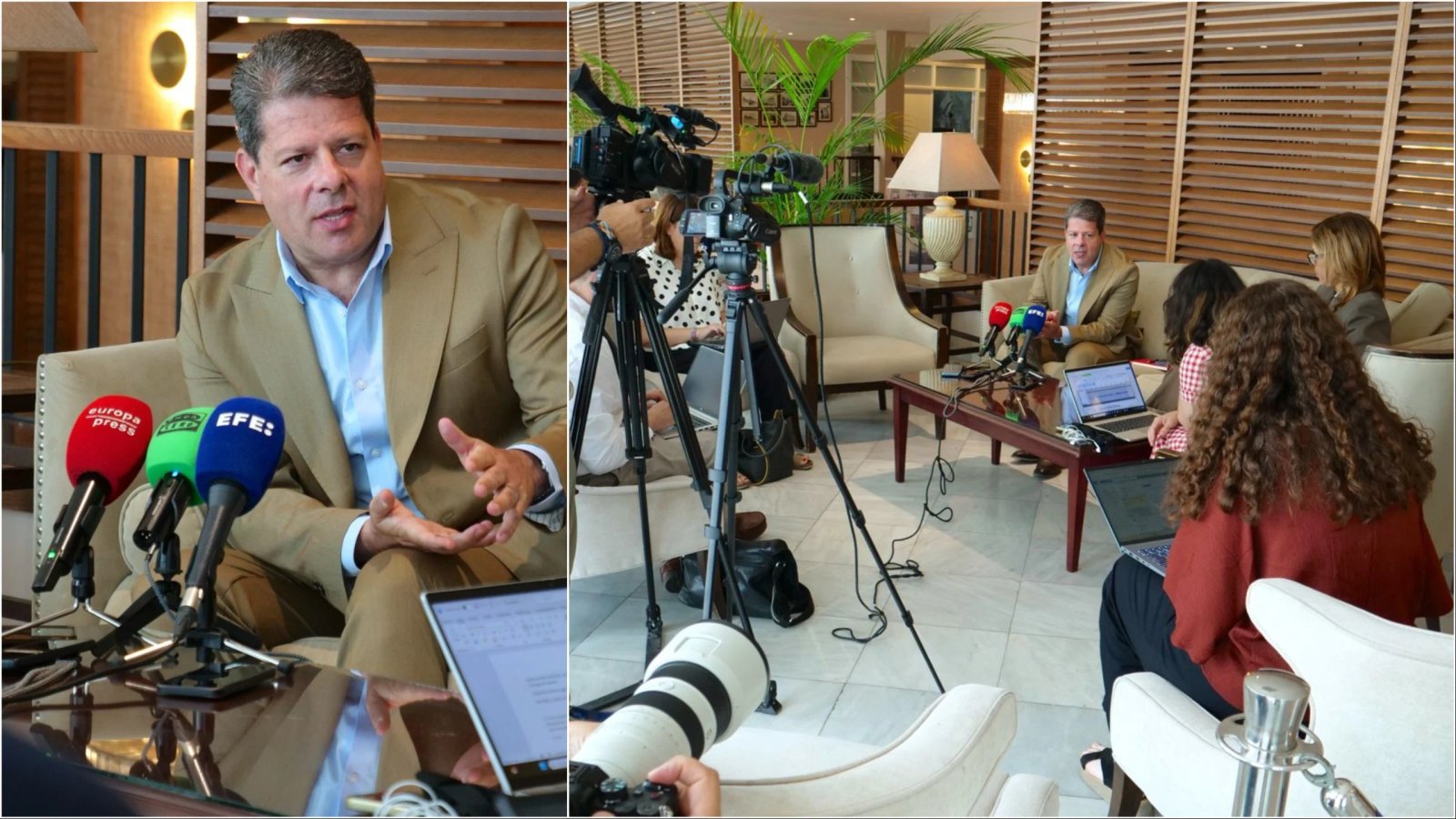
GIBRALTAR’S Chief Minister met the Spanish press last week in the iconic Rock Hotel for a personal briefing on what to expect once the border comes down.
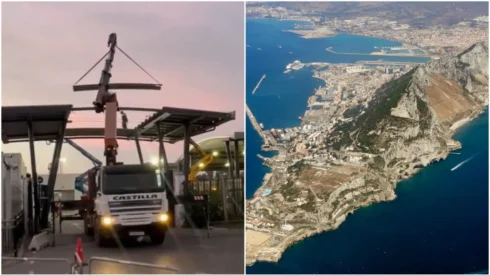
Wrecking teams on both sides of the frontier are in a race against time to dismantle the historic border fence before a putative date of July 15 to commence the open border.
Fabian Picardo greeted the assembled journalists alongside possible successor Gemma Arias-Vásquez and fielded questions on a number of topics of keen interest to Spanish audiences.
READ MORE: Spain begins tearing down border infrastructure with Gibraltar as frontier opening gathers pace
‘The Rock is not a military base’
Picardo rejected the term outright. He said Gibraltar is a British Overseas Territory with a UK Armed Forces presence, not a military base in the way Spain often describes it.
He drew a contrast with Britain’s sovereign base areas in Cyprus, where military personnel and their families actually live on site. Gibraltar, he said, is something else entirely.
Picardo said he wants a fluid, positive relationship between British and Spanish forces as NATO neighbours, and hopes the treaty marks a turning point.
He was less willing to engage on detail. Asked about a hypothetical Moroccan soldier moving freely into Spain after being invited onto a British base, Picardo said it was ‘not my call’.

Signing date still unconfirmed
Picardo would not be pinned down on a concrete date to sign and ratify the treaty.
Spanish media have floated July 13 as the date the treaty is signed in Brussels, but he said it could be ‘earlier or later’. He said it ‘could be the 14th, or the week before’.
But he was firm that provisional application cannot begin before signature, with July 15 remaining the date everyone has committed to.
Security tightens as the fence comes down
New surveillance is going in too. Facial recognition cameras are being installed at the north of the airport and on Gibraltar’s main roads, Picardo said. Biometric checks will follow.
Anyone flagged on Interpol or UK and Gibraltar police databases can be identified and arrested immediately, he said. It marks a sharp change after decades of routine checks.
He also confirmed two Spanish Policia Nacional officers will join two Gibraltar officers on passport checks at the airport, the only place dual control will now apply.

Residency rules tighten
The scramble for residency has already begun. Applications surged from 1,000 a year to 3,000 in three months since the deal was sealed last June, Picardo said.
That is three times the normal volume, packed into a single quarter. Gibraltar has now tightened the rules.
New criteria require applicants to be under 55 and earning at least Gibraltar’s average salary, about €43,000 a year.
Older applicants can still get in. Picardo can use his own discretion if he judges their residency serves Gibraltar’s wider strategic interests.
But the message is blunt – Picardo said Gibraltar should not be treated as a side door into the Schengen zone.
PP and Vox: ‘foolish’ to reverse
Picardo saved his sharpest words for Spain’s right.
He said it would be ‘foolish’ for any future Spanish government to try to roll back the deal. Less mobility, he warned, means less shared prosperity for both sides.
Picardo said the PP’s opposition was inevitable, whatever the deal looked like, simply because it was not the PP’s own government that struck it.
He described relations with parts of the party as ‘frankly bad’.
He named former foreign minister Alfonso Dastis as someone who privately agreed the PP would have rejected any version of the text.
Vox drew a different warning.
Picardo was asked what would happen if Vox supporters tried to march on Gibraltar demanding Spanish sovereignty.
His answer was procedural – anyone wanting to demonstrate in Gibraltar needs a permit from the Royal Gibraltar Police, and doing so without one is illegal.
His closing message was aimed at critics on the Spanish right more broadly, not just Vox.
“Blame the PSOE for the deal all you like,” he said.
Just don’t strip away the fluidity and shared prosperity that people on both sides of the border will actually live with.
Click here to read more Gibraltar News from The Olive Press.
