
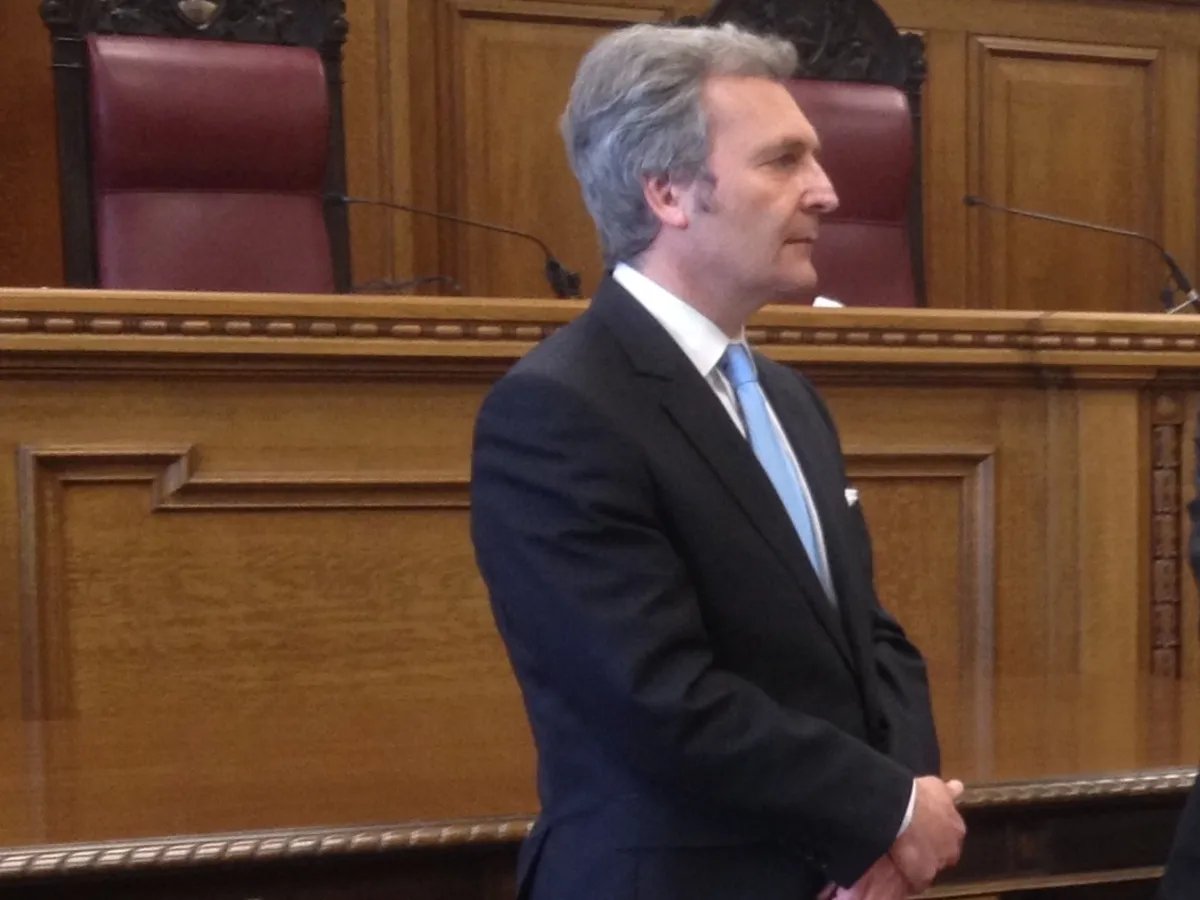
Manitoba Superior Court Chief Justice Glenn D. Joyal will be the newest member of the Supreme Court, Prime Minister Mark Carney announced Monday . Here’s what to know about him.
How long has he been in the running for this job?
Joyal had applied for the job in 2017 but the news was leaked to the media, creating a scandal at the time. Joyal later confirmed to The Canadian Press that he had withdrawn his application due to his wife’s health issues.
Where was he educated?
In his questionnaire for the Supreme Court job, published in part by the government, Joyal says he attended St. Paul’s Jesuit High School in Winnipeg before getting a BA at Simon Fraser University in Vancouver. He has also attended the Sorbonne in Paris and two language and cultural schools in Italy before obtaining a Bachelor of Laws at the University of Manitoba (plus a year at McGill in Montreal) and an MA in political science at Manitoba.
He also attended Oxford University’s doctor of philosophy program in 1995 but says: “Regrettably, after finishing my first year at Oxford, I was unable to complete my Dphil due to an unexpected family emergency and my eventual obligation to return to my duties with the Federal Department of Justice, which return was incompatible with the Oxford University’s residency requirement.”
How many languages does he speak?
In addition to English and French, Joyal speaks Italian due to his time in Italy.
What are some of his non-judicial talents?
Joyal refers to himself in his questionnaire as “an amateur playwright” who has had plays theatrically produced and published, and who has served on related boards and arts councils.
“My experience and association with the arts community has given me a special reference point and insight into Canadian diversity and indeed, the diversity of the human condition more generally,” he says. From my experience, the arts and the arts community — with its creativity, variety and energy — have the capacity to bring people together by posing relevant, daring and nuanced questions which, in turn, can encourage civic dialogue.”
He notes that his last staged play, 2005’s “Les Lions et Leurs Ponts” (The Lions and Their Bridges), explored themes surrounding the meaning of identity, community, inclusion and survival.
How deep are his Franco-Manitoban roots?
Joyal says his Franco-Manitoban roots go back more than 200 years. He notes that his ancestors include Marie Anne Gaboury, who was the first woman of European descent to travel to and settle in what is now western Canada, and also happens to have been the maternal grandmother of Métis leader and Member of Parliament Louis Riel.
Who is stepping down from the Supreme Court?
Joyal fills the vacancy left behind by Sheilah Martin, who announced in a news release in January that she would be retiring from the court on May 30. This was a day before her 70th birthday, but five years shy of the mandatory retirement age for Supreme Court justices.
Martin was born and raised in Montreal but practiced law in Alberta. Joyal’s appointment thus also maintains the traditional makeup of the Supreme Court, with three seats from Ontario, three from Quebec, two from the West and one from the East.
What did Carney say about the nomination?
“Throughout his career, Chief Justice Joyal has demonstrated the integrity, experience, and sound judgment that service on our highest court demands,”Carney said in making the nomination . “I am confident that he will serve Canadians with distinction.”
What did Sean Fraser have to say?
“Chief Justice Joyal has spent more than a decade leading the Court of King’s Bench of Manitoba, where he has shown the experience, integrity, and sound judgment this role demands,” said the Minister of Justice and Attorney General of Canada, Sean Fraser . “His work to improve access to justice, modernize court operations, and advance reconciliation reflects a deep commitment to the fair administration of justice.”
What happens next?
Members of the House of Commons Standing Committee on Justice and Human Rights will participate in a special committee hearing to learn more about the selection process from Fraser and from Maureen McTeer, Chair of the Independent Advisory Board for Supreme Court of Canada Judicial Appointments.
A question-and-answer session will then be held with the nominee, with members of the House of Commons Standing Committee on Justice and Human Rights and of the Standing Senate Committee on Legal and Constitutional Affairs invited to attend. The session will be moderated by Anne Levesque, associate professor at the University of Ottawa Faculty of Law.
Our website is the place for the latest breaking news, exclusive scoops, longreads and provocative commentary. Please bookmark nationalpost.com and sign up for our daily newsletter, Posted, here.
