
Mohammadreza Pakatchian said he chose to study aerospace engineering at Carleton University because it was a “great opportunity” to further his skills and knowledge.
In its acceptance letter to the Iranian, Carleton University offered him a scholarship, while an MP’s office spoke with immigration officials about his student visa.
But Canada’s national security agencies aren’t so keen on the 41-year-old doctoral student.
They have flagged Pakatchian as a security threat, warning that he is pursuing studies that will advance the Islamic Republic’s weapons programs.
Classified intelligence reports obtained by Global News allege that Pakatchian works for an Iranian company that has been sanctioned due to its role in weapons of mass destruction (WMD).
He is also associated with an Iranian academic whose research focuses on ballistic missiles and other military technology, the Canadian Security Intelligence Service wrote.
Further, Pakatchian obtained his master’s degree at an Iranian university known for its work on uranium enrichment, nuclear implosion and missile guidance, the CSIS report said.
Upon completing his studies in Ottawa, CSIS added, Pakatchian intends to return to the same sanctioned Iranian company that employs him to apply what he has learned.
According to the national security reports, Pakatchian, who said he began studies at Carleton online in 2023, “represents a danger to the security of Canada.”
His research interests “have the potential of being used for nefarious purposes,” a Canada Border Services Agency report added in its report on Pakatchian.
The “knowledge he will gain through his studies could be used to contribute to advancing Iran’s military and weapons systems,” it said.
On Feb. 17, immigration officials wrote that if Pakatchian continued pursuing his PhD at Carleton, “the expertise gained in Canada will likely be transferred and used to further Iran’s WMD programs.”
Pakatchian did not respond to emails, and his lawyer declined to comment, saying he did not have his client’s permission to speak.
The CBSA and CSIS would not comment on the case.
Nor did Carleton University respond to questions about why it accepted a doctoral student employed by a sanctioned Iranian company.
Mohammadreza Pakatchian is pursuing studies at Carleton University that Canadian official say will help Iran’s mass weapons programs.
Fedral Court
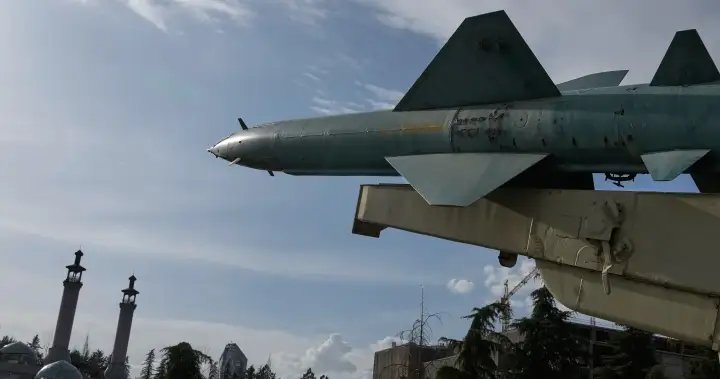
The U.S. and Israeli war that began in February showed that Iran’s military had amassed a significant stockpile of missiles and drones.
While the thousands of missiles Iran launched during the conflict were not state-of-the-art, they were a step above those it had used previously.
“The performance of Iran’s missile, and drone programs for that matter, in the war of 2026, was better than what we’ve seen in the past,” said Prof. Thomas Juneau.
A Middle East expert at the University of Ottawa, Juneau said that many of Iran’s missiles failed upon launch during 2024 fighting with Israel.
“There is a trend of improvement in the accuracy, but also in the reliability,” said Juneau, who teaches at the Graduate School of Public and International Affairs.
Matthew Levitt, a fellow at the Washington Institute for Near East Policy, agreed that Iran’s drones and missiles proved to be “highly developed” during the recent war.
“Authorities have long been concerned that Iranian scientists studying abroad may be trying to fill gaps in knowledge or components for these programs,” he said.
Juneau said he was not familiar with Pakatchian’s case, and it was possible the Iranian was pursuing studies in Canada for legitimate purposes.
“But it’s equally conceivable that he could be here for the very specific purposes of coming back to Iran to work on something directly or indirectly related to the missile or drone program,” he said.
“We know that Iran does that.”
Nonetheless, the deal U.S. President Donald Trump negotiated to end the war makes no mention of missiles, and he said last week it would be “unfair” not to allow Iran to possess the weapons.
Carleton offered scholarship
Carleton University, Ottawa, Oct. 25, 2017. THE CANADIAN PRESS/Adrian Wyld.
When Pakatchian first applied to pursue his PhD at Carleton University in 2022, the dean not only said he was “pleased” to accept him but also offered him $8,000 in scholarships.
The money was described as a way to offset higher foreign student fees, according to Pakatchian’s immigration file, which was released to Global News.
The records also show that Liberal MP Yasir Naqvi’s office spoke with Immigration, Refugees and Citizenship Canada officials about a student visa for Pakatchian.
Carleton University is part of Naqvi’s Ottawa Centre riding.
The MP’s staff said in a statement to Global News that riding offices routinely helped constituents with immigration-related matters but were “not privy” to information from CSIS or CBSA.
Records show the MP’s office dealt with Pakatchian’s case in July 2023 — four months after national security officials had identified Pakatchian as a security threat.
Marked Secret/Canadian Eyes Only, the papers describe international efforts to prevent Iran from obtaining the technology and materials needed to develop mass weapons.
The CBSA wrote that in 2018, Trump unilaterally pulled out of the Joint Comprehensive Plan of Action put in place in 2015 to stop Iran’s nuclear program.
In response, Tehran resumed “proliferation activities, including amassing a stockpile of enriched uranium and installing more centrifuges,” the CBSA wrote.
Trump’s actions left sanctions as a remaining curb on Iran’s mass weapons, and among the entities targeted was MAPNA, where Pakatchian had worked since 2009.
Canada had sanctioned MAPNA under its Special Economic Measures Act in 2016, citing the company for its “grave breach of international peace and security.”
Pakatchian is a MAPNA designer of axial compressors, which power jet engines and have both commercial and military uses, according to the CBSA.
When he applied for a student visa to attend Carleton, he named Mahmoud Mani, a professor at Amirkabir University in Tehran, as a reference.
Mani’s research is “unequivocally and overwhelmingly focused on military end-use applications,” such as missile aerodynamics, rocket engines and ballistic missiles, CSIS said.
At Carleton’s department of aerospace engineering, Pakatchian had chosen as his academic supervisor a professor who was conducting research involving fighter jets and drones, CSIS added.
“This is a great opportunity for me because of Carleton mechanical engineering infrastructures and faculty members,” Pakatchian wrote in a letter to Canada’s immigration department.
“So when I come back to my home country, I will be able to use my acquired knowledge in this area to improve my current profession by using new state of the art methods,” he wrote in another letter.
But in its report on Pakatchian, the CBSA wrote “intangible technology transfer which could advance Iranian military programs” are a security threat to Canada.
If Pakatchian “is allowed to pursue his studies in Canada, an intangible transfer of technology and knowledge could take place which could advance Iran’s military programs and capabilities,” the agency wrote.
Iranian missile that landed near the West Bank city of Jericho, June 8, 2026. (AP Photo/Mahmoud Illean).
Pakatchian’s immigration records indicate that he arrived in Canada in 2023, the same year he began his studies at Carleton and co-authored a paper with one of the university’s professors.
His current whereabouts are unknown, but in May, he brought a case before the Federal Court seeking an order compelling the government to rule on his student visa.
He also wanted $10,000 to compensate him for the delays he claimed he faced awaiting his visa. The judge dismissed his application on June 9.
Michael Armstrong, an associate professor at Brock University’s Goodman School of Business, said many Canadian universities admitted Iranian graduate students.
Although he was unfamiliar with Tehran’s efforts to improve its weapons, he said Iranian missiles had proven to be strategically successful.
“The recent war showed that Iran’s missiles were less accurate than it likely hoped, but good enough for its strategy,” the Royal Military College graduate said.
“If your target is a large area like a city, oil refinery, or air base, much less precision is needed than for targeting a specific aircraft, building, or bridge,” he said.
Although many were intercepted, some hit populated areas, while the drones fired at Arab countries were more precise, Armstrong said.
Thwarting Iran’s missile program is particularly meaningful for Canada, due to Tehran’s downing of a passenger plane full of Canadians six years ago.
On Jan. 8, 2020, an Islamic Revolutionary Guard Corps missile fired at Ukrainian Airlines Flight PS752 killed 85 Canadian citizens and permanent residents.
CSIS said it had been working with Canadian companies to stop Iran from acquiring the know-how it needed to develop more advanced weapons.
In its 2024 annual report, CSIS wrote that it “actively investigates attempted procurement of Canadian technology” to further Iran’s weapons programs.
