
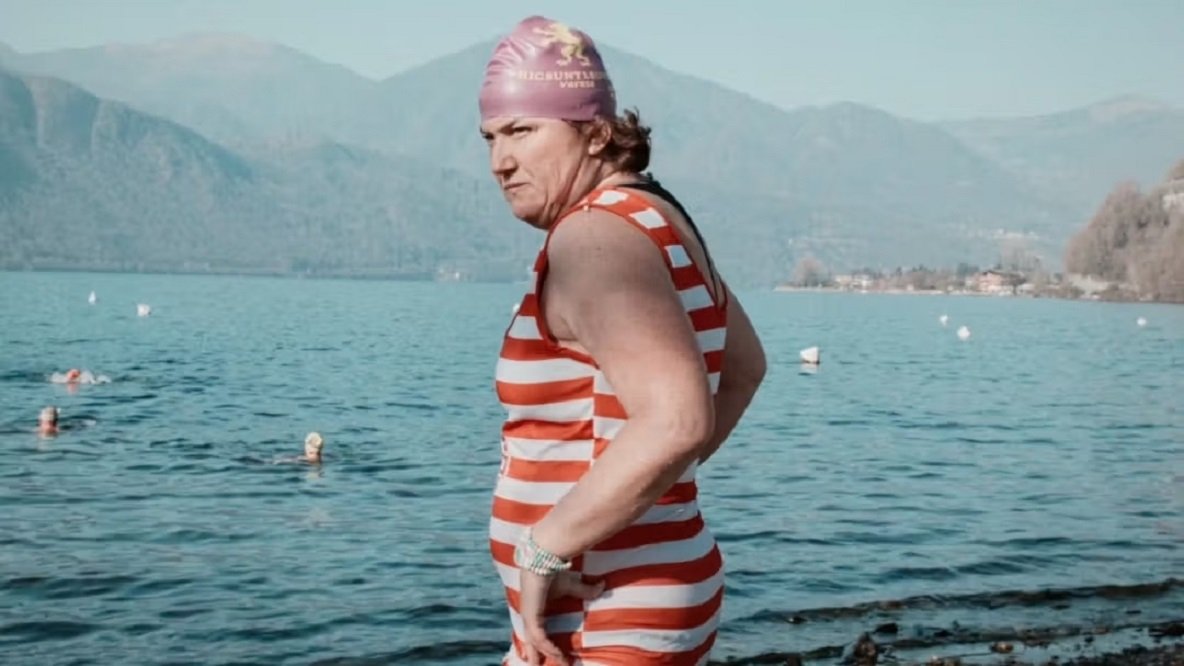
– Alessandro Cattaneo’s documentary marks time across the seasons, exploring social, religious and work-related rituals in Italy and favouring pure observation over social critique
The seasons are a result of a cosmic affair, of the inclination of a planet in space and of the way the sunlight hits Earth, and yet the recurring magic of their passing surprises us each and every time and has inspired legions of poets over the centuries. Alessandro Cattaneo has divided his film, Soul of the Seasons, into four chapters, whose titles assign adjectives to the seasons with poetic and metaphorical qualities which transcend more traditional definitions: autumn is associated with the dynamism of “swinging”, winter is unyieldingly “dominant”, spring is “silvery”, while summer is “highest”. Having scooped a Special Mention from the Modena Film Festival jury back in April, who highlighted its “capacity to turn the most ordinary experience into material for poetic reflection”, the film is scheduled to compete in the Ischia Film Festival (running 27 June to 4 July).
Largely an observational documentary, shot over 14 months in seven different regions of Italy, we watch Soul of the Seasons as if flicking through an album of moving images whose captions are dictated by the sensations evoked in the audience itself. Anna Gallarati’s voice briefly introduces us to the film, asking “are we the seasons or are they us?”. She invites us to see the world from an astral viewpoint before definitively yielding to images and to clear and diaphanous original music by Vittorio De Vecchi. Autumn mist wraps itself around hills and valleys where vineyards are being pruned, while on the beaches, with their closed parasols, boat sheds are being repaired. Immediately, in the winter, Cattaneo – entrusted with cinematography and live sound – shows us the juxtaposition between the city and the various communities dotted across the land. In Milan, preparing for the Christmas holidays means frantic shopping in the city centre, while, an hour’s drive away, in Piedmont, people dare one another to dive into the freezing waters of Lake Mergozzo and, high up in the Swiss Alps, on the Jungfraujoch saddle, scientists study the climate in total isolation in the highest astronomical observatory in Europe, the Sphinx.
In spring, dynamic and steadfast editing by Giovanna Ferrari and Walter Marocchi reveals fields flooded for rice paddies in Lomellina, the Labor Day parade in Milan on 1 May, boats being launched at sea in Liguria, and end of school celebrations. The director makes an exception for the summer, setting aside objective observation in order to “interview” a couple who aren’t too young anymore, but who describe this season as a moment of freedom, “when you walk around, meet people in the town square, make friends”.
The film is a temporal snapshot of a country anchored in social, religious and work-related rituals punctuated by the seasons – heading to the cemetery on 2 November, visiting town parks in the spring, making tomato sauce in Calabria in the summer, and harvesting grapes in the countryside of Oltrepò Pavese. Fragments which are sometimes very brief; snippets which capture the bond between the people and the environment. In these references to a rural world which is on the way to disappearing, to a kind of craftmanship which is now but a symbol of the past, and to an urban modernity which is redesigning how we use public spaces, there’s no explicit exploration of social issues. Instead, the director’s lens keeps a distance, leaving it up to the audience to join the dots and to grasp the complexity of the dynamics at play.
Soul of the Seasons was produced by Zivago Film alongside Twin Studio, Lateral Film and Agio Film.
(Translated from Italian)
