
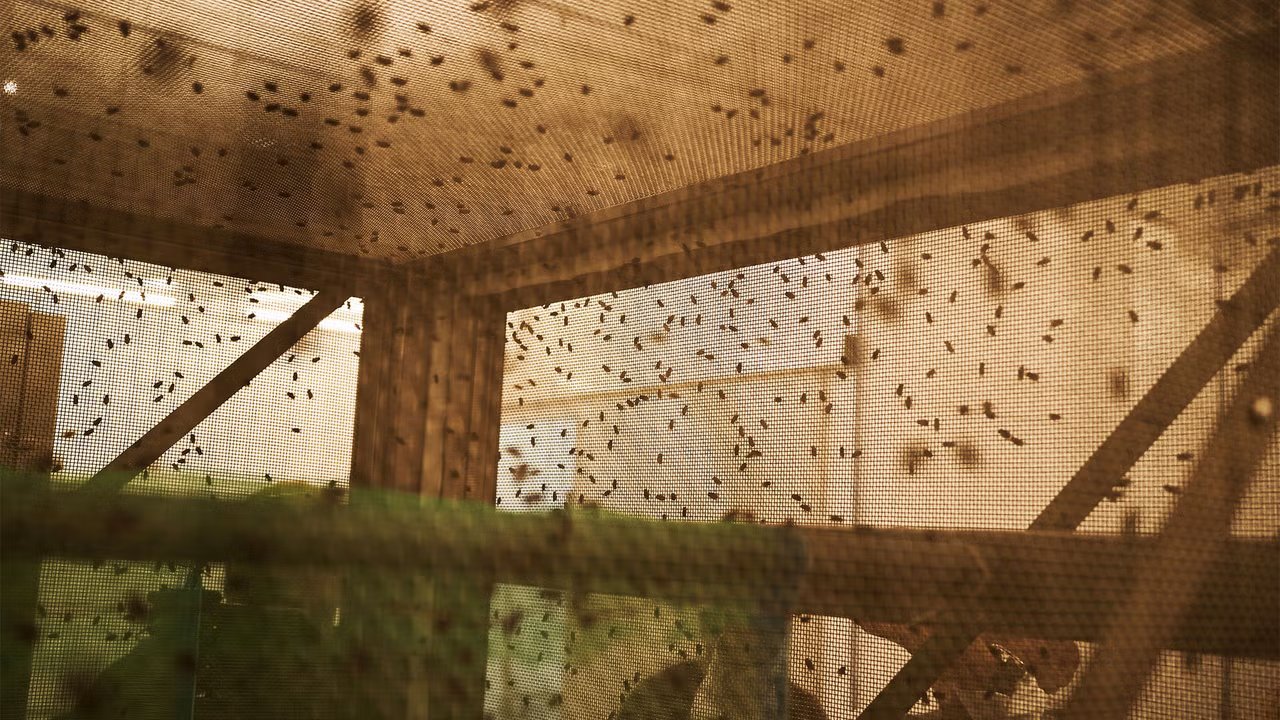
In an effort to combat the threat of flesh-eating parasitic flies, the U.S. Department of Agriculture (USDA) has turned to a surprising solution: sterile flies.
On June 27, the USDA inaugurated a 22,000-square-foot sterile fly production plant in Metapa, Mexico, with plans to release the insects in response to rising cases of the New World screwworm, a type of parasitic blowfly whose larvae are deadly to animals.
According to the USDA, the facility has been under construction for the last 11 months, and has been a collaborative effort between the current administration and the Mexican government. The facility’s inauguration arrives at a critical time. While the New World screwworm was believed to have been eradicated in the 1960s, at least 27 new animal cases have been reported in the U.S.
According to the USDA, the first case was reported on June 3, with the number of cases rising to 27 by June 29 across two states. The infected animals have been identified as domestic, with no active cases reported in the wild. Currently, Texas is the only state with active cases, and authorities have quarantined parts of 20 counties across the state.
The sterile flies are set to be used as part of a sterile insect technique (SIT) by sustainably disrupting the insect’s ability to reproduce. The technique works by using gamma radiation to sterilize New World screwworm pupae, which are then released into environments infested with the pests.
“Released through ground and aerial operations, these sterile flies disrupt the pest’s life cycle and support our multi‑agency effort to protect livestock,” the USDA’s New World screwworm Rapid Response official X account stated in a post.
By doing so, the screwworms will no longer be able to cause harm to the animals, as it’s the maggots that eat the flesh of warm-blooded animals. Additionally, the fly population eventually dies out as wild screwworms mate with sterile flies.
The technique is the same one used in the 1960s, which led to the parasite’s eradication, and it was also used to treat a 2017 outbreak in Florida.
“The more sterile flies we produce and deploy, the faster we can suppress and ultimately eradicate this devastating pest,” the official X account said.
Lawmakers in Texas estimate an outbreak could cost hundreds of millions of dollars to the state’s constituents, and while the state currently has sterile flies, local officials say they need more.
The new facility in Mexico is set to help deliver more flies to the affected regions, with the USDA estimating it will provide an additional 100 million sterile flies once it’s fully operational.
The USDA’s New World screwworm Rapid Response account added: “We’ve beaten New World screwworm before—and together, we’ll do it again.”
