
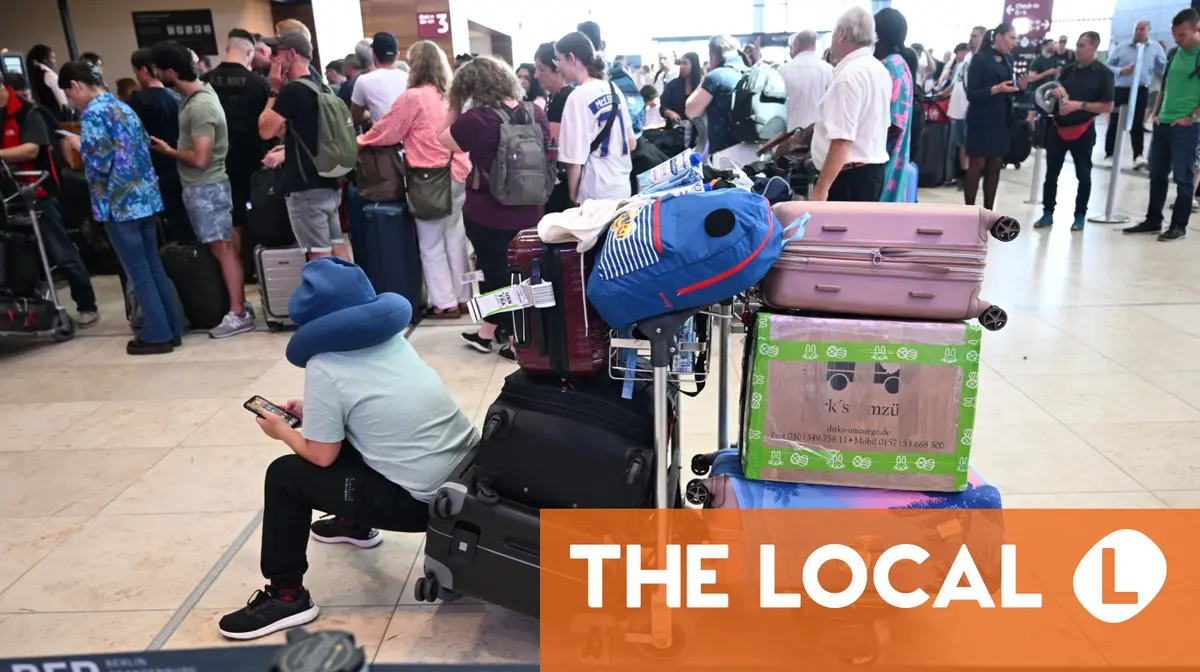
European airport and airline associations have once again urged the European Commission to take immediate action as they warn the new digital Entry/Exit System (EES) risks travel mayhem and misery for millions this summer.
In the latest appeal ahead of the summer travel season, organisations representing European airports and airlines have called on the European Commission to adopt urgent measures to limit delays at border checks, which are now not only causing disruptions for travellers but also “undermining Europe’s reputation, European tourism and connectivity,” a letter says.
Since October 12th 2025, the 29 countries of the Schengen area (25 EU member states plus Iceland, Norway, Switzerland and Liechtenstein) have been operating the Entry/Exit System (EES), a new IT scheme that gathers digital personal records of visitors from third countries and replaces the manual stamping of passports.
The system requires passengers to register fingerprints and facial images the first time they cross an external Schengen border. The data is recorded in a Europe-wide database that tracks each time travellers enter and exit the Schengen area to avoid people staying beyond the limits of the 90/180-day rule.
Throughout the introduction of the EES, however, several locations have reported significant delays at border crossings, with the situation worsening at peak times, such as the Easter holidays.
Italy’s airports have been particularly affected by delays linked to EES, with Rome’s airports already suggested the checks will be postponed over the summer peak season.
With an open letter sent this week to Commission President Ursula von der Leyen, industry associations including the Airports Council International (ACI) Europe, Airlines for Europe (A4E) and the International Air Transport Association (IATA) said the situation had “reached a critical point”.
Airlines face half-empty planes
The groups argued that since the full rollout of the EES in April, “waiting times at border control have increased significantly, now reaching up to five hours during peak traffic periods”.
“These delays are impacting millions of passengers entering the Schengen Area, including families travelling with young children, elderly passengers and persons with reduced mobility,” the letter states.
At the same time, airports and airlines are experiencing operational disruption ranging from flight delays, missed connections, half-empty planes at gate closing time and increasing pressure on frontline staff, the letter continues.
The implementation is putting border authorities, airports and airlines “under unsustainable pressure”, an issue concerning not only the largest hubs but also smaller airports.
The letter adds that “beyond the immediate operational consequences… the reputation of the European Union and the confidence in the regulatory framework are also at stake”.
“Europe must remain a destination that is not only secure but also efficient, welcoming and competitive,” the groups continued,
The associations call for an “immediate intervention before the situation deteriorates further during the peak summer travel season,” allowing member states to temporarily pause the EES “whenever needed and justified” and revert to standard border code checks, including the stamping of passports.
Schengen countries can already temporarily suspend the collection of biometric data. Under current rules, this will be possible until the beginning of September. But such measures have “not prevented excessive queues” and “existing challenges will inevitably intensify” in July and August, as airports are expected to handle some 40 million more passengers than in the past two months.
The groups said that “a permanent operational flexibility mechanism” should be established to allow border control authorities to suspend the EES “until the structural challenges repeatedly highlighted by industry have been fully addressed”.
They also called for adequate staffing levels at airport border crossing points, the stability of the IT systems supporting the sharing of data across the EU and the EU-wide deployment of an app that would allow passengers to pre-register, reducing pressure at the border.
