
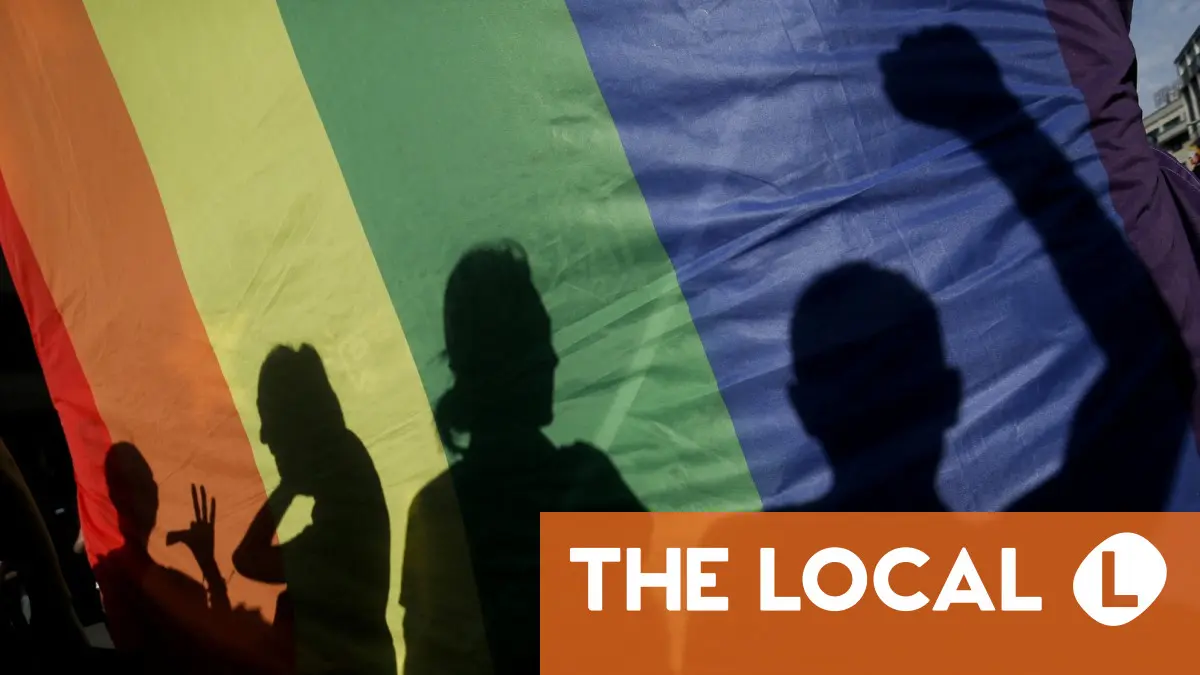
Small town Spain is breaking down barriers and showing that ‘pueblos’ can be progressive and welcoming places for sexual minorities, even helping revitalise some of the country’s depopulated areas at the same time.
Small towns in Spain are increasingly embracing LGBTQ friendly events, showing local residents that they don’t need to head to big cities to be themselves and find like-minded people.
The ‘Plumas de Pueblo’ initiative, run by Proyecto Hortensia, organises festivals, Pride parades and queer events in towns across the country from A Coruña to Menorca and aims to break stereotypes about the lives of those who defy the norm in rural communities.
A recent report by state broadcaster RTVE has highlighted this trend, with more than a hundred rural LGBTQ+ initiatives in Spain featured on the map seen below.
Photo: RTVE.
Looking at the Plumas de Pueblo site, events are hosted in, among many others, in Monterroso (Lugo), including a pioneering rural Pride event that began in 2014, as well as the Orgullo Serrano in Puebla de la Sierra, Madrid, the Veracuir in Talaveruela de la Vera, Cáceres, Unicorns Pride Ebre in Roquetes, Tarragona, and Pride Zahara in Zahara de la Sierra, Cádiz.
READ ALSO: Spain to offer non-binary gender option on foreigners’ residency cards
Much of the impetus behind the projects is about showing local LGBTQ+ people that small town life can be welcoming and it’s no longer necessary to go to the big city to find inclusive environments.
RTVE spoke to locals in La Cuireñon in Castile and León about the initiatives.
“Things happen in small towns, too, not everything has to happen in the city,” Victoria, one of the organisers of the initiative in La Cuireñon, told RTVE Noticias.
The event is now in its third year in 2026, having attracted hundreds of people in the previous two years.
The events not only promote inclusivity, however. They can also help towns and villages at risk of depopulation by hosting events and improving community outreach.
The gathering in León aims to also help revitalise an area particularly affected by depopulation that has little in terms of events beyond the local patron saint festivals.
To that end, the activities in the programme can range from those that revive and update tradition, such as traditional dancing and crochet workshop, to more innovative ones like so-called “disco football”.
Further south, the Asociación Plural LGTBI Mancha Centro, based in Alcázar de San Juan in Ciudad Real, has for years organised advocacy and cultural events as well as talks in not only during Pride, but throughout the entire year.
Koali Martín Consuegra Martín del Campo, one of its members, told RTVE that the association was founded with the idea of “not having to go to Madrid for everything”.
Instead the small town developed “a network of associations and a family”, which over time has gradually broken down prejudices about the LGBTQI+ reality in rural La Mancha.
At one of its first gatherings in Alcázar de San Juan, she recalls, conservative mindsets meant barely “a handful of people” turned out because locals “were very afraid to come out, and even those who weren’t part of the community didn’t want to be associated with an LGBTQI+ organisation”.
Spain, generally viewed as a comparatively progressive country in many ways, was the third country in the world to legalise gay marriage, back in 2005, following The Netherlands and Belgium.
However, despite cities like Barcelona, Madrid and Valencia long being long-established LGBTQI+ hubs, smaller villages and towns can, in some cases, feel a little more old-fashioned when it comes to sexuality and non-traditional lifestyles.
The RTVE report also highlights that living in small towns presents challenges for gay, lesbian, bisexual, and transgender people, including a lack of awareness among doctors regarding sexual health issues, and issues of mobility and isolation.
In small towns and villages with little or no public transport, owning a car becomes a necessity for dating or meeting other people.
And those who don’t have a car or a driver’s license “may experience a much more acute sense of loneliness,” the report states.
In towns where opportunities to meet people are already “more limited”, especially for young people, sexuality can add further difficulties: “If you add the LGBTQ+ layer on top of that, it’s even more so,” said one interviewee.
With schemes like Plumas de Pueblo, small towns across Spain are breaking down those barriers bit by bit.
READ ALSO: What is Spain’s ‘Trans Law’ and why is it controversial?
