
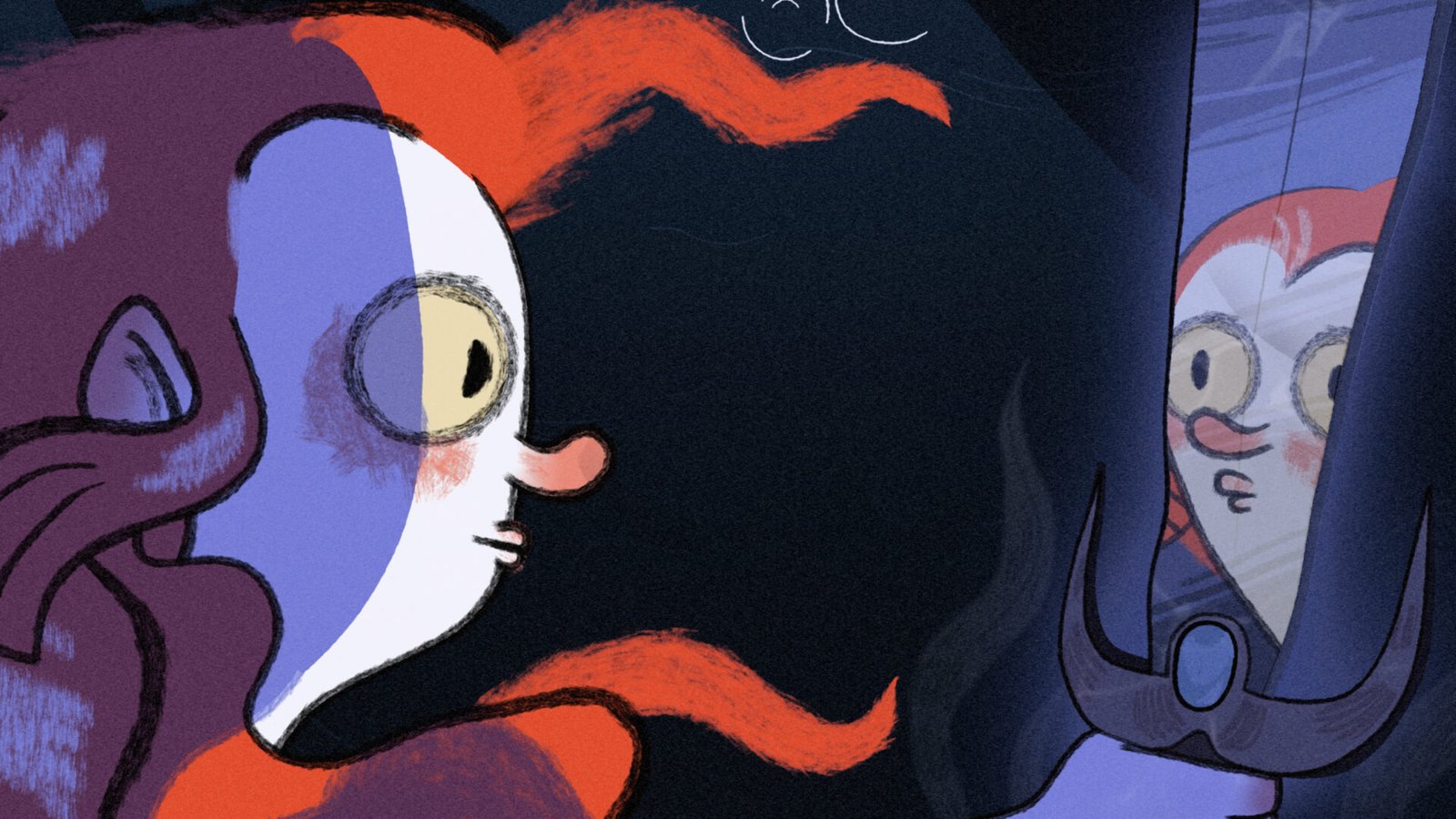
– In this short, Slovenian director Lea Vučko weaves a complex and imaginative story that combines unexpected settings and genre tropes
The Girl Who Wasn’t Afraid of Bears is a 20-minute animated short adaptation of the Slovenian comic book of the same name, which screened in Animafest’s Croatian Competition. It takes place in a magical land inspired by Balkan folktales, but with a twist. Animator Lea Vučko, already known for the short film The Legend of Goldhorn, once again draws inspiration from the mythical world of Balkan legends. In this Slovenian-Croatian-Hungarian co-production, the animator masterfully plays with genre and gender. The fairytale setting with castles, princesses and dragons is combined with the Western-inspired protagonist’s costume and the film’s music. The narrative follows the main character on adventures typical of epic heroes, such as confronting the King of Snakes and the Devil, as well as undertaking a quest to find a legendary sword. Here, the blend of traditionally masculine medieval and Western worlds is transformed into one in which a brave girl can become a knight in shining armour or, in this case, a cowboy, albeit one brandishing a sword instead of a gun.
Early in the film, the girl buries a man in the forest and then changes her appearance to look like a man. Soon, the audience learns that the man was her father, who dressed up as a bear to frighten his daughter and keep her inside the house, traditionally considered the private and feminine sphere. However, as the title says, the protagonist is not afraid of bears, so she slays her father in his bear disguise, a moment that might symbolically represent female bravery in challenging patriarchy, except she does not kill him intentionally. This is one of the many thought-provoking aspects of the film’s narrative.
The Girl Who Wasn’t Afraid of Bears is created using 2D animation, and there is no spoken dialogue in the film. Instead, title cards are used, harking back to early silent Westerns, and the sound design and score created by Julij Zornik and Magnifico & Schatz!, respectively, become particularly significant in establishing a fast-paced and dynamic atmosphere. Although the music has a distinctly Western, Morricone-like flavour, it is combined with typical Balkan accordion. Colour also plays an important role, as the predominantly monochrome palette is contrasted with the protagonist’s magnificent flaming red hair. This visual contrast may remind viewers of Merida from Brave, a female character who is similarly stubborn, courageous and unafraid of wild animals.
The gender politics in this film are complex and intriguing, as the narrative leaves many questions unresolved. By assuming a male identity, the protagonist’s active and adventurous behaviour becomes socially accepted and permitted, yet the film’s treatment of gender remains deliberately ambiguous. Is the protagonist’s true self expressed through a male identity because that is the only way she can achieve freedom, or does she embrace said identity because she may be transgender? There is no answer, but in dealing with her identity, including all possible doubts and insecurities about it, The Girl Who Wasn’t Afraid of Bears reveals that its heroine’s greatest challenge is not defeating monsters but finding herself. In doing so, it turns a tale of courage and adventure into a thoughtful reflection on identity, freedom and acceptance.
