
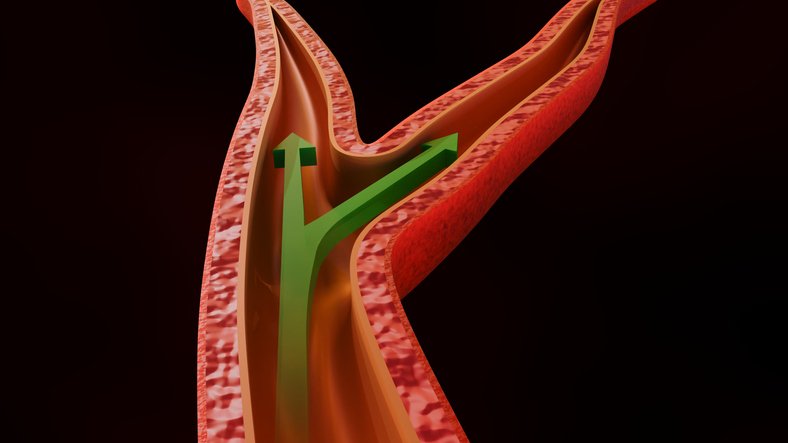
This week, the FDA granted breakthrough device designation to Aurenar‘s V-Link system, a non-invasive nerve stimulation device designed to treat cerebral vasospasm.
Vasospasm is one of the most dangerous complications that can occur after a brain hemorrhage. It happens when blood vessels in the brain narrow in the days following an aneurysm, cutting off blood flow to brain tissue and risking further, typically severe, damage on top of the initial bleed. The condition affects a large share of patients who survive a brain hemorrhage — they survive the initial event, only to suffer an additional, sometimes worse, brain injury days later.
Providers have historically lacked the tools to prevent vasospasm. The main option is an oral drug, backed up by invasive rescue procedures like balloon angioplasty.
Aurenar’s V-Link aims to intervene earlier. Instead of waiting to intervene after vessels have already constricted, the earbud-style device delivers gentle electrical pulses to a nerve behind the ear to calm the body’s inflammatory response, which is the same response believed to drive the spasming in the first place.
Patients receive the treatment for 20 minutes twice a day during their ICU stay, explained Aurenar CEO Eric Leuthardt. The device is designed to fit into existing ICU workflows so that nurses and physicians can use it without much training, he added.
In a trial, the V-Link’s approach cut moderate-to-severe vasospasm by more than 40% with no safety issues reported.
The trial had only 27 patients, but Leuthardt is confident that the V-Link’s vasospasm reduction rate will hold up at scale.
“The 27-patient trial was a randomized, triple-blinded study — meaning patients, clinicians and outcome assessors were all blinded — which is the strongest study design for a trial of this size. The effect size we saw was substantial and reached statistical significance, and the result was consistent with what we’d expect biologically given how vagus nerve stimulation modulates inflammation,” he stated.
Still, Aurenar is approaching its evidence generation with “the appropriate humility,” Leuthardt remarked. The breakthrough device designation is meant to speed up the path toward larger pivotal trials, which he noted are designed precisely to confirm whether the product’s benefits hold up at scale.
Looking ahead, Leuthardt said Aurenar’s near-term focus is running pivotal trials for this specific indication — but the company sees the same inflammation-modulating mechanism eventually applying to other high-acuity ICU conditions. The plan is to eventually expand indication by indication.
Photo: Love Employee, Getty Images
