
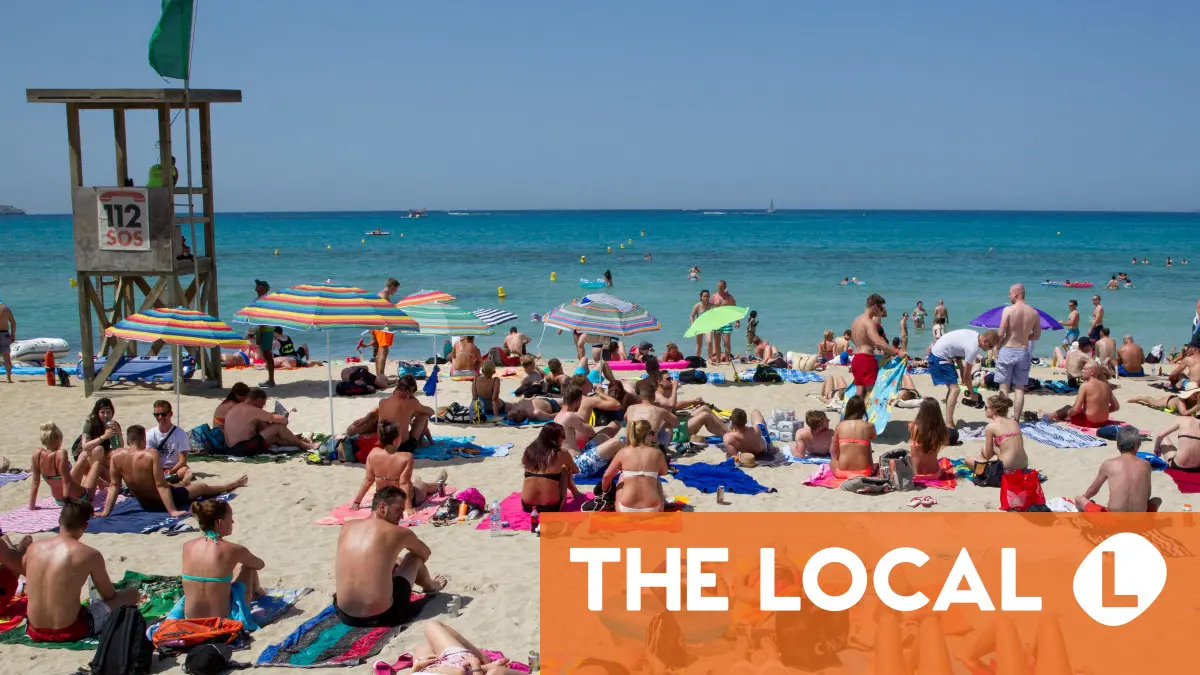
Spain’s mass tourism machine keeps breaking records, and the Spanish press believes this will be the year the country surpasses the 100-million annual visitors threshold. Is this actually something to be celebrated?
This week, Spain’s National Institute of Statistics (INE) reported that the country received a record 36.8 million international tourists between January and May, 5 percent more than during the same period in 2025.
During these months, foreign holidaymakers spent over €50 billion, 7.8 percent more than last year – another record.
In May alone, 10.26 million tourists arrived in Spain from abroad, 9.5 percent more than in the same month of 2025. Otro récord (another record).
Overseas visitors spent almost 11 percent more as well – €13 billion – and you guessed it, yet another record with the highest figures for the month of May ever.
According to the Statistics on Tourist Movements at Borders (Frontur), the main countries of origin in the first five months were the United Kingdom (with more than 7 million and an increase of 3.6 percent); France (with more than 4.6 million and an increase of 1.5 percent) and Germany (with more than 4.5 million and an increase of 0.3 percent).
READ ALSO: Spain and UK make deal to digitally monitor British-led overtourism
In terms of type of accommodation, almost 8.75 million tourists used market accommodation (hotels and tourist apartments), 7.4 percent more.
This was driven especially by Airbnb-style accommodation, which saw growth of 26 percent year-on-year, while stays in hotels increased by 5 percent. The spike in stays in tourism accommodation is somewhat surprising, especially given that INE recently reportedly that there are 40,000 fewer properties listed in Spain than a year ago.
In any case, all the above figures point to one fact – Spain is more likely than ever to surpass the 100-million yearly visitor mark the Spanish press has been talking about for some time.
Spain welcomed a record-breaking 97 million international tourists last year, remaining behind France as the world’s second most visited country.
When you read articles in the Spanish press, there’s almost the sense that it’s a competition to become the global tourism leader.
This year, the US-led war in Iran has caused some uncertainty among travellers, but experts say it’s also been leading more tourists to choose Spain as a ‘refuge’ destination rather than holiday hotspots in the Middle East.
Although the 100-million figure may just seem like a symbolic milestone, not everyone will consider it a success.
In many ways, it evidences Spain’s failure to change its tourism model to a more sustainable one.
Average tourist spending is going up – one of the demands from those who want to put an end to cheap holiday packages that encourage mass tourism – but so are visitor numbers, every single year.
Ultimately, the 100-million mark consolidates tourism’s importance to the Spanish economy, but further cements the problems it’s been causing Spanish society.
On the one hand, three million Spaniards are employed in the tourism industry, around 13 percent of the country’s workforce.
On the other, the impact tourist apartments have on housing stock and prices for locals is undeniable.
Tourism represents 12.6 percent of Spain’s GDP and is one of the sectors spearheading Spain’s widely reported economic ‘boom’, but ask the average man on the street and they’ll probably say tourism isn’t making them any richer.
There’s also been growing resentment about city centres being turned into theme parks for tourists rather than residents, eroding the social fabric of towns and cities in the process.
Spain finds itself at a crossroads. Nobody wants to kill the goose that laid the golden eggs, but feed it too much and those eggs are going to crack.
For many in Spain, the drawbacks of overtourism now outweigh the benefits, and welcoming 100 million people in one year should not be something to aim for.
