
GOCRITIC! Animafest Zagreb 2026
– Joe Hsieh’s short animation infuses the creature genre with a cautionary tale about monstrous motherly love
Motherhood has long occupied a central place in Taiwanese director’s Joe Hsieh‘s filmography, but Praying Mantis, screening in the Grand Competition – Short Film at Animafest Zagreb, approaches the subject through the lens of body horror, channeling the maternal anxieties of Polanski’s Rosemary’s Baby while drawing on the praying mantis’s cultural association with sexual cannibalism to suggest that care, when pushed to its furthest extreme, can become a form of self-annihilation.
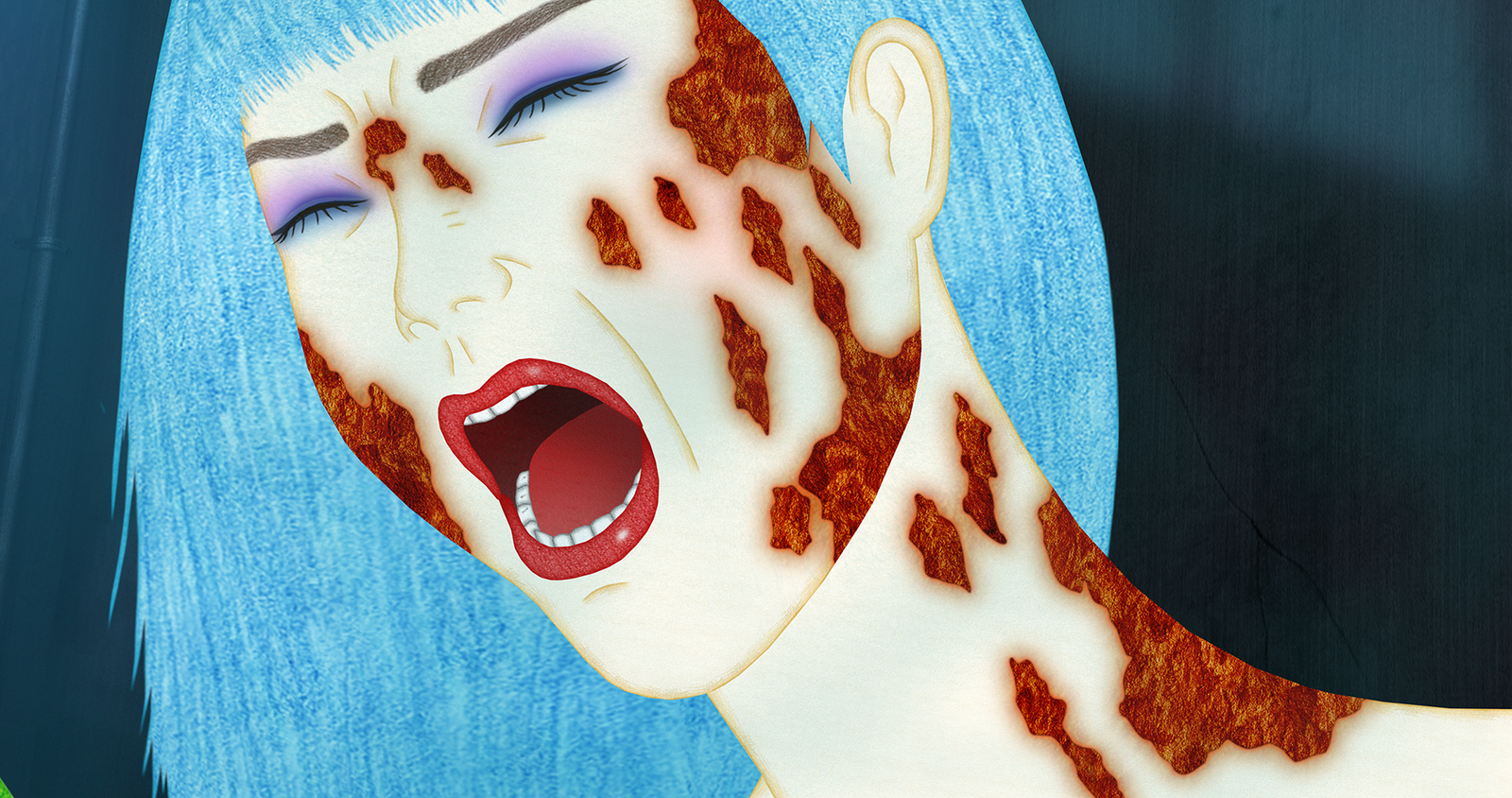
The film transports us to the neon-lit streets of 1970s Taipei, where lonely men searching for intimacy become prey to a beautiful, blue-haired woman whose allure conceals an insectoid reality. This mutant creature seduces men and feeds their bodies to her perpetually hungry offspring, hidden within an abandoned hospital and watched over by a ghostly, elderly caretaker. When a double homicide goes wrong and one intended victim survives, the mother is forced to retrieve him and the kidnapping sets in motion the dismantling of the grim routine she and her child have maintained for years.
While the narrative frames itself as a malicious scientific experiment gone wrong, following the survivor’s escape and his growing understanding of the situation, the film’s strongest element remains the praying mantis as a tragic figure linking female desire, motherhood and bodily sacrifice. As the setting shifts from the neon-soaked cityscape to the eerie atmosphere of the abandoned hospital, attention stays fixed on this hybrid creature: a woman’s face and torso fused with the limbs of an insect. She shifts between human beauty and insect anatomy, and the clean 2D animation conveys that instability through awkward yet delicate movements. Rather than pushing towards outright horror, the film sustains an uncanny tension in which traces of tenderness remain visible beneath the claws.
Praying Mantis can be seen as a culmination of concerns around the fragile boundary between care and possessiveness, but the film manages to address it in an unsettlingly compassionate way. Flashbacks reveal the origins of the insect-human fusion and the mother’s acts of violence become desperate attempts to fulfil an impossible obligation to her child. Eerie and heartwrenching at times, as the film sheds its creature exterior, it reveals itself to be a tragic story of parental devotion and self-erasure, which offers a unique take on monstrous motherly love.
