
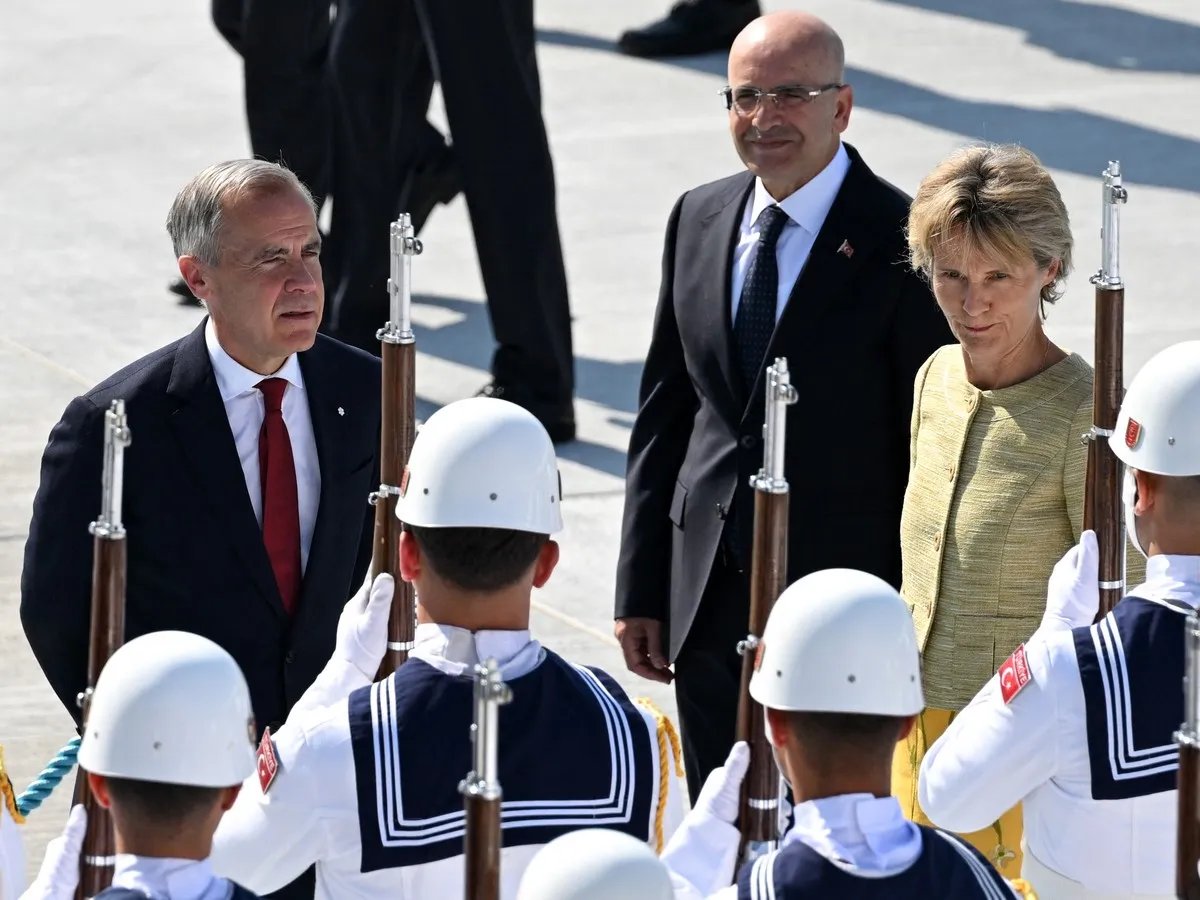
ANKARA, TURKEY — Prime Minister Mark Carney was busy doing some aftercare with the South Koreans at the NATO Summit Tuesday after dumping their country’s bid to build Canada’s submarines and instead opting for a European builder.
Carney was set to hold a formal bilateral meeting with the president of South Korea, Lee Jae Myung, on Tuesday afternoon. But a spokesperson for the prime minister said both men bumped into each other in the NATO leaders’ lounge and had an informal discussion.
Defence Minister David McGuinty described their exchange as “very encouraging.”
“Obviously, when you have two bidders, one bidder is going to be chosen, the other will not,” McGuinty said of the bidding process.
The federal government announced earlier this week that it chose ThyssenKrupp Marine Systems (TKMS), a German-Norwegian partnership , to be its “preferred bidder” to replace Canada’s aging fleet of submarines. Its competitor was South Korea’s Hanwha Ocean, whose stock lost more than 20 per cent in value after the announcement .
McGuinty noted that Hanwha remains the second bidder in reserve, in the event that negotiations with TKMS fall apart. The negotiations are expected to conclude by the end of 2027.
“Look, there’s a lot of co-operation possibilities here between Canada and Korea,” the defence minister told reporters. “We’re going to continue building that relationship, and that’s exactly what the prime minister mentioned (in his discussion with President Lee).”
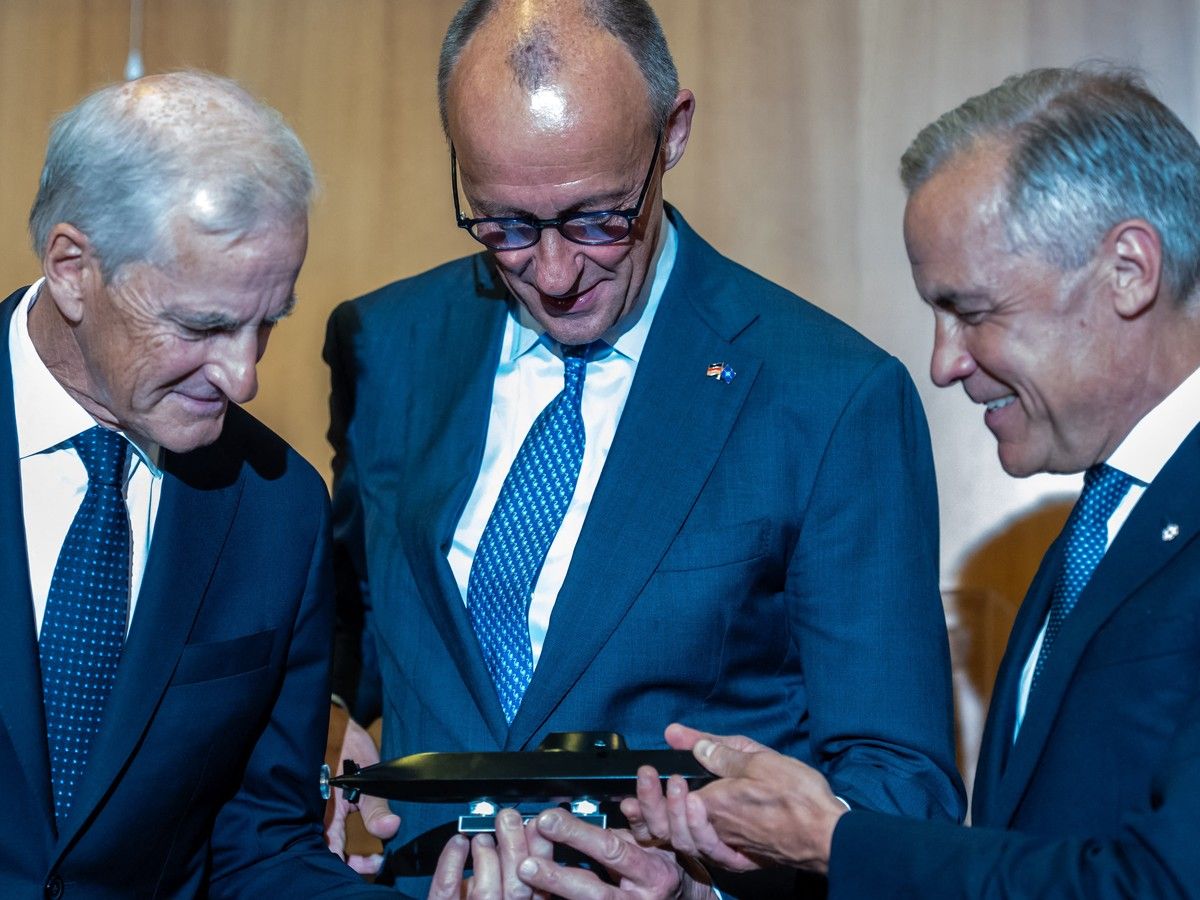
Later in the day, Carney held a trilateral meeting with German Chancellor Friedrich Merz and Norwegian Prime Minister Jonas Gahr Støre. In their public remarks to the media, the three leaders praised the opportunity to work together on the proposed purchase of the 212CD TKMS submarine.

The three men stood in front of a large mock-up of a sub and held a model of the vessel in their hands.
“This is an extraordinarily important partnership for Canada, and I would say more broadly, obviously, for our countries,” Carney said.
Merz praised Canada’s “bold decision” which he said brings a “new era of co-operation.”
“This is something which is bringing the people together, which is bringing our countries together,” he said.
Støre said all three countries could end up with a total of 26 submarines. Canada is expected to order up to 12 of them but reserves the right to order fewer.
The Liberal government has signalled that Canada, Germany and Norway’s relationship will be much more integrated than initially anticipated. McGuinty confirmed Tuesday there will be “a high degree of interoperability” included in the plan, meaning that they could share crews, for instance, or co-operate on Arctic surveillance.
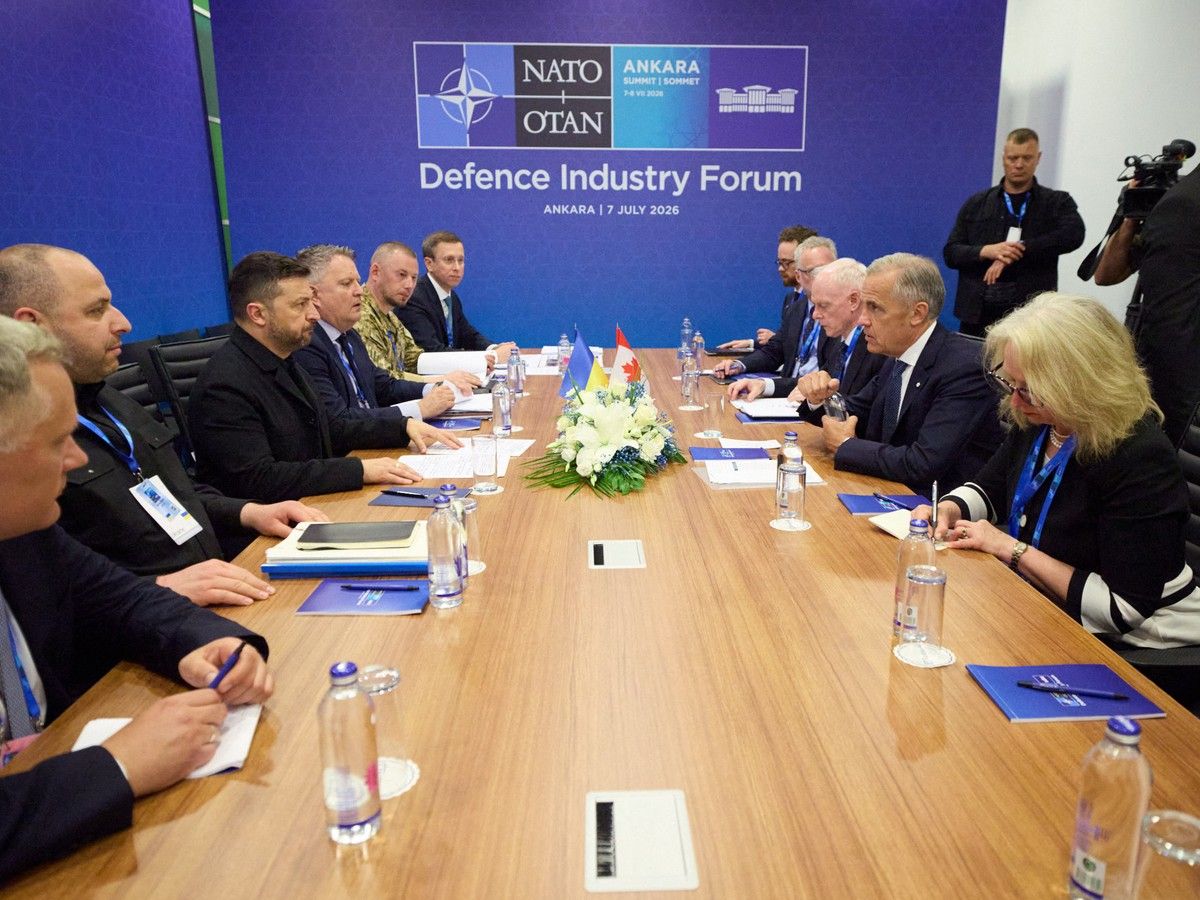
Carney joked that he hoped the interoperability would include Norwegian soccer superstar Erling Haaland in time for the next World Cup, which was met with laughs.
The TKMS deal does not mean that all three countries will do everything together.
Eight countries have joined Canada’s efforts to establish the new Defence, Security and Resilience Bank (DSRB), a new multilateral financial institution that is bringing together like-minded partners to provide long-term, low-cost financing for defence initiatives.
To date, Albania, Belgium, Greece, Latvia, Luxembourg, Romania, Turkey and Ukraine are the founding members of the DSRB which is set to be headquartered in Canada, Carney announced on Tuesday. Germany and Norway are not part of the group for now.
McGuinty said there is already a “good core” of member states who have signed on and that there is still lots to do before the DSRB is up and running, such as putting the final touches on design, setting up the bylaws of the bank and much more.
“These things take time,” he said. “We’ll bring in other partners as we go along.”
National Post
calevesque@postmedia.com
Our website is the place for the latest breaking news, exclusive scoops, longreads and provocative commentary. Please bookmark nationalpost.com and sign up for our newsletters here.
