
– Three immigrants search for happiness in the French metropolis in Isabelle Tollenaere’s docu-fiction
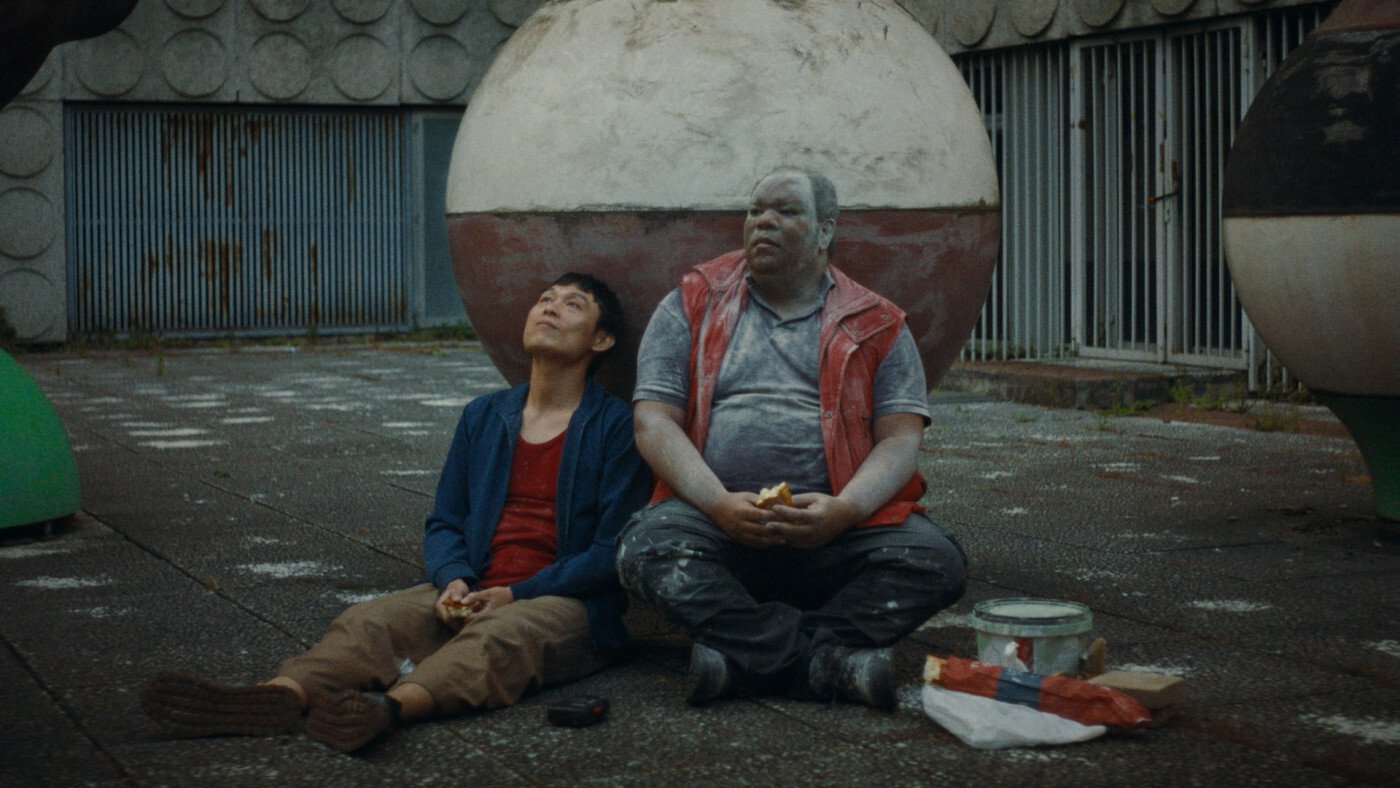
Chen Yi-En and David Mutamba in Paris Paris
Big, metropolitan cities have been attracting people – from the same country and beyond – for centuries, if not millennia, and countless stories have been told on the subject. They usually begin with a kind of fascination rooted in romanticised illusions, before the whole thing curdles into hardship, struggle and, more often than not, disappointment. Over the past couple of centuries, Paris in particular has become synonymous with such stories: many arrive harbouring illusions about the City of Light drawn from books, films and art, only for few to glimpse its underbelly before becoming part of it themselves.
Premiering in the Proxima competition at the 60th Karlovy Vary International Film Festival, Isabelle Tollenaere’s debut fiction feature Paris Paris tells one such story, set in the milieu of migrants and refugees searching for their own slice of happiness in the French metropolis. Coming from a background in documentaries such as Battles and Battles, Tollenaere sets out to tell a true story, but by somewhat different means.
The central stage for this story – or, more accurately, this collection of short stories driven by three characters – is a squat in a soon-to-be-demolished building in La Défense. Yi-En (Chen Yi-En) claims to have been born and raised in Paris, yet he doesn’t speak a word of French, and so he enrols in a language course, where he meets others in a position similar to his own. One of them is the Palestinian refugee Hamzah (Mahmoud Beshtawi), who claims to be a poet but has to support himself by selling cheap toys on the streets. The two strike up a friendship, and Hamzah moves into the flat Yi-En shares with a Congolese construction worker, Junior (David Mutamba).
Each of the three men has his own story to tell. For Hamzah, it is the war and the destruction it has brought upon him, his neighbours and his compatriots. For Junior, it is the city of Lubumbashi, which has changed so much he can no longer recognise it. And for Yi-En, it is his actual home town – a film-set-like replica of Paris built in China as a real-estate gimmick. Yi-En also keeps losing things (knives, shoelaces, even his wallet), yet keeps “finding” living creatures, both animals and people in need, while his eventual disappearance might signal the disappearance of the improvised “world” the three of them built for themselves from the leftovers of the decaying world around them.
Tollenaere opens her film in a slightly, artistically polished docu-fiction style, with non-professional actors playing variations on the types of characters they naturally embody. A trained eye and ear can spot that the whole thing is scripted, yet it still rings completely true and real – perhaps thanks to Thomas Verijke‘s strictly static camerawork in a boxy 4:3 ratio, and the filmmaker’s own precise editing, which frames the story with a sense of gravity.
However, Tollenaere is aware that this approach can only take her so far, and she intervenes to shift things – first at the script level, then in execution, as the camera begins slowly moving around the characters. A warm, slightly absurdist humour starts to emerge, and the echoes of Wim Wenders‘ urban travelogues and Jim Jarmusch’s stories of friendship on the margins – as the only way of surviving life there – become clearer. The film’s initial message isn’t exactly betrayed, but it doesn’t come across quite so easily either. Nevertheless, Paris Paris radiates a certain warm-heartedness, even if the stories it tells are far from heart-warming.
Paris Paris is a Belgian production by Menuetto Film. Square Eyes handles international sales.
