
– Jan-Eric Mack’s film, the first Swiss title ever in the Crystal Globe competition, follows the unraveling of a mother after her two children are sent to foster care
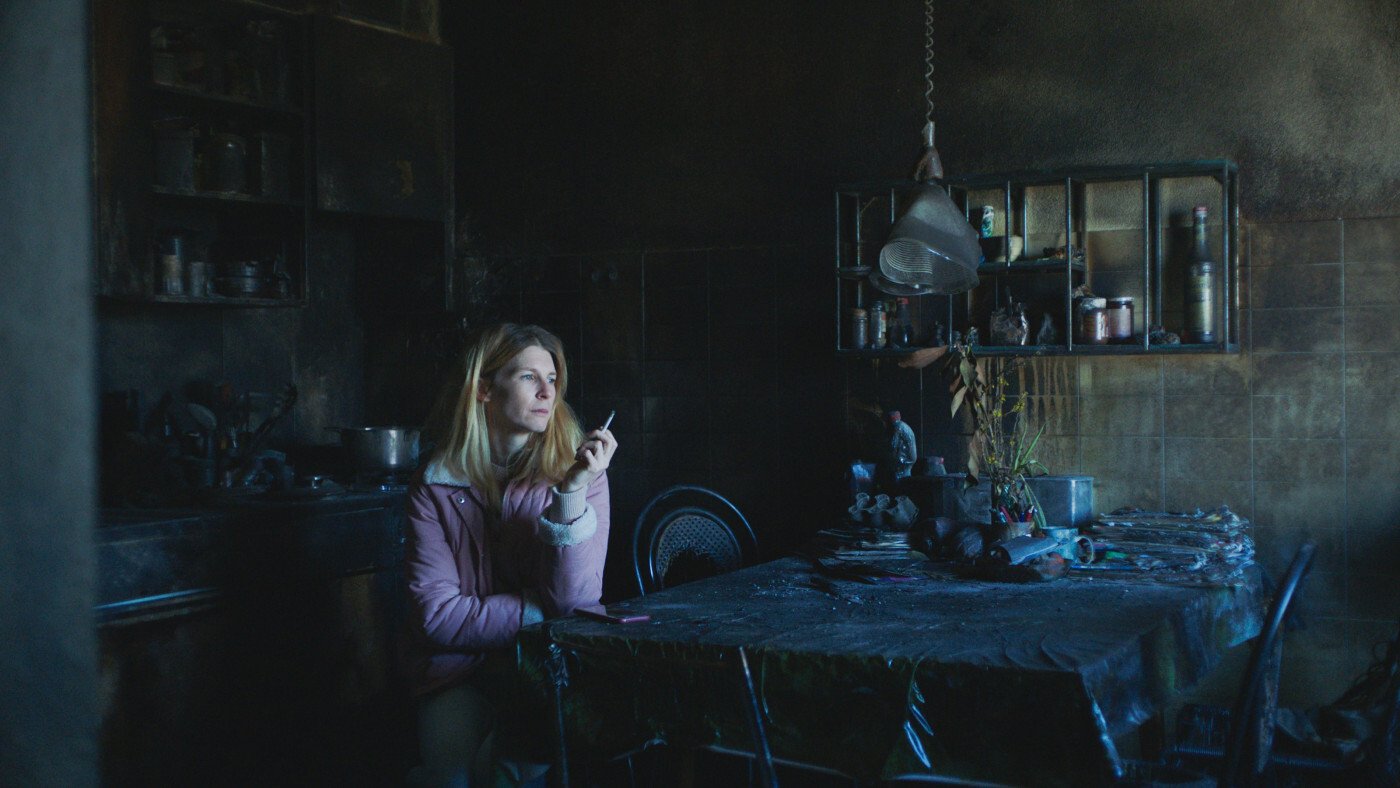
Anna Schinz in A Happy Family
For his solo debut, Jan-Eric Mack makes history with A Happy Family, billed as the first Swiss film in Karlovy Vary’s Crystal Globe competition. With an initially intriguing premise, the film falls short in allowing us to connect with Mack’s Swiss single mother protagonist Niki (Anna Schinz), largely owing to a clunky script (credited to Schinz, Nikita Afanasjew, Eva Kienholz and Mack). Over a two-hour runtime, A Happy Family turns from social drama to thriller and later to oddity, where we side less and less with Niki in light of her antics.
Struggling, working two jobs and in massive debt for unknown reasons, she is monitored closely by social services regarding the care of her children, Leonie (Annalisa Ferriani) and the young Jimmy (Lir Kunkel). After a kitchen fire breaks out in her absence, the two are sent to live across the country under the care of Sabine (Julia Jentsch). Desperate, Niki takes a job at the school her kids attend and makes friends with the local community in a bid to do anything to be close to them.
Niki’s desperation as a mother is built more on selfishness than care, where the outrageous scenarios in which she puts herself are perhaps not quite outrageous enough to stick the landing. After breaking into a building to find where her children are and dyeing her hair, she manages to befriend Matthias (Michael Neuenschwander), who allows her – a stranger – to sleep on his couch. Still, A Happy Family plays these moments as straight, rendering a certain unbelievability.
As Niki’s children begin to relish in the small pleasures of their new life, they also begin to realise the tumultuousness of her behaviour and reject it, which becomes the film’s most heartbreaking element. Switzerland looks as drab as possible, a sort of working-class people’s cinematic perspective. With this comes cinematographer Yunus Roy Imer‘s maintenance of a dark visual mood throughout nearly the entire film, only opening up to picturesque mountainous landscapes near the end.
A Happy Family feels neither like a portrait of how the system fails its own citizens nor a character study. The screenplay seems intent on finding a harmonious resolution to a tale that isn’t meant to have this kind of ending, with an aspirational “things will work themselves out regardless” type of message. If only we were to really get as close as possible to Niki’s struggle and love for her children in a tangible sense, then we might be able to make peace with the tonally peculiar ending.
A Happy Family is a Swiss production by C-Films AG. Bendita Film Sales holds the world sales rights.
