
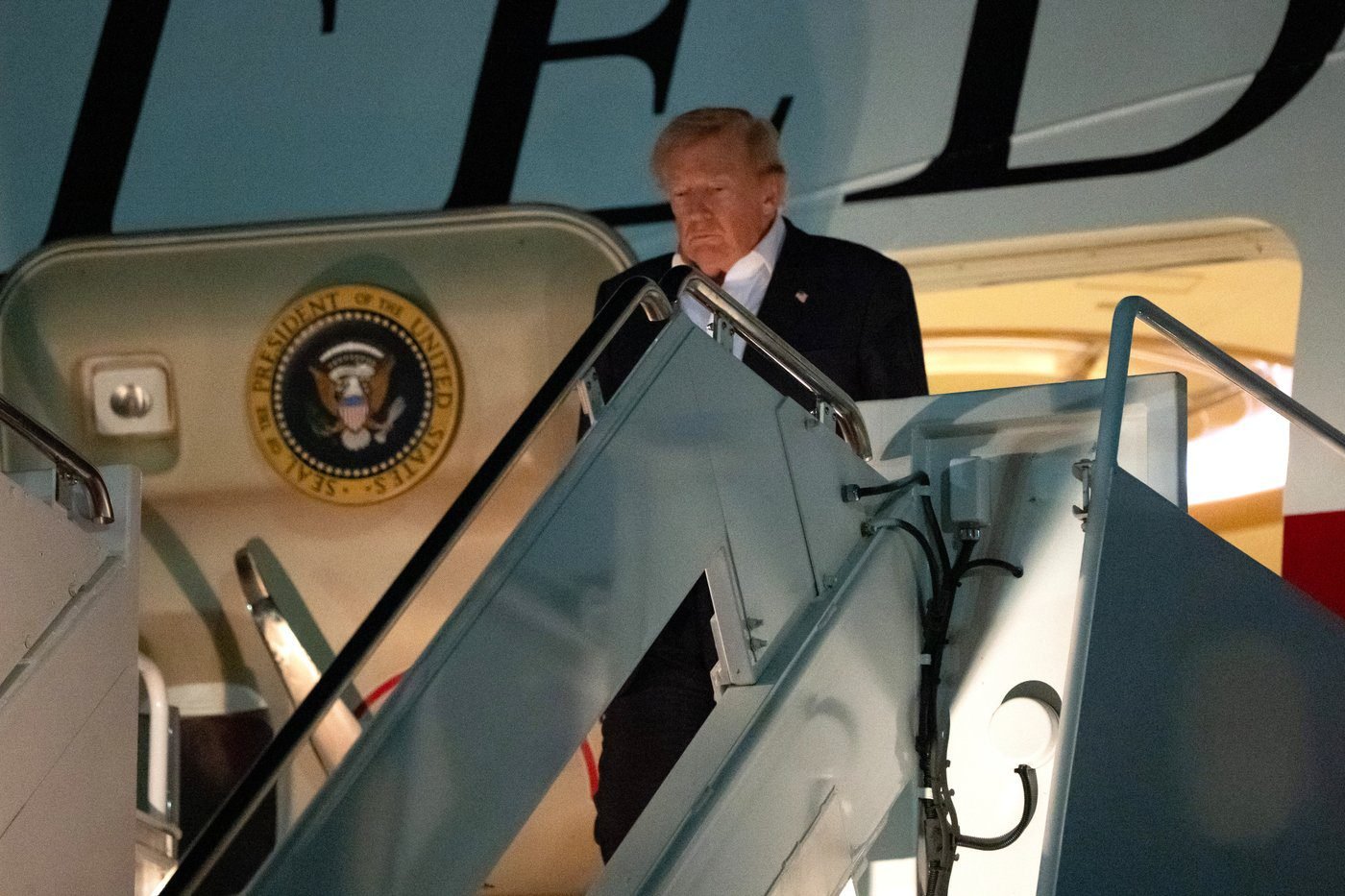
The U.S. launched new airstrikes against Iran early Thursday, hours after President Donald Trump said recent Iranian attacks on ships in the Strait of Hormuz signaled the end of the ceasefire and threatened to escalate the conflict if they didn’t stop.
Iran responded by targeting U.S.-allied Kuwait and Qatar and accused the U.S. of striking near its sole nuclear power plant.
Back-and-forth attacks, including on Wednesday, have repeatedly threatened the ceasefire, but Thursday’s appeared bigger all around. And Trump’s mixed messaging — approving back-to-back military strikes while insisting they don’t mean a return to full-scale war — is fueling uncertainty about what comes next.
Here’s the latest:
Eswatini receives 11 people deported from the US as part of migration crackdown
The southern African kingdom of Eswatini has accepted a fourth group of people deported from the United States under a bilateral agreement to host third-country nationals, with 11 people arriving this week, the government said Thursday.
Acting government spokesperson Thabile Mdluli said the group, predominantly from African countries, would remain in the kingdom temporarily while their rights were protected.
“The government reaffirms that, during their temporary stay in the Kingdom, the fundamental rights of the third-country nationals will be respected and protected in accordance with the laws of the Kingdom of Eswatini and the Kingdom’s international obligations,” Mdluli said in a statement.
Under a series of often-secret agreements that are part of a broad U.S. crackdown on immigration, the Trump administration has deported thousands of people to nearly two dozen countries that are not their own, advocates say.
Global markets are mixed and oil prices rise as Iran and US launch new attacks
Futures for the S&P 500 rose 0.1% before the opening bell Thursday, while futures for the Dow Jones Industrial Average fell 0.1%. Nasdaq futures were up 0.5%.
Oil prices inched up again Thursday, with Brent crude, the international standard, rising 64 cents to to $78.66 per barrel. It briefly topped $80 on Wednesday. Before the Iran war began, Brent oil was trading at around $72 a barrel. Earlier optimism over an interim peace deal recently brought it back to prewar levels.
Benchmark U.S. crude rose 54 cents to $74.06 a barrel.
New attacks raise questions about what comes next in the Iran war
President Donald Trump says he believes the ceasefire with Iran is over. He says he’s not sure he wants a deal anymore and says the U.S. should “finish the job.” But he also insists continued attacks don’t mean a return to war or long-term action.
The confusion and uncertainty in Trump’s mixed messaging and his approval of back-to-back military strikes leave major questions about what comes next in the conflict, just weeks after difficult diplomacy to reach even an initial deal between the longtime adversaries.
The whipsawing rhetoric could be a strategy to increase the pressure on Tehran to stop attacking ships transporting oil and natural gas in the Strait of Hormuz and bend to U.S. demands on its nuclear program — something Trump has tried before.
Whether it’s a negotiation tactic or a signal of an escalation in fighting, mediators are scrambling to save the interim deal and the actions risk further inflaming tensions.
The Associated Press
