
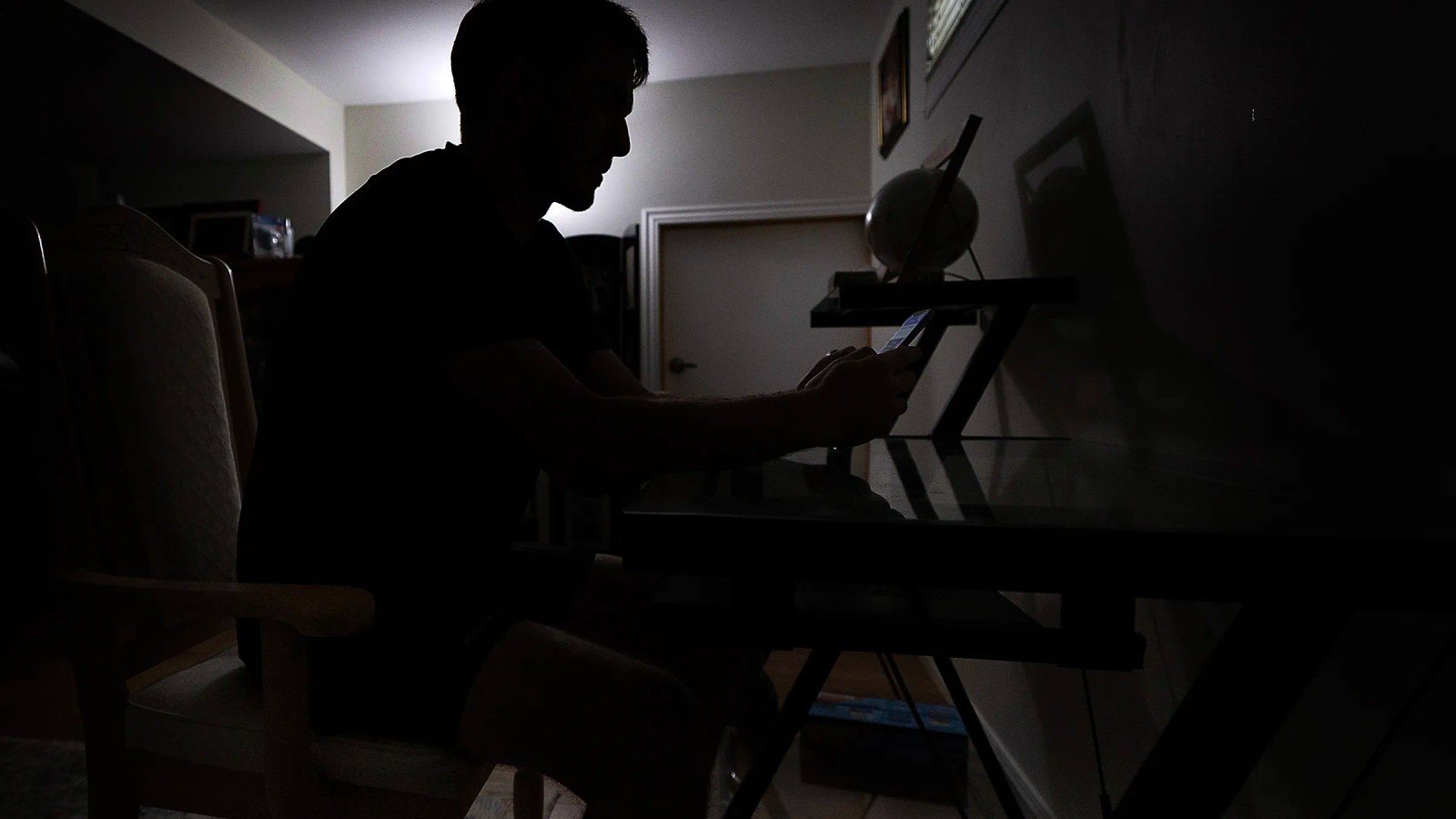
One student racked up $400K in gambling debt on his phone, and online betting is now a bigger threat to sports than doping
Article content
Studying medicine is a notorious grind, involving complex courses, gruelling on-the-job stints and exacting standards. For Phil, a future Canadian doctor, it also meant sleeping in his car.
As the Windsor, Ont., native toured the United States completing clinical rotations — the final requirement for his medical degree — a surprising reality kept him from securing accommodation. His rent money was being gobbled up by a voracious online gambling habit.
Article content
Article content
Advertisement 2

Article content
Wagering huge sums on sports and blackjack with his cellphone over a stress-laden four years, Phil racked up $400,000 in losses.

Long Story
Article content
He would finish his work alongside physicians and patients in one clinical specialty or another, continue course studies at a Panera Bread outlet or some other public venue, then bed down in the store’s parking lot.
“There was a homeless woman inside one of the Panera Breads, and I just stared at her as I’m sitting there with my books, trying to study the best I can, truly struggling with everything,” recalls Phil, who asked that his last name not be published to protect his privacy. “I remember thinking, ‘I am jealous of this person, how they can just exist.’ … Which is crazy.’”
Phil’s story is indeed an extraordinary one, not least because he somehow managed to complete his degree amid the gambling spree. But it’s just one example of what appears to be a mounting toll from Canada’s embrace of Internet-based sports betting — and the virtual casino gambling that flowed from it.
Ontario legalized both in 2022 and their popularity has grown at breakneck speed. Bettors in the province wagered a stunning $103 billion online over the last year, producing $4.3 billion in revenue for 76 licensed sites, with 20 per cent of their take going to the government.
Article content
Federal legislation in 2021 helped pave the way for Ontario’s experiment — and a similar Alberta program set to launch in July — while people in other provinces have more-limited access to unauthorized Internet-based gambling. Ottawa’s Bill C-218 let provinces license single-event sports betting, an attempt to corral a nascent, unfettered sports-betting industry already drawing customers across Canada.

The change even won support from groups such as the federally funded Sports Integrity Canada, dedicated to combatting cheating in sports. But just a couple of years later, in 2024, a Sports Integrity report issued a warning: “Few people anticipated the exponential growth of sport gambling that has been seen.” The volume of betting in Ontario has doubled since those words were written.
Coupled with a deluge of advertising, plus technology with documented addictive qualities, online sports and casino gaming has almost overnight become part of the social fabric, a cultural phenomenon that few Canadians saw coming.
What used to involve a trip to a casino, racetrack or black-market bookmaker now is available 24 hours a day on a device that virtually everyone owns.
And though most people use the apps responsibly as entertainment, the trend has come with a troubling human cost, research published in recent months indicates.
Article content
A federally funded survey in 2024 suggested that one in three young Canadians had gambled online and almost 70 per cent of those met criteria for problem gambling. Another study pointed to a near-doubling of calls to Ontario’s problem-gambling help lines. Bankruptcies involving gambling have tripled in the province.
And there may be even darker consequences.
Data obtained by the National Post from the office of Ontario’s chief coroner show a sharp rise in suicides of individuals with gambling issues in the two years after the new system was introduced. Chief coroner Dr. Dirk Huyer says it’s too early to say for sure what the trend means. But problem gambling is a well-documented risk factor for suicide, and Huyer said he’s asking Ontario’s 300 local coroners to begin actively looking for evidence of gambling when people take their own lives.
You can lose everything in one evening from your couch
Chelsea Rodrigues, gambling addictions counsellor
Little-noticed decisions by the province’s regulator — the Alcohol and Gaming Commission (AGCO) — suggest that massive losses like Phil’s are not uncommon; one customer squandered $2 million in just four months.
“A lot of clients will report that once they started gambling online, they lost touch with the reality of what money really means … It’s just numbers on a screen,” says Chelsea Rodrigues, a counsellor at a leading gambling-addiction program run by Windsor’s Hôtel-Dieu Grace Hospital. “You can lose everything in one evening from your couch.”
Article content
But the consequences of the phenomenon go well beyond a surge in problem gambling.
Disgruntled bettors have proven to be a scourge for athletes, with numerous professional basketball, baseball, hockey and tennis players receiving harassment online and in person, death threats and demands for money to cover losing bets.
And the rise of online sports betting has coincided with a burst in reports of match-fixing, including on one of Canada’s marquee professional franchises. A former Toronto Raptors player is awaiting sentencing in the United States after pleading guilty to faking injuries to aid gamblers betting on his performance. Most of the pro leagues have seen players arrested in recent years on match-fixing charges, something that used to be a rarity. An Ontario-licensed gambling app was sanctioned for not reporting suspicious betting around, of all events, Czech table tennis.
Article content

“This is a major threat to sport — I would suggest it’s a larger threat than the issue of doping,” says Jeremy Luke, CEO of Sport Integrity Canada. “If we don’t put in place mechanisms to properly deal with it, then I think we will be facing a significant scandal.”
At the same time, North America’s professional sports establishment — whose athletes are the targets of those angry bettors and match fixers — has embraced the phenomenon. All the major leagues and many of the teams have forged partnerships with online betting companies, while sports broadcasters have embedded discussion of betting into their programming.
Article content
In one of this novel world’s many ironies, an Ottawa Senators player, Shane Pinto, handed a 41-week suspension for gambling online in 2023, had, like his teammates, a gambling site’s name emblazoned on his helmet.
Leagues and teams “are dancing with the devil. Worse, they’ve gotten into bed with the devil,” says Canadian Declan Hill, a professor at Connecticut’s University of New Haven, whose new book on the issue, Birds of Prey, comes out next spring. “It seems attractive at first … but the devil is coming for his payment.”
Governments roll the dice on online sports betting
It all raises a vexing question. In what was touted as an attempt to rein in a disruptive new industry, did governments in the U.S. and Canada create a monster that has grown beyond anyone’s control?
Even an industry spokesman concedes that government approval may have acted as a comforting draw for some people who once shunned online gambling. And Ontario’s legalization initiative uncorked a fire hose of advertising, its primary goal being, like most marketing, to find and hold on to customers.
As Draft Kings, a prominent gambling app, says in its most recent annual report, “our ability to effectively market is paramount to our operational success.”
Article content
But officials in Ontario and Alberta, and the industry itself, say giving the business a government imprimatur was the responsible thing to do.
Alberta’s commercial online betting system is set to open on July 13. Dale Nally, the Alberta minister in charge of the program, seems to acknowledge the darker side of the industry, a contrast to advocates who typically portray it as harmless entertainment for most people — “gaming,” not gambling, in the official vernacular.
“If there was a big red button you could push that would end online gambling, that’s what we would do. But there is no red button,” Nally told the National Post. “We can’t control the Internet. You can do that in places like North Korea and Cuba, but you can’t do it in Alberta.”
Article content

Many Albertans were already using “grey market” sports and casino sites that are unregulated and often allow underage gambling — and funnel none of their proceeds to the province, the minister said.
Now Alberta will reap some of the profit and devote part of that money to addiction treatment and First Nations, Nally said.
In Ontario, the government’s share of industry revenues over the last 12 months blew past $800 million. On the other hand, the province cancelled direct funding of its leading-edge centre studying problem betting in 2019, leaving Gambling Research Exchange Ontario (GREO) to rely in part on public largesse from the U.K. and New Zealand.
Article content
Still, the Ontario government has invested $421 million since 2018 to support research, responsible-gambling education and awareness programs, and gambling-addiction treatment, said a statement from Stan Cho, the minister in charge of gaming.
The province has also modified rules in response to emerging issues, banning athletes and other celebrities from appearing in gambling ads and launching a new program that lets problem gamblers bar themselves from all the licensed apps at one time — a key demand of critics, said the statement.
Industry spokesman Paul Burns says his members have long pushed for regulation, anxious to protect their customers and distinguish themselves from less-savoury rivals based in laissez-faire jurisdictions.
“One, regulation in this market is better than not having it. Two, it was a product Canadians were participating in in an unregulated fashion,” said the Canadian Gaming Association’s CEO. “The (licensed) games are fair, you’re going to get paid, and there is a requirement and oversight for player protection tools … Industry wants to ensure we have a healthy relationship with players.”
Sports betting a gateway to casino gambling
That such a business exists in its current form actually stems from events in another country, specifically, a 2018 decision of the U.S. Supreme Court.
Article content
Congress had outlawed American sports betting in 1992 following a series of scandals, but the court ruled the ban unconstitutional, meaning states were free to legalize sports gambling. The majority have since taken advantage of the decision and legalized one form of online wagering or another.
There was little to stop Canadians from accessing such foreign sites, yet the provinces, which have had jurisdiction over lottery and gambling since 1985, had no way to control or tax the business. Some offered sports gambling online through their own agencies, but only “parlay” betting, where a player wagers on a series of different events. Single-event sports betting was actually a criminal offence.
Parliament responded by passing the 2021 bill that legalized single-event betting and gave provinces the green light to get into the act.
When Ontario became the first to do just that, setting up iGaming Ontario to license commercial operators, it allowed more than just the “sportsbooks” that offer sports betting. Over half its approved sites now feature casino games — and they account for more than 80 per cent of revenue.
Combining the two types of betting actually gives operators a key synergy, argues Michael Naraine, a sports management professor at Ontario’s Brock University. Many bettors are enticed by sports gambling — an extension of their interest in hockey or football or track and field — but often navigate casino games between those wagers, he says.
Article content
Flutter Entertainment, for instance, relies on “successful cross-promotion” and minimizing “friction” between the two sorts of gambling, its 2025 annual report says. The firm’s popular FanDuel app lets customers “play a subset of casino games without leaving the sportsbook app.”
The industry welcomes such behaviour because casino games are more consistently profitable than wagering on the less-predictable outcome of athletic competition, says Naraine.
“Sports betting,” he says, “is the gateway drug to casino gambling.”
Burns of the Gaming Association disagrees with Naraine’s analysis. Ontario was working toward regulating commercial online casino gambling before Parliament took on the sports-betting issue, and many gamblers are interested primarily in casino games, not sports, he said.
Regardless, there seems little doubt that the legalization push convinced more Canadians to wager on something online.
Mounting personal debt and gambling addiction
A 2018 national survey spearheaded by the University of Lethbridge found that fewer than two per cent of respondents had partaken in what was then illegal online gaming. Burns counters that other research puts the figure at about 20 per cent.
Article content

More recent data has shed new light on the matter.
A 2024 survey for the Canadian Centre for Substance Use and Addiction by GREO and others, using a polling firm’s Internet opinion panel, suggested that one in five Canadians had gambled online, one in three of those aged 18 to 29.
More troubling, almost 40 per cent of the online players overall, and 70 per cent of those aged 18 to 29, met criteria for problem gambling, compared with less than six per cent for people who stuck to physical casinos and other types of gambling. Problems ranged from increased credit card debt to fractured personal relationships and feeling shame about their betting.
If accurate, those data would mark a dramatic spike in gambling addiction, and the scale of online betting in Ontario has continued to soar since the study was conducted.
For much of the previous two decades — even as bricks-and-mortar casinos, racetrack slot machines and corner-store VLTs became commonplace — the problem rate among Canadian gamblers hovered in the one-to-two-per-cent range, says Matthew Young, GREO’s chief research officer.
The rate suggested by the 2024 survey, he says, “was far beyond what we had expected.”
Other studies and reports add to the concerning evidence.
Article content
The per-capita rate of calls to Ontario’s problem-gambling help lines has almost doubled since the province first allowed limited online gaming, then legalized private gambling apps and their ubiquitous marketing, noted a study published in March in the Canadian Medical Association Journal.
From another perspective, the province saw 140 to 214 gambling-related personal insolvencies between 2020 and 2022. Then, as commercial online gambling took hold, the figures steadily climbed to 727 last year, data provided by the Office of the Superintendent of Bankruptcy Canada indicate.
Then there are the suicides.
The number of self-inflicted deaths in Ontario where coroners recorded gambling as an issue before commercial Internet betting was legalized in 2022 reached as high as 12 in one year, but ranged from two to eight in other years. Then coroners reported 13 such suicides in 2023, and 17 in 2024. Another seven have been tallied so far for 2025 but many investigations of deaths that year are still ongoing, and the number is certain to rise, said chief coroner Huyer.
“Some people end up panicking,” says Windsor counsellor Rodrigues about the “high suicidality rate” she sees among compulsive gamblers. “They go to very dark places.”
Article content
In Victoria, B.C., the Homewood Ravensview addictions treatment centre has had a “strong response” after opening a gambling program this year, even though that province has yet to legalize commercial online gambling, said spokesman Craig Extine
Businesses that help people in dire financial straits are also seeing the fallout.
As many as 30 per cent of clients at Toronto’s Harris and Partners Debt Relief have gambling problems — about twice the rate before Ontario’s legalized internet gambling initiative, says proprietor Joshua Harris.
“Just around my office … we see tons of people doing sports bets,” he said. “I tell them, ‘You’re making poor choices.’”
Gambling anywhere, any time
It all points to a tectonic shift in the history of legal gambling in Canada, with a number of likely explanations.
Most obvious is the convenience. Betting on sports or a casino game is as effortless now as scrolling through TikTok or checking tomorrow’s weather. It can be done anywhere, at any time.
And like other Internet-based enterprises, the operators of gambling apps use the considerable powers of the technology to hook customers, says Andrew Kim, a psychology professor at Toronto Metropolitan University.
Article content

Those powers include the type of software built into social-media sites that studies suggest make the platforms addictive, flooding the brain with dopamine, the “feel-good” neurotransmitter.
Gambling comes with an inherent risk of such compulsiveness. But in their quest to entice more users, some gaming companies also harness artificial intelligence and other advanced tech.
At Draft Kings “we actively use data science and machine learning to help optimize conversion and monetization,” its 2024 annual report says. Conversion is the process of turning an idle browser into a paying customer.
One of the industry’s innovations are so-called “micro bets,” which produce an instant rush by allowing customers to vote on everything from whether the next pitch will be a strike to the result of a basketball player’s free throw.
And then there’s the advertising that floods television, the internet, sports arenas and billboards. An academic study commissioned by CBC’s Marketplace found gambling content occupied as much as 21 per cent of televised hockey and basketball games. Flutter alone says it spent almost $5 billion on marketing globally in 2025.
“We’re conditioning youth to think of gambling as essential to sports,” says Nigel Turner, a scientist at Ontario’s Centre for Addiction and Mental Health.
Article content
Some Canadian politicians are responding. A Senate bill that would set up a framework for more strictly limiting gambling ads has moved through an initial hurdle in the House of Commons, while a private member’s bill in the Ontario Legislature would ban gambling advertising completely.
Phil, the medical student, says ads aren’t what hooked him initially, though he says in time they made his addiction worse. He notes that he had often visited Windsor’s casino — one of the first in Canada — on social outings that never got out of hand. But his father’s sudden death in 2021 dealt him a deep emotional blow and he turned to online betting in the grey market as an escape. He’s a self-described “sports guy” but while waiting to see the result of his wager on a sporting event, he would play blackjack for the more immediate stimulation.
The advent of Ontario’s legal system in 2022 allowed him for the first time to charge his wagers to a credit card, “so definitely in that way I lost a significant amount of money very quickly.”
He says he was financing his medical degree at a North American-accredited university in the Caribbean with his own savings, an inheritance and contributions from his family. Much of the money was soon diverted into an endless cycle of gambling wins, losses and vain attempts to recoup those losses. What started as $100 wagers escalated to bets as steep as $2,000. To keep the high going, he would gamble on the outcome of a single point in a tennis match or “random” events like ping-pong somewhere overseas, often staying up all night.
Article content
Several times he would win $100,000 or more in a gambling spree — $315,000 one day — only to lose it soon after. He would ask his family for more money, his loved ones not realizing they were shovelling cash into the yawning hole of his secret habit.
“There’s nothing worse, no worse feeling than having it and then immediately — you just can’t control yourself — losing it within an hour,” says Phil.
Ontario requires companies to “systematically provide assistance” to players like Phil who might be experiencing harms. It’s the type of “responsible gaming” rule often touted by governments and industry to justify legalization. Phil says some of the gambling apps did eventually ban him after asking questions about where his money was coming from, but none tried to get him help.

Rodrigues, the Windsor addictions counsellor, says to her knowledge the “vast majority” of her clients were never approached by sites about slowing down.
Decisions by Ontario’s regulator suggest the safeguards are by no means rock solid.
The AGCO fined app operator Apollo Entertainment $100,000 for lax enforcement of responsible-gaming rules, including “in the case of a player experiencing over $2 million in losses in under four months without receiving interventions from the gaming site operator during that period.”
Article content
TheScore was fined a similar amount for failing to help a customer who lost $230,000 after displaying clear loss-chasing behaviour and “signs of distress to the operator’s VIP host.” The commission dinged PointsBet with a $150,000 penalty when it neglected to assist a client who lost over $500,000 in less than three months, even as the app’s own software flagged his concerning behaviour.
Athlete threats and match-fixing
While some desperate or frustrated players do find help, others lash out at athletes whose performance caused them to lose bets. Often the beef is over a proposition — or prop — wager, a popular feature that lets users bet on the actions of an individual player — either over or under a performance standard set by the app — rather than await the match’s final outcome.
Chris Boucher, then a Toronto Raptor, revealed in 2023 that a gambler upset that Boucher’s scoring total had ruined his bet launched a racist attack online against the Black player, saying “I chose the wrong slave today.”
After Ukrainian tennis star Elina Svitolina lost her quarterfinal match at last August’s National Bank Open in Toronto, she says she received a flood of harassment from bettors. They threatened her parents, uttered racial slurs against her husband, Black tennis star Gael Monfils, and said they hoped Russian soldiers would kill all Ukrainians.
Article content
The 2024 U.S. Open was the first major golf tournament where gambling spectators actually yelled at individual players, to encourage or spoil their performances. Scotty Scheffler, the world’s No. 1-ranked golfer, says he shut down his account on the American cash-transfer site Venmo because of all the requests to reimburse losing bets.
The WTA, which runs the premiere women’s pro tennis tour, called last year for the gambling industry to crack down on harassment after a survey found 8,000 “abusive, violent or threatening” posts directed at players in one year. The organization, which itself has partnered with leading gambling app FanDuel, did not respond to a request for comment on the issue.
The gambling industry has spoken out against abusive customers, banning those it can identify, but it remains to be seen if this bleak new version of sports fandom will persist or disappear.
In the meantime, a related problem is attracting increasing scrutiny: attempts to manipulate athletic performance to help gamblers win.
Match-fixing scandals like the 1919 “Black Sox” affair were once an infrequent, if sensational, occurrence in North America, though some cases undoubtedly went undetected. But U.S. authorities have laid a slew of charges against professional and college basketball, baseball and football players in the last few years. One of the highest-profile cases is that of former Toronto Raptor Jontay Porter, who was banned for life from the NBA.
Article content
Article content

Gamblers in Ontario appear to have been part of the problem.
John Holden, an Oakville, Ont., native and business law professor at Indiana University who studies sports gambling, said it’s not clear whether more match fixing is taking place or if it has just become more visible because of the monitoring required of regulated sportsbooks’ betting patterns.
Others, including Hill, the professor, and Luke of Sport Integrity Canada, believe the boom in sports gambling has undoubtedly spawned more match fixing, with potentially dire consequences.
“There is a whole trove of good-faith sports fans who now are watching games going, ‘Is that for real? Did that guy just drop the ball deliberately?’” says Hill. They’re “watching with an increased level of skepticism and cynicism, and frankly, they’re right to do so.”
Porter pleaded guilty to wire fraud conspiracy in 2024, admitting that on two occasions he had faked an injury or illness and left a Raptors game early, making sure that gamblers who had placed an “under” prop bet on his performance would win. A New York City court heard that Porter was hooked on online gambling himself and pressured into match-fixing by people who promised to forgive his debts.
Article content
“If I don’t do a ‘special’ with your terms, then it’s up,” Porter acknowledged to one of them in a Telegram group chat. “And u hate me and if I don’t get u 8k by Friday you’re coming to Toronto to beat me up.”
The case also reverberated with Ontario’s gaming regulator. Earlier this year, the AGCO proposed suspending PointsBet for five days, alleging it had taken bets on the impugned Porter games and failed to detect or report clear signs of suspicious activity.
In January, the commission fined FanDuel $350,000 after it accepted 114 bets from Ontario player accounts on the Czech Table Tennis Stars Series, despite numerous red flags pointing to match fixing.
Luke, of Sport Integrity Canada, says his group has repeatedly urged the federal government to adopt the Macolin Convention, an international treaty that sets out how countries should combat the problem, including by making match-fixing a crime. The group has also developed preventive guidelines for the sports associations it serves and would like Ottawa to make them official.
Federal authorities have yet to act on either request.
Phil, for one, did manage finally to emerge from the hell of online-gambling addiction. In 2024, he disclosed the compulsion to his family and his longtime girlfriend — who promptly left him — and underwent months of treatment at Hôtel-Dieu Grace in Windsor, often focused on root-case emotional issues.
He’s been proudly gambling-free since last November but says he no longer gets the same enjoyment from watching sports. He and other members of his gambling support group are angered by the advertising they see and the impact they fear it will have on others.
“I do get upset when I see the betting odds (on TV broadcasts). I know that they’re not even good odds, they’re just screwing with people’s lives and livelihoods,” he says. “The worst part is it really strikes people who are struggling — struggling through things and trying to feel something.”
Article content
