
WASHINGTON (AP) — In the days after two American citizens were shot and killed in Minneapolis earlier this year, former Homeland Security Secretary Kristi Noem said the department would “rapidly acquire and deploy” body cameras to its officers around the country.
Nearly half a year later, after another shooting death under disputed circumstances blamed on the department, the promise still hasn’t been fully met — prompting outrage from critics who say the cameras are a chance at accountability for officers enforcing President Donald Trump’s immigration crackdown.
The Immigration and Customs Enforcement officers involved in the Houston shooting death of Lorenzo Salgado Araujo, a Mexican man who lived in the U.S. for more than 35 years, were not wearing body cameras, Homeland Security has said.
No evidence has emerged to support DHS’ version of events — that an officer opened fire at Salgado Araujo after he rammed an ICE vehicle chasing his van. Witnesses deny those claims. Cameras could have helped shed light on what exactly took place.
The shooting has opened ICE up to fresh scrutiny over its tactics at a time when arrests have ticked up and as DHS is flush with billions of dollars from an infusion granted by Congress — some of which was earmarked to outfit officers with body cameras.
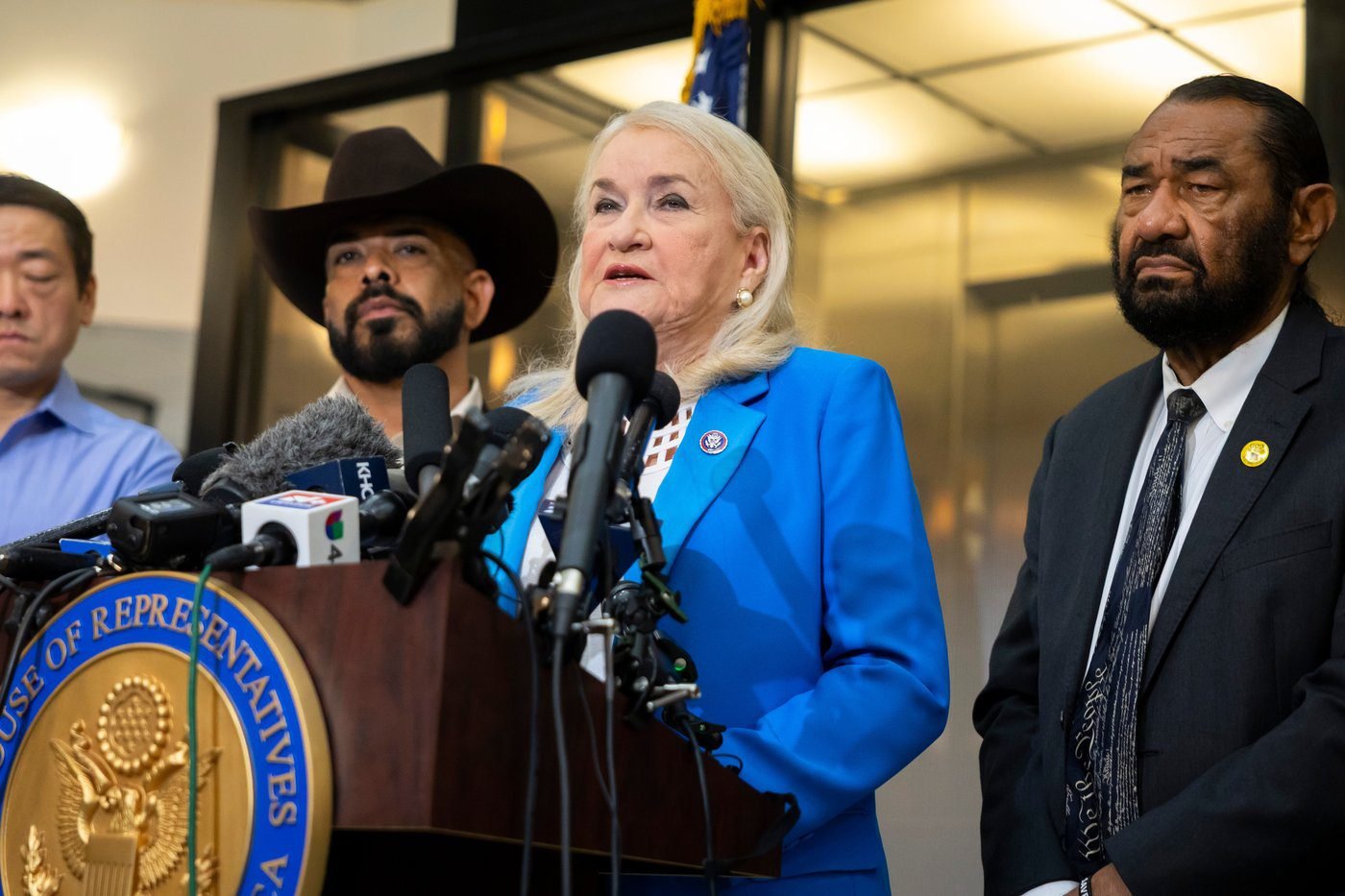
“Even after we’ve given ICE specifically $20 million for body cameras and Kristi Noem promised in February of this year that she was going to purchase them and get them in the field, that here we were in Houston that the agents didn’t have them,” said Rep. Sylvia Garcia, a Democrat from Houston, during a news conference Friday.
Body cameras, and the lack of them, a key issue in Trump’s second term
Days after Alex Pretti was killed while protesting ICE activity in Minneapolis in January, Noem announced that every Homeland Security officer on the ground there would be issued body-worn cameras. Noem said it was the beginning of a nationwide effort to get them to every officer around the country as funding becomes available.
“We will rapidly acquire and deploy body cameras to DHS law enforcement across the country,” Noem, who has since been replaced by Markwayne Mullin, said in a social media post.
Homeland Security said Thursday that body cameras have been deployed to more than half of ICE field offices around the country and that the remainder would get them in the next 60 days.
Garcia said she told the acting head of ICE, David Venturella, during a phone call that she was outraged over the lack of body-worn cameras. She said Venturella told her that less than a third of officers nationally have been issued body cameras. He promised her that all officers would get them by the end of July, she said.
“Trust me, I will hold him to it, and I will make sure that all my colleagues in Congress and the Democratic caucus hold him to it,” she said.
Michelle Gross, president of the Minnesota-based advocacy group Communities United Against Police Brutality said ICE shouldn’t conduct enforcement operations until all officers are equipped with body cameras.
“If they’re going to be running around with guns and stopping people, you damn well better have some body cameras,” she said. “This is an agency that’s soaking up an incredible amount of tax dollars and we can’t have any accountability?”
In earlier shootings, some officers wore cameras — but not all
Homeland Security said at the time of the Pretti shooting that four of the Border Patrol agents were wearing cameras. Investigators from Customs and Border Protection were able to use video from those cameras as well as other sources to determine that more than one officer on the scene fired shots during the Pretti death.
The department has not said whether any of the ICE officers on the scene of the killing of 37-year-old mother of three Renee Good earlier in January were wearing the cameras. Bystander video of both shootings was highly scrutinized and fanned public outrage over the incidents.
The former acting head of ICE, Todd Lyons, said while testifying to Congress in the aftermath of the Minneapolis events that the body camera footage would eventually be released to the public but it so far has not. Lyons has since retired.
Lyons and his counterpart at CBP, Rodney Scott, testified at the time that thousands of their officers were already outfitted with body cameras, with more to come.
“That’s one thing that I’m committed to is full transparency. And I fully welcome body cameras all across the spectrum in all of our law enforcement activities,” Lyons said.
In a January court filing, at a time when roughly 2,000 ICE officers were deployed to Minnesota, a senior ICE officer said in a court deposition that body-worn cameras had not been deployed to deportation officers working out of the St. Paul office. Samuel J. Olson, the head of the St. Paul field office, said the agency would need roughly half a year to do all the equipping and training needed to roll out body cameras to all the ICE law enforcement officers in the state.
The body camera issue has come up at other times during Trump’s second term as growing numbers of ICE and CBP officers are enforcing the president’s mass deportation agenda.
In Chicago, as Homeland Security officers were out in force as part of “Operation Midway Blitz,” a judge required federal immigration officers to wear body cameras, saying that they would provide evidence to back up how agents handle confrontations with protesters.
Homeland Security blames Democrats for slow rollout but Dems push back
Homeland Security officials have blamed Democrats for the fact that not every officer has cameras yet.
“The officers involved in the incident in Houston had not been issued body-worn cameras due to back-to-back Democrat shutdowns,” the department said.
Those shutdowns were fueled by Democrats’ anger over President Trump’s immigration crackdown and demands to force reforms on Homeland Security.
In the wake of the Pretti and Good shootings, the one area where Republicans and Democrats appeared to agree was the need for widespread adoption of body cameras for officers taking part in immigration enforcement tasks. In April, Congress gave Homeland Security $20 million for “the procurement, deployment, and operations of body-worn cameras” for officers carrying out immigration enforcement tasks.
Garcia called the accusation that Democrats were to blame for the officers not having body cameras “ludicrous.”
“That’s just a freaking excuse, because the bottom line is they made a commitment,” said Garcia.
Rebecca Santana, The Associated Press
