
For many businesses, growth is often measured by how many new customers come through the door. Marketing campaigns, paid ads, and social media strategies are usually focused on attracting attention and generating new sales. While acquisition is important, many businesses overlook one of the most profitable growth opportunities already sitting in front of them: existing customers.
Customer retention is what keeps customers coming back after the first purchase. It reflects how well a business builds trust, delivers consistent value, and creates experiences that make customers want to stay loyal over time. In competitive industries where customers have endless options, retention can become the difference between businesses that struggle to maintain momentum and businesses that grow sustainably.
The numbers reinforce just how valuable existing customers can be. Businesses typically have a 60–70% chance of selling to an existing customer, compared to a much lower likelihood of converting a brand-new prospect. Loyal customers also tend to purchase more frequently, spend more over time, and recommend businesses to others, making retention one of the most cost-effective ways to support long-term growth.
At the same time, retention is not something that happens automatically. Customers leave when experiences feel inconsistent, communication breaks down, or businesses fail to continue delivering value after the initial sale. Understanding why customers stay, and why they leave, is essential for businesses looking to improve loyalty, strengthen customer relationships, and build more sustainable growth over time.
What Is Meant by Customer Retention?
Customer retention refers to a business’s ability to keep customers engaged and returning over time. Rather than focusing only on attracting new buyers, retention measures how successfully a company builds ongoing relationships that encourage repeat purchases and continued loyalty.
For ecommerce businesses, retention may look like customers returning regularly to purchase products. For service-based businesses, it could involve clients renewing contracts, booking repeat appointments, or maintaining long-term partnerships. Regardless of the industry, retention reflects how well a business continues meeting customer expectations after the first interaction.
Customer retention is also closely tied to customer loyalty. A loyal customer is more likely to continue choosing the same business even when competitors offer similar pricing or promotions. That loyalty is usually built through positive experiences, consistent communication, and trust developed over time.
Many businesses focus heavily on acquisition because new customers feel like immediate growth. However, acquisition without retention can become expensive and unsustainable. If customers only purchase once and never return, businesses are forced to continuously spend time and money replacing lost revenue.
Why Customer Retention Matters for Business Growth
Customer retention plays a major role in long-term profitability because existing customers are often more valuable than first-time buyers. Returning customers are already familiar with the business, which usually means they require less marketing effort and are more likely to purchase again with confidence.
Over time, loyal customers tend to spend more and contribute higher customer lifetime value. They are also more likely to recommend businesses to friends, family, and colleagues, creating organic referrals that can reduce customer acquisition costs. In many cases, strong retention creates a cycle where satisfied customers help generate additional business growth naturally.
Retention also creates more predictable revenue. Businesses with strong repeat customer behaviour often have steadier cash flow and better long-term forecasting ability than businesses relying entirely on new customer acquisition. This stability becomes especially important during slower economic periods or highly competitive market conditions.
Perhaps most importantly, customer retention strengthens brand trust. Customers who consistently receive positive experiences are more likely to remain loyal even when competitors attempt to win them over with discounts or promotions. In crowded industries, that trust becomes a powerful competitive advantage.
Key Customer Retention Metrics Businesses Should Track
Retention strategies become much more effective when businesses understand how customers are actually behaving. Tracking customer retention metrics helps companies identify strengths, uncover problems early, and make more informed decisions about customer experience improvements.
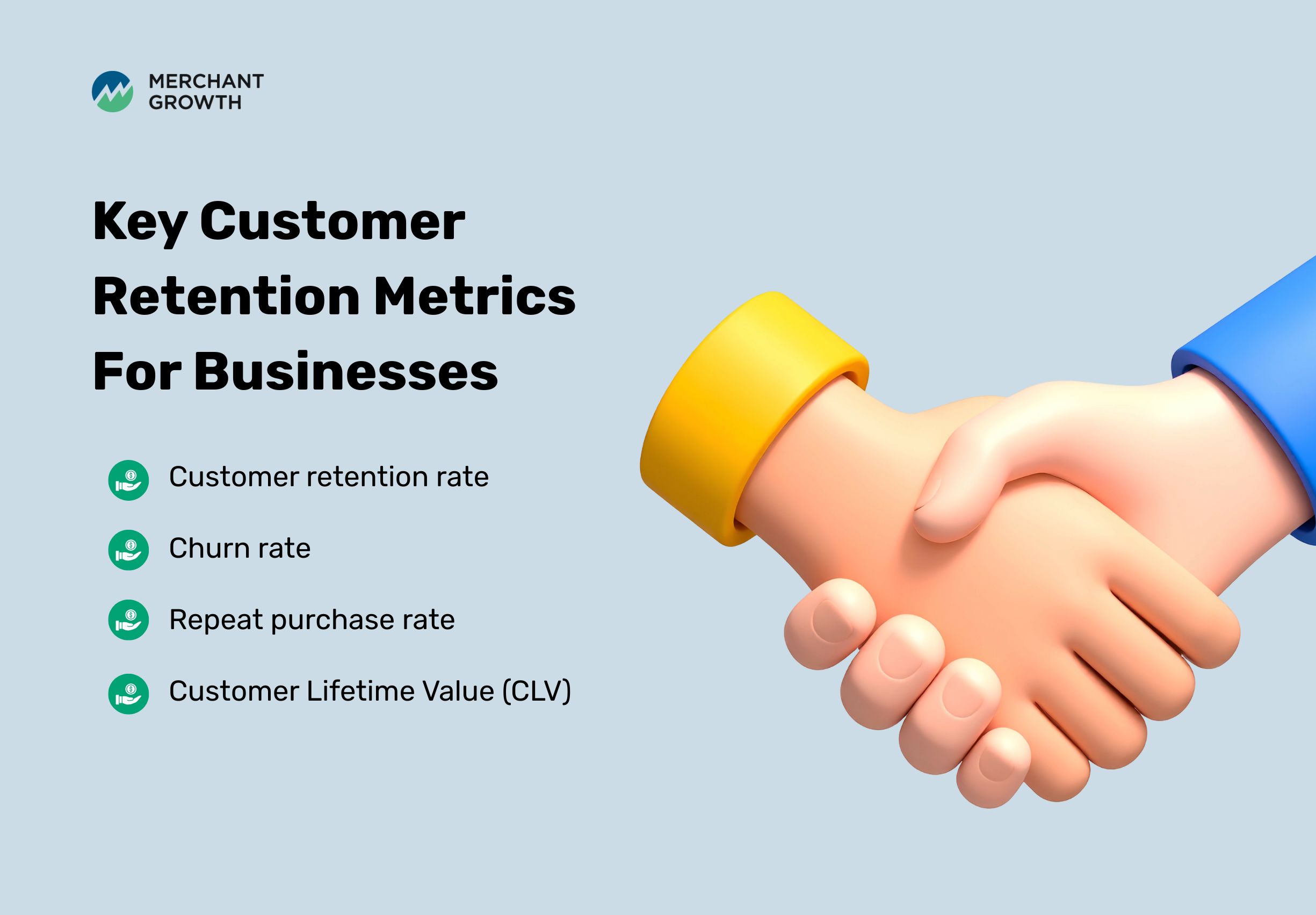
Customer Retention Rate
Customer retention rate measures the percentage of customers a business keeps over a specific period of time. A high retention rate generally indicates that customers are satisfied, engaged, and continuing to return after their initial purchase. For many businesses, retention rate is one of the clearest indicators of long-term customer loyalty and overall customer experience.
Businesses typically calculate retention rate by comparing the number of customers at the beginning and end of a time period while accounting for newly acquired customers. Despite how important this metric is, many companies still fail to track it consistently. In fact, as many as 44% of businesses do not actively measure their customer retention rate, which can make it much harder to identify churn risks or understand long-term customer behaviour.
Retention benchmarks can also vary significantly depending on the industry. Businesses operating in sectors with recurring customer relationships or subscription models often see much higher retention rates than industries with less frequent customer engagement. Average retention rates by industry include:
- Insurance: 84%
- Banking: 75%
- Retail: 63%
- Hospitality: 55%
- Fintech: 37%
- SaaS: 35%
- Media: 25%
- Edtech: 4%
Rather than focusing only on industry averages, businesses should pay close attention to whether their retention rate is improving over time. Even small improvements in retention can have a meaningful impact on customer lifetime value, repeat revenue, and long-term profitability.
Churn Rate
Churn rate measures how many customers stop doing business with a company over a given period. While retention focuses on customers staying, churn focuses on customers leaving. High churn rates can signal problems with customer experience, communication, onboarding, or overall satisfaction.
For subscription-based businesses in particular, churn is one of the most important metrics to monitor. Even small increases in customer churn can have a major impact on recurring revenue and long-term profitability.
Repeat Purchase Rate
Repeat purchase rate measures how often customers come back to buy again after their first transaction. This metric is especially important for ecommerce businesses where long-term profitability often depends on repeat buying behaviour rather than one-time purchases.
A strong repeat purchase rate usually indicates that customers trust the brand, enjoy the product experience, and continue seeing value over time. Businesses with higher repeat purchase rates often rely less heavily on aggressive acquisition campaigns to maintain growth.
Customer Lifetime Value (CLV)
Customer lifetime value estimates how much revenue a customer is expected to generate throughout their relationship with a business. Retention has a direct impact on CLV because customers who stay longer and purchase more frequently contribute significantly more long-term value.
Businesses focused on improving retention often see customer lifetime value increase naturally over time. This is one reason many companies now prioritize relationship-building and post-purchase engagement as part of their overall growth strategy.
What Are 5 Key Factors of Customer Retention?
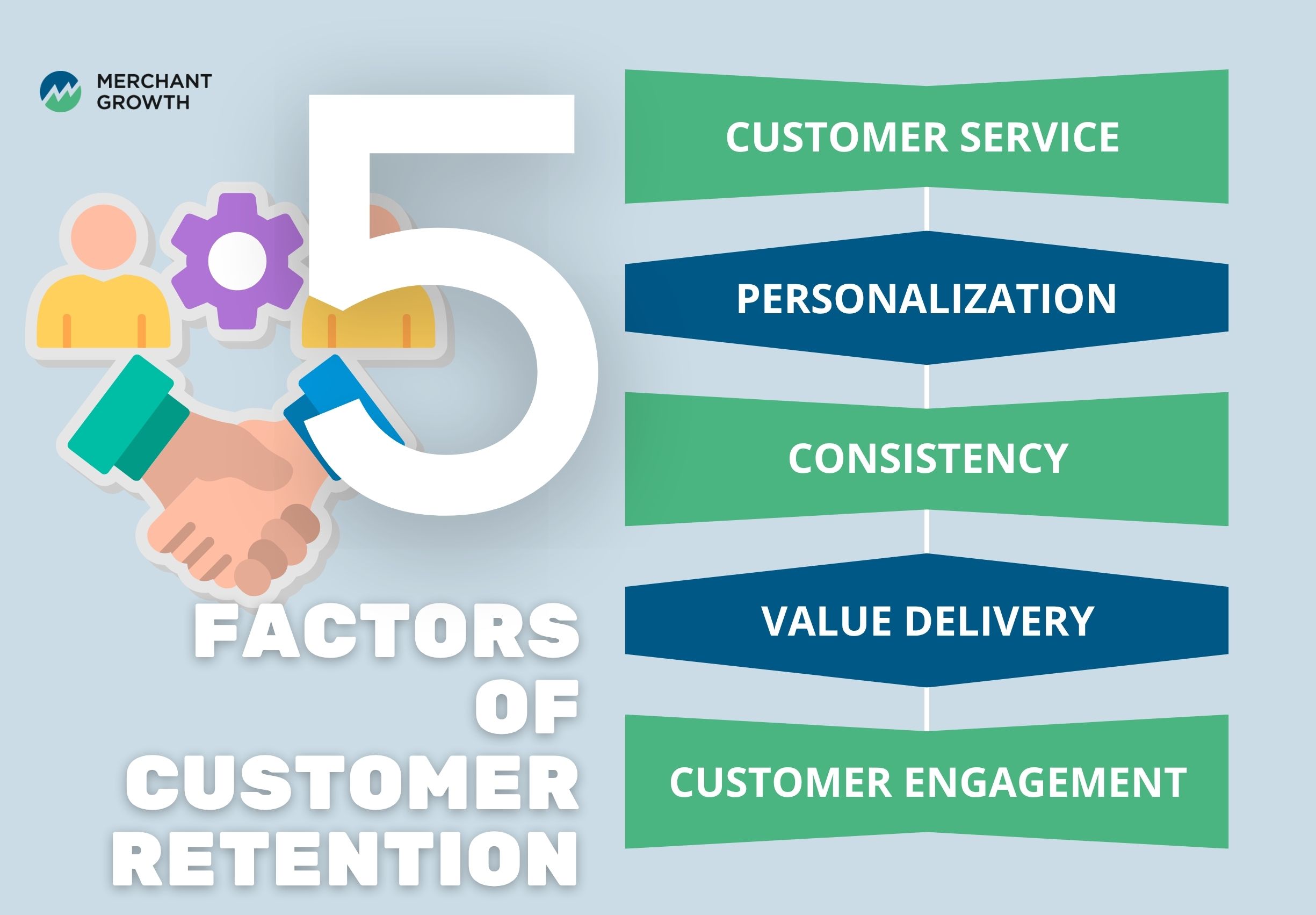
Customer retention is rarely driven by one single factor. Instead, long-term loyalty is usually built through a combination of consistent experiences, strong communication, and ongoing value delivery.
Customer Service
Customer service plays a major role in retention because customers remember how businesses respond when issues arise. Fast response times, helpful support, and clear communication all contribute to stronger trust and satisfaction. Even small service interactions can shape whether a customer chooses to continue doing business with a company.
Poor customer service, on the other hand, can quickly damage loyalty even if the original product or service was strong. Customers who feel ignored or undervalued are far more likely to leave and explore other options. Businesses that prioritize responsive and proactive support are often more successful at building long-term customer trust.
Enhance customer service and try out these strategies:
- Offer multiple customer support channels such as live chat, email, and phone support
- Create post-purchase follow-up emails to check customer satisfaction after delivery or service completion
- Set internal response time goals to ensure customer inquiries are answered quickly and consistently
Personalization
Customers increasingly expect experiences that feel tailored to their needs and preferences. Personalized recommendations, targeted communication, and relevant offers help businesses create stronger emotional connections with customers. Businesses that use customer behaviour and purchase history effectively are often better positioned to increase repeat purchases and engagement.
Personalization also helps customers feel recognized instead of treated like just another transaction. Even simple personalized experiences can make interactions feel more relevant and valuable to customers over time.
Work personalization into your processes with these tactics:
- Send personalized product or service recommendations based on previous purchases
- Segment email campaigns by customer interests, buying behaviour, or engagement history
- Use customer names and tailored messaging in marketing emails and loyalty communications
Consistency
Consistency builds confidence. Customers are far more likely to stay loyal when businesses deliver reliable experiences across communication, fulfillment, support, and product quality. A consistent experience helps customers know what to expect every time they interact with a business.
Inconsistent experiences create uncertainty, which can weaken trust over time. Businesses that consistently meet expectations are often better positioned to retain customers, especially in highly competitive industries where alternatives are easy to find.
Stay consistent and implement these techniques:
- Create standardized customer service processes and brand messaging guidelines
- Maintain consistent delivery timelines and communication updates for customers
- Regularly review customer feedback to identify gaps in the customer experience
Value Delivery
Retention depends on customers continuing to feel they are receiving value after the initial purchase. This can include product quality, educational resources, ongoing service improvements, or post-purchase support. Businesses that consistently reinforce value are more likely to maintain long-term customer relationships.
Customers who feel businesses continue investing in their experience are more likely to stay engaged long term. Value delivery is often what separates transactional businesses from relationship-driven brands.
Try out these strategies to deliver more value to your customers:
- Share educational content, tutorials, or product usage tips after purchase
- Introduce loyalty perks or exclusive offers for repeat customers
- Regularly improve products or services based on customer feedback and industry trends
Customer Engagement
Strong customer relationships require ongoing communication and interaction. Follow-up emails, feedback requests, loyalty programs, and community-building efforts all help businesses stay connected with customers after the sale.
Engagement also creates opportunities to identify concerns before customers disengage completely. Businesses that communicate proactively are often better equipped to reduce churn and strengthen loyalty over time.
Ideas to build customer engagement in your business:
- Launch a loyalty or rewards program that encourages repeat purchases
- Send customer surveys or feedback requests to identify improvement opportunities
- Create exclusive promotions, events, or early-access offers for returning customers
Common Reasons Businesses Lose Customers
Most customers do not leave because of one negative experience. More often, businesses lose customers through a series of small frustrations that slowly weaken trust over time. A delayed response, inconsistent communication, lack of follow-up, or feeling overlooked can gradually push customers toward competitors offering a better overall experience.
The challenge is that many retention problems are not immediately obvious. Customers rarely announce they are becoming disengaged before they leave. Instead, they may stop opening emails, purchase less frequently, or quietly move on after a poor experience. Understanding the most common reasons customers leave allows businesses to strengthen relationships before churn becomes a larger issue.
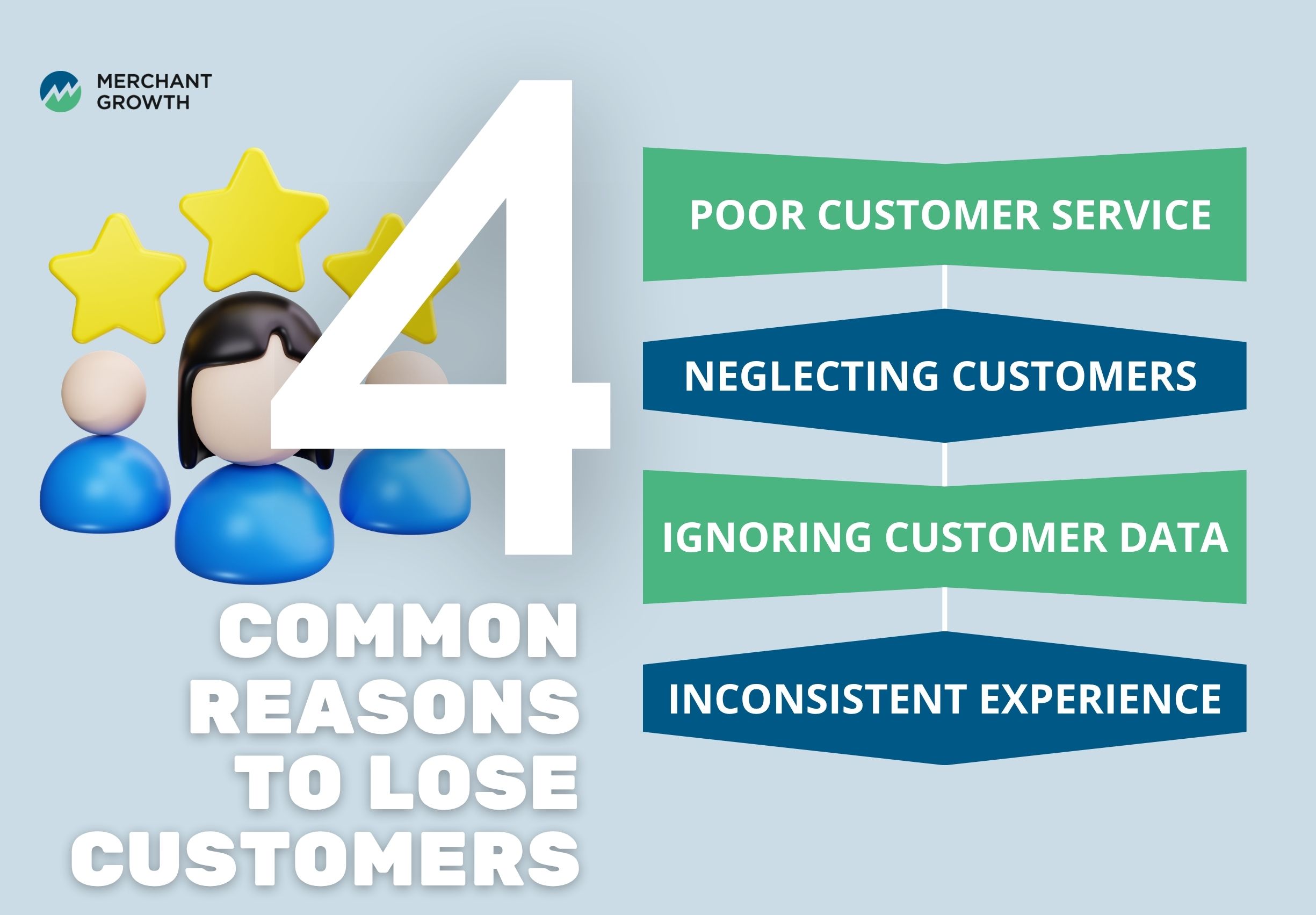
Poor Customer Service
Slow response times, unresolved problems, and inconsistent support experiences are some of the most common reasons customers leave. Even businesses with strong products or competitive pricing can struggle to retain customers if service quality does not meet expectations.
Customers want to feel supported and valued when issues arise. Businesses that fail to respond quickly, communicate clearly, or resolve concerns efficiently often damage trust faster than they realize. In highly competitive industries, poor service experiences can quickly send customers searching for alternatives.
Pro Tip: Create a customer response standard for your business, such as replying to all customer inquiries within a set timeframe. Fast, consistent communication alone can significantly improve customer trust and retention.
Neglecting Existing Customers
Some businesses focus so heavily on attracting new customers that they unintentionally ignore the customers they already have. Existing customers may receive little follow-up communication, limited engagement, or no incentives to continue purchasing after the initial sale.
Over time, this lack of attention can make customers feel undervalued. Businesses that consistently nurture existing relationships are often more successful at building long-term loyalty and repeat revenue. Retention requires ongoing effort, not just strong acquisition campaigns.
Pro Tip: Build a simple post-purchase follow-up strategy that keeps customers engaged after the sale through check-ins, loyalty offers, or personalized recommendations.
Ignoring Customer Data
Customer feedback, purchase behaviour, and engagement patterns provide valuable insight into retention risks. Businesses that ignore this data often miss early warning signs that customers are becoming disengaged or dissatisfied.
Tracking customer behaviour helps businesses identify opportunities for improvement before churn becomes a larger problem. Even simple feedback surveys or monitoring repeat purchase trends can help businesses better understand what customers want and where experiences may be falling short.
Pro Tip: Pay close attention to repeat purchase behaviour and customer feedback trends. Small shifts in engagement often reveal retention problems before customers stop buying altogether.
Inconsistent Customer Experience
Customers expect consistency across every interaction with a business. Problems with fulfillment, communication, onboarding, or product quality can quickly create frustration when experiences vary too much from one interaction to the next.
Consistency matters because customers associate reliability with trust. Businesses that create predictable positive experiences are often more successful at maintaining customer loyalty over time. Even small inconsistencies can weaken confidence if they happen repeatedly.
Pro Tip: Document your ideal customer experience from first interaction to post-purchase follow-up so every customer receives a consistent experience regardless of who they interact with.
What Are the 4 Pillars of Retention?
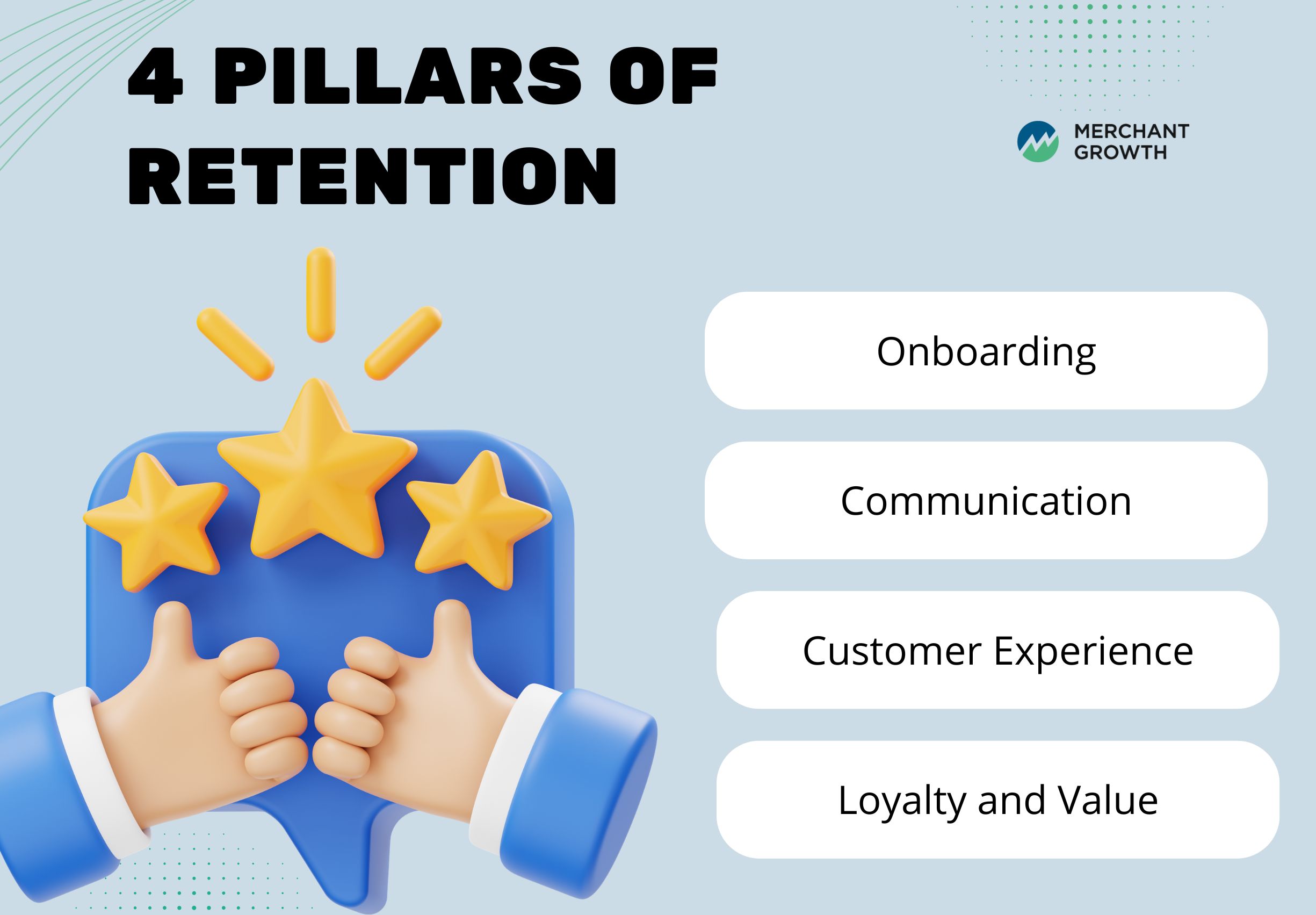
Strong customer retention rarely happens by accident. Businesses that keep customers coming back usually focus on a few core areas that shape how customers feel throughout the entire relationship. These pillars help businesses build trust and loyalty over time instead of relying only on discounts or constant promotions to keep customers interested.
1. Onboarding
The customer experience starts immediately after the first purchase or sign-up. A strong onboarding experience helps customers understand the product or service quickly while making them feel confident that they made the right decision.
When onboarding feels confusing, overwhelming, or unsupported, customers are far more likely to lose interest before fully experiencing the value of what the business offers. Businesses that simplify the early stages of the customer journey often create stronger long-term relationships from the beginning.
2. Communication
Customers want to hear from businesses beyond the initial transaction, but that communication needs to feel useful and relevant. Follow-up emails, proactive updates, educational content, and personalized messaging all help businesses stay connected without feeling overly promotional.
Consistent communication also reassures customers that the business remains invested in their experience. When customers feel informed and supported, they are more likely to stay engaged and continue building trust with the brand over time.
3. Customer Experience
Every interaction shapes how customers view a business. From website usability and delivery timelines to customer support and product quality, each touchpoint contributes to the overall impression customers associate with the brand.
Businesses that consistently deliver smooth, reliable experiences are more likely to retain customers even in highly competitive industries. Customers may forget individual marketing campaigns, but they rarely forget how a business made them feel.
4. Loyalty and Value
Customers stay loyal when they continue receiving value long after the first purchase. Loyalty programs, personalized experiences, exclusive perks, and ongoing product improvements all help reinforce the relationship and encourage repeat engagement.
Retention becomes much stronger when customers feel appreciated rather than constantly sold to. Businesses that consistently deliver value are more likely to turn one-time buyers into long-term loyal customers.
Customer Retention Strategies That Build Long-Term Loyalty
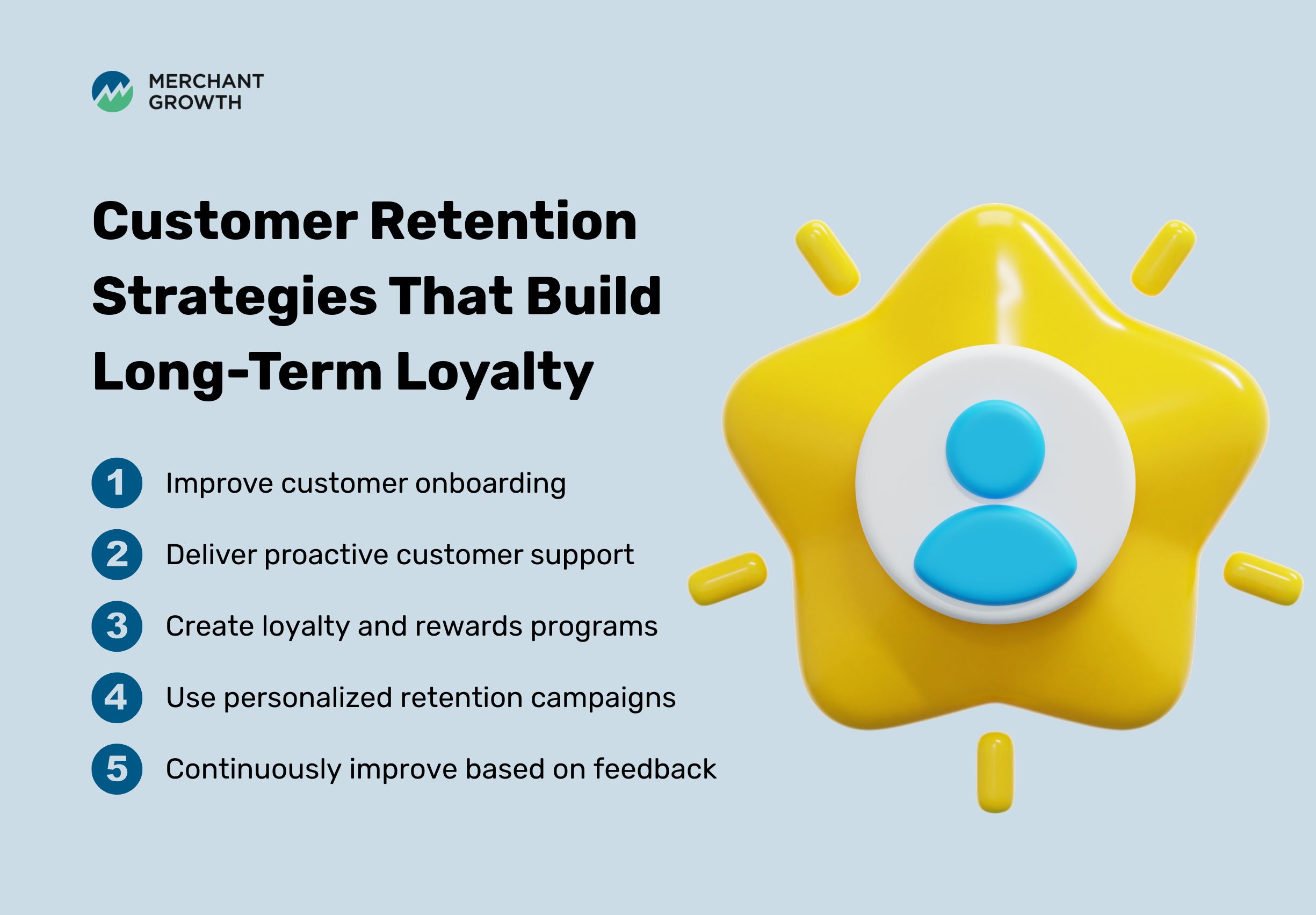
Customer retention should be treated as an ongoing business strategy rather than a one-time marketing campaign. Businesses that build strong customer loyalty usually do so through consistent experiences, proactive communication, and long-term value delivery. The goal is not just to encourage repeat purchases, but to create relationships that customers genuinely want to continue.
Improve Customer Onboarding
First impressions matter more than many businesses realize. A strong onboarding experience helps customers understand the value of a product or service quickly while reducing confusion during the early stages of the relationship.
When customers feel supported immediately after purchase, they are more likely to stay engaged long enough to build trust with the brand. Businesses that create clear and helpful onboarding experiences often see stronger retention because customers feel confident from the beginning.
This can include welcome emails, onboarding calls, tutorials, educational resources, or proactive follow-ups designed to help customers get started successfully.
Deliver Proactive Customer Support
Customers appreciate businesses that address concerns before they become major frustrations. Proactive support means staying ahead of customer needs through regular check-ins, accessible communication channels, and fast problem resolution.
Businesses that treat support as a relationship-building tool instead of simply reacting to complaints are often more successful at strengthening long-term loyalty. Customers are far more likely to stay loyal when they feel supported consistently, not just when something goes wrong.
Even simple actions like following up after a purchase or notifying customers about delays before they ask can improve trust significantly.
Create Loyalty and Rewards Programs
Loyalty programs give customers an extra reason to continue choosing the same business over competitors. Reward points, referral incentives, VIP perks, and repeat purchase discounts all help encourage ongoing engagement and repeat buying behaviour.
The strongest loyalty programs go beyond discounts alone. Customers are more likely to stay engaged when rewards feel personalized, exclusive, or tied to appreciation rather than constant sales messaging.
Businesses that make customers feel valued instead of simply marketed to often create stronger emotional loyalty over time.
Use Personalized Retention Campaigns
Customers are more likely to engage with communication that feels relevant to their interests and behaviour. Personalized retention campaigns help businesses build stronger connections through targeted messaging, product recommendations, and customized offers.
Generic marketing emails are easy to ignore, especially when customers feel businesses do not understand their preferences or needs. Personalized communication creates a more tailored experience that helps customers feel recognized instead of treated like just another sale.
Even small personalization efforts, such as recommending products based on past purchases or sending birthday offers, can improve engagement and repeat business.
Continuously Improve Based on Feedback
Customer expectations constantly evolve, which means retention strategies should evolve too. Businesses that actively collect feedback and make improvements based on customer input are often better positioned to maintain loyalty over time.
Customers appreciate when businesses listen and respond to concerns instead of ignoring them. This responsiveness helps strengthen trust while also improving the overall customer experience.
Simple actions like sending customer surveys, reviewing online feedback, or monitoring recurring complaints can help businesses identify retention issues before they lead to higher churn.
What Are the 8 C’s of Customer Retention?
The 8 C’s of customer retention are commonly used as a framework for building stronger customer relationships. While businesses may apply the framework differently, the core idea is that retention is shaped by multiple interconnected experiences.
The 8 C’s typically include:
- Consistency
- Communication
- Convenience
- Competence
- Customization
- Care
- Credibility
- Connection
Together, these elements help businesses create experiences that feel reliable, personalized, and trustworthy. Companies that consistently deliver across these areas are often more successful at reducing churn and maintaining customer loyalty over time.
Customer Acquisition vs Customer Retention
Customer acquisition and customer retention are both important growth strategies, but they serve very different purposes. Acquisition focuses on bringing new customers into the business, while retention focuses on keeping existing customers engaged over time.
Many businesses invest heavily in acquisition because it creates immediate growth opportunities. However, relying too heavily on acquisition without improving retention can create long-term profitability challenges. Constantly replacing lost customers is often far more expensive than maintaining strong relationships with existing ones.
Retention typically delivers stronger long-term returns because repeat customers are already familiar with the business and more likely to purchase again. Sustainable growth usually depends on balancing both strategies rather than prioritizing one at the expense of the other.
How Technology Supports Customer Retention
Technology plays an important role in helping businesses improve retention at scale. CRM systems, automation tools, and customer data platforms allow businesses to better understand customer behaviour and create more personalized experiences.
CRM platforms help businesses track customer interactions, segment audiences, and manage ongoing relationships more effectively. This information allows businesses to communicate more strategically and identify retention opportunities earlier.
Automation also helps businesses stay connected with customers consistently. Follow-up emails, abandoned cart reminders, loyalty campaigns, and re-engagement sequences all help maintain customer engagement without requiring entirely manual processes.
Customer feedback tools and behaviour tracking also provide valuable insight into customer satisfaction trends. Businesses that actively monitor feedback and engagement patterns are often better positioned to improve experiences before customers disengage completely.
Building a Sustainable Customer Retention Strategy
Customer retention is not built overnight. Strong retention usually develops through consistent experiences, proactive communication, and long-term relationship management across every stage of the customer journey.
Businesses that succeed with retention tend to approach it as an ongoing operational priority rather than a short-term campaign. They monitor customer satisfaction regularly, adjust strategies based on feedback, and continue investing in experiences that strengthen trust over time.
As customer expectations continue evolving, retention strategies must evolve as well. Businesses that remain adaptable while continuing to deliver value are often best positioned to maintain customer loyalty and long-term growth.
How Merchant Growth Can Help Businesses Improve Customer Retention
Improving customer retention often requires investment. Whether a business is upgrading customer support systems, improving fulfillment operations, launching loyalty programs, or investing in personalized marketing tools, retention initiatives usually require both time and capital.
For many small businesses, balancing growth investments with day-to-day cash flow can be challenging. This is especially true when businesses are trying to improve customer experience while also managing inventory, staffing, operations, and expansion.
Merchant Growth helps Canadian small businesses access flexible financing solutions that support long-term growth initiatives. Businesses can use funding to invest in customer experience improvements, marketing campaigns, onboarding processes, operational upgrades, or technology that strengthens customer relationships over time.
Strong customer retention does not happen by accident. It is built through consistent investment in customer experience, communication, and value delivery. With the right financial support and strategy in place, businesses can create stronger customer loyalty, improve repeat revenue, and build a more sustainable foundation for long-term growth.
