
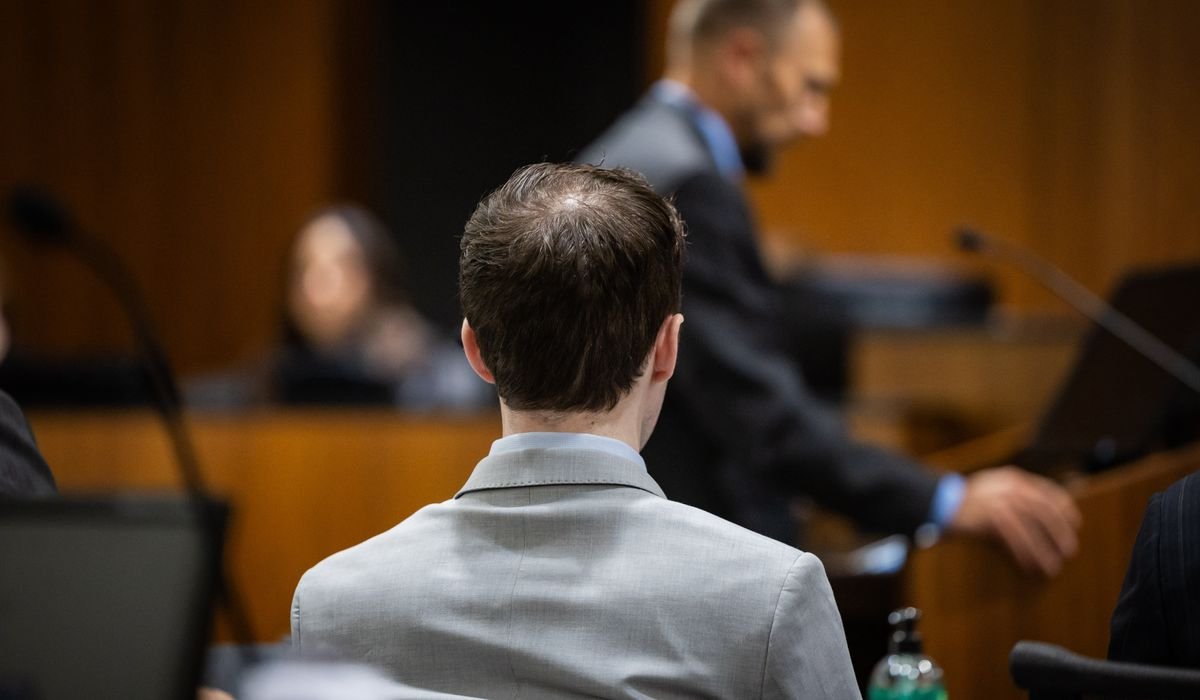
Don’t expect a quick ruling about a trial for the alleged Charlie Kirk assassin.
A five-day preliminary hearing wrapped on Friday, and despite a mountain of evidence presented by prosecutors, Utah County Judge Tony Graf won’t decide until at least September, nearly a year after Kirk’s death, whether to put suspect Tyler Robinson on trial for aggravated murder.
Kirk, co-founder of Turning Point USA and a conservative influencer, was killed on Sept. 10 by a bullet fired from the rooftop of a building on the campus of Utah Valley University.
Prosecutors this past week presented surveillance video, DNA evidence and witness testimony from his former romantic partner that they say link Mr. Robinson to the killing.
Defense lawyers called witnesses and showed evidence they say call into question the accuracy of ballistic and DNA evidence that prosecutors say tie Mr. Robinson to the crime.
After days of testimony, the probable cause hearing is far from over in the Provo, Utah, court.
Judge Graf won’t rule on proceeding to a murder trial until he reads a round of written arguments that the defense and prosecution will submit later this summer.
Then it’s still not over.
Lawyers will present oral arguments to the judge on Sept. 1. After that, Judge Graf said he’ll make a decision.
“I think it’s absolutely unprecedented — and frankly outrageous — that this judge intends to wait until September to issue a ruling following what was merely a probable cause hearing,” criminal defense attorney Mark Eiglarsh, who is based in Florida, told The Washington Times. “In virtually every case, judges make that decision immediately from the bench or shortly thereafter. Delaying it for months is highly unusual.”
The long wait has frustrated Kirk’s family and friends. Their legal representative complained to Judge Graf last week that they’d already waited 10 months in their quest to get justice for Kirk, who was 31 when he was killed and the married father of two young children.
Kirk’s widow, Erika Kirk, filed a motion Friday in Utah District Court invoking her rights as a victim for a speedy trial and calling on Judge Graf to issue his probable cause determination no later than Sept. 1.
“A prompt determination is imperative in the interest of justice,” her lawyer argued in the court document. “The defendant is entitled to a fair trial, and he must receive one. He is not, however, entitled to cause undue delay in the criminal justice process.”
The preliminary hearing was delayed for months by Mr. Robinson’s defense team, which repeatedly sought more time to review thousands of pages of evidence amassed by prosecutors.
The alleged killer, who is 23, could face the death penalty if he’s found guilty. He has not entered a plea, and legal analysts predict his defense team, having viewed the extensive incriminating evidence against Mr. Robinson, may seek a deal with prosecutors to avoid trial if it would spare him the death penalty.
“The judge’s decision is extremely easy. The prosecutors clearly established probable cause, which is a very low legal standard. This is what lawyers call a no-brainer,” Mr. Eiglarsh said. “While I believe this case is headed for a full-blown trial, I think both sides should seriously consider resolving it with a sentence of life without the possibility of parole, in exchange for Robinson waiving his right to appeal. That would provide certainty, finality and a guaranteed outcome for everyone involved.”
The preliminary hearing was bogged down by defense attorneys trying to ban media cameras from recording, plus battling to block prosecutors from submitting key evidence that Mr. Robinson’s lawyers said would unfairly influence a future jury.
Judge Graf on Friday sanctioned the media for inadvertently showing an image of a confession note prosecutors said Mr. Robinson tucked under a keyboard in his room the morning he left for the UVU campus to carry out what he called his “mission” to “take out” Kirk.
Even though the note was read aloud in court and presented in earlier court documents, the judge, as a punishment for displaying the image of the note, banned the camera from showing any of the exhibits put on by the defense on Friday.
Defense lawyers spent hours grilling analysts with the Bureau of Alcohol, Tobacco, Firearms and Explosives about the science and techniques involved in DNA and bullet fragment testing. They tried to cast doubt on the certainty of the ATF’s analysis linking Mr. Robinson’s DNA to the gun and ammunition. The ATF was not able to conclusively tie the bullet fragments retrieved from Kirk’s body to the bolt-action rifle prosecutors say Mr. Robinson used in the shooting.
Defense lawyer Michael Burt questioned the ATF’s DNA expert Caitlin Oliver on what Mr. Burt said were “the limitations” of her report tying Mr. Robinson to the rifle and scope.
The Kirk family lawyer has repeatedly called on Judge Graf to make all of the evidence submitted in the preliminary hearing available to the public.
“As difficult as these last few days have been, it brings our family comfort to know that the world has witnessed the overwhelming evidence of what occurred to Charlie that day,” Kirk’s family said in a Friday statement. “Nothing will ever undo the loss of our beloved Charlie. As this case moves into its next phase, we pray that truth will continue to be heard through a process that is fair, transparent, and grounded in the facts.”
