
– Élie Wajeman skilfully weaves together a sensitive ensemble film on a shoestring budget, intertwining the stories of 18 characters who reflect aspects of today’s urban world
“I’m looking out of the window. I wonder what people are thinking. The comet seems to connect us. How do people cope with life?” Embarking on a cinematic exploration that is the polar opposite of traditional productions, Élie Wajeman, invited by the organisers of the Cinemasterclass training workshops for actors and actresses, has decided, with Comète (released in French cinemas on 15 July by Dulac Distribution), to adopt a highly minimalist approach (with a budget said not to exceed 100,000 euros) to demonstrate once again his great talents – already proven by his first three films, all of which have been screened at Cannes (Alyah at the Directors’ Fortnight in 2012, The Anarchists in Critics’ Week in 2015 and A Night Doctor in the Official Selection in 2020).
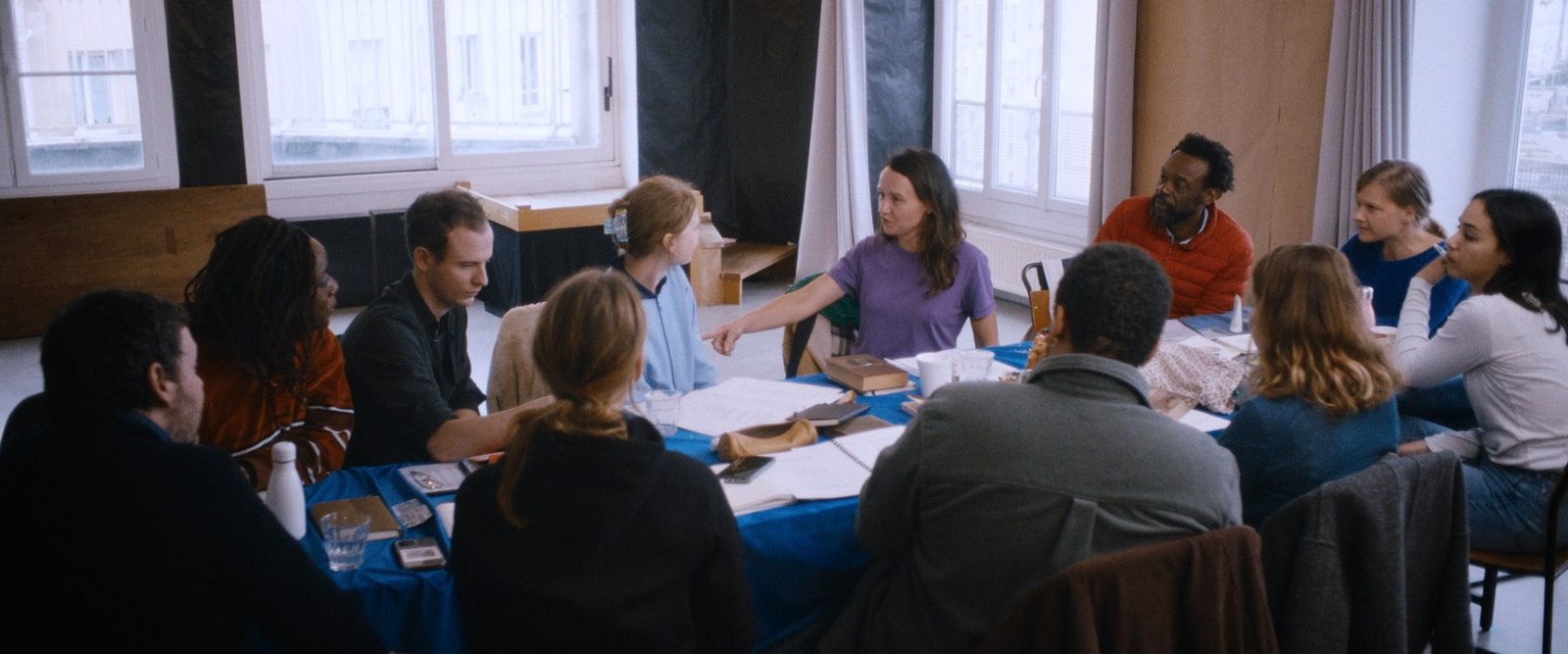
What is the outcome of this experiment involving 18 performers whose lives are subtly intertwined in the working-class neighbourhoods of north-east Paris? A rich, multi-faceted film, weaving together more than fifty sequences spanning several genres (from existentialist social drama to film noir featuring drug trafficking and a hitman, as well as rehearsals for Chekhov’s play Three Sisters, emotional and family upheavals, street interviews from a podcast on perceptions of life in Paris, and so on), like a daring jazz improvisation that is both romantic and realistic, masterfully held together by the grace of an editing style that delicately weaves together the various threads of a fragmented plot underpinned by a sense of urgency at every level (“there’s no time to waste”).
Both a portrait of a generation and of a city, the film moves with an engaging fluidity from one character to another: a pair of friends, one of whom has just left a psychiatric hospital and is searching for his trumpet, whilst the other makes ends meet by working as a tour guide at the extermination camps in Poland; a girl whose father, struggling to make ends meet, turns up on her doorstep after years of absence; a young woman dealing drugs at night on her scooter to help out her brother; a Hungarian migrant refurbishing a flat and forming a relationship with a bereaved psychologist; a theatre director determined to press ahead with rehearsals with her troupe despite a financial sword of Damocles hanging over her and a break-up with one of her performers, who is herself awaiting distressing medical results; and so on. Snippets of life that Élie Wajeman skilfully weaves together, from which emerge, amongst others, Vincent Macaigne, Lou Lampros, Anne-Lise Heimburger, Sandor Funtek and Samuel Achache, to name but a few of the 18 faces in this surprising work – playful in form yet deeply serious in substance, keenly capturing the harshness of life in the heart of big cities (loneliness, communication difficulties, dull aches, separations) and the impulses of life.
With this film, remarkable for its ability to create so much from so little (as the plot device tying the whole story together – the passage of a comet – is tenuous), the filmmaker treats himself to a highly successful interlude before the next, more conventional and highly tense instalment in his career: Le joueur (currently in post-production – read the news).
Comète was produced by Keep the Peach Prod and WY Productions.
(Translated from French)
