
An award-winning horseman, accomplished pilot, motorcycle enthusiast and real-life space traveller, the 95-year-old is still in high demand
Article content
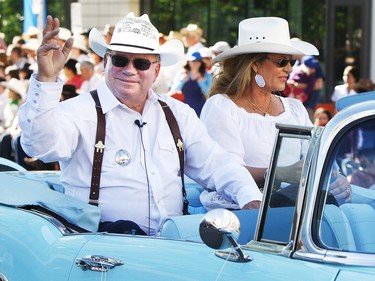
Even as he faces his own final frontier, 95-year-old William Shatner is in constant motion, burnishing his legacy as one of Canada’s most versatile, consequential — and busiest — entertainers.
An actor, author, singer, astronaut and icon, Shatner has more than two dozen events booked through December 2026 in places such as New Orleans, Boston, Las Vegas, Edinburgh and Dublin. In each of those appearances, he’ll talk about Star Trek, the miraculous television series that saved his acting career and opened new worlds of opportunity for him.
Article content
Article content
Advertisement 2

Article content
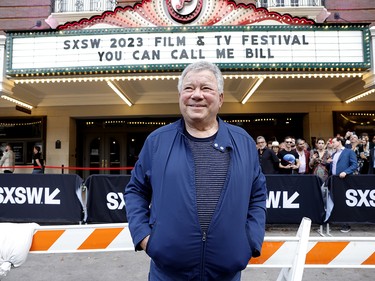
It’s the reason he’s still in demand as a nonagenarian.

Long Story
Article content
Still, while Star Trek promises to make Shatner a screen immortal, its fiction cannot remove him from the bounds of science: He knows he’s in the final chapter of a long, storied life. He admits to being terrified of the great beyond.
“I am scared to death of death,” he writes in his most recent autobiography, Boldly Go. “I don’t have the certitude of knowing what comes next. I would like to, but I expect to just stop.”
Only when he does stop will the curtain come down on a sprawling career unlike any other in the annals of Canadian show business. According to the Internet Movie Database (IMDb), Shatner boasts 263 acting credits, considerably more than celebrated Canadian stars such as Mary Pickford (247), Christopher Plummer (216) or Donald Sutherland (198). He’s been a screenwriter, director and producer.
Trained as a stage actor, Shatner has performed in countless plays, everything from The Adventures of Tom Sawyer at Montreal’s Victorian Theatre, to The Merchant of Venice at Stratford, to Tamburlaine the Great on Broadway.
He has recorded a dozen musical albums, beginning with his “experimental opus” The Transformed Man, a deeply odd collection of spoken-word songs. On Instagram, Shatner recently announced he has a heavy metal album in development.
Article content
Shatner has also authored or co-authored more than 40 books, including Leonard, a memoir of his friendship with Star Trek actor Leonard Nimoy; Spirit of the Horse, a love letter to his favourite animal; and Get a Life!, his investigation into the meaning of Star Trek’s enduring fan cult. A new book that explores his impact on fans, William Shatner … And You, will be published this fall.
He has 2.3 million followers on X, 1.5 million on Facebook, and appeared in April on CNN and CBC to discuss the Artemis II moon mission. He was recently invoked by White House deputy chief of staff Stephen Miller, who suggested that Paramount, maker of Star Trek: Starfleet Academy, rescue the series from its “tragic” wokeness by giving Shatner creative control. (Shatner made fun of the notion.)
He frequently wades into cultural debates, such as the question of whether AI will ultimately rule mankind. “I think that’s in the area of fantasy — at least that’s my comfort thought,” he said to one interviewer. What’s more, he told Fox News that Prime Minister Mark Carney should offer to let the United States become Canada’s 11th province. Criticized, Shatner tweeted: “Imagine how Canadians felt when an actual leader of a friendly neighbouring country floated that idea across the border. Doesn’t feel good, does it? Learn a lesson from it.”
Article content
Article content
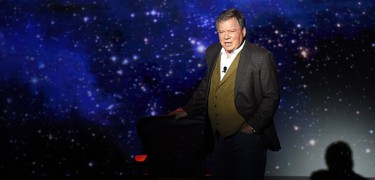
He even announced, a few years back, that he’d had a stem cell transplant to see if it would reverse the effects of aging (there is no evidence that it does).
An award-winning horseman, accomplished pilot, motorcycle enthusiast and daredevil, Shatner has parachuted from a plane, kayaked down Class V rapids, slain a brown bear with a bow and arrow (it’s something he says he deeply regrets), and been manhandled by a gorilla.
“I have heretofore avoided death, and I think part of how I have done so is to keep discovering,” Shatner says in his 2022 autobiography. (An earlier autobiography, Up Till Now, was published in 2008; there’s also an authorized biography, Where No Man; an autobiographical album, Bill; a feature-length documentary film on his life, You Can Call Me Bill; and a one-man, autobiographical Broadway show, Shatner’s World.)
An inveterate pitchman, Shatner has famously represented brands such as Loblaws, Chrysler and Priceline.com. Earlier this year, he appeared in a Super Bowl ad for Kellogg’s Raisin Bran as “Will Shat,” a fibre-pushing alien.
He is one of precious few 95-year-olds able to transcend age barriers, appealing to Boomers, Gen Xers and Gen Zers alike.
“I honestly think he’s a national treasure,” says Ottawa journalist Peter Simpson, who has interviewed him. (Shatner declined an interview for this article.)
Article content
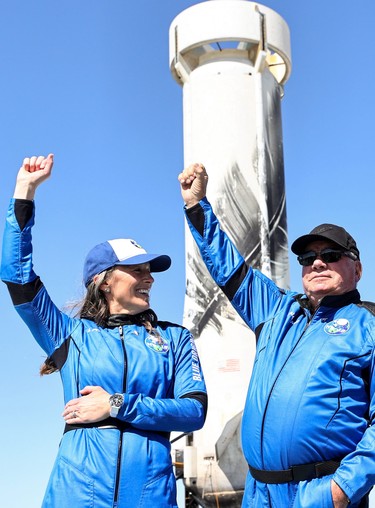
Since turning 90, Shatner has scuba dived with tiger sharks in the Bahamas and travelled into outer space aboard Blue Origin’s New Shepard rocket. The world’s oldest astronaut was moved to tears by the contrast between Earth’s swirl of colour and the dark desert of outer space.
“It was ominous,” he says.
Many questions about our universe are still to be answered. What triggered its inception? What is the mysterious substance, dark matter, that holds our universe together? Are there more universes beyond our own? A multiverse?
And, most confoundingly, how did Shatner, the industrious son of a Montreal tailor, become the centre of it all?
Jewish roots in Montreal
The life force named William Shatner entered the world on March 22, 1931, in Montreal.
He was born into a Jewish family with roots in Austria, Lithuania and Ukraine. His hard-working father, Joseph, immigrated from eastern Europe at the age of 14, learned the Montreal garment trade and opened his own small manufacturing company, Admiration Clothing Ltd. (The first of his family to settle in Canada, Joseph would help all 10 of his siblings leave Europe before the Holocaust.) Shatner’s mother, Ann, was from a well-to-do Montreal family. She was an elocution teacher, loved to be the centre of attention, and pushed her young son in the direction of the stage even as his father pulled him toward the garment business.
Article content
Shatner would draw in equal measure from his parents: Possessed of a feverish work ethic, he would relentlessly seek the limelight for nine decades.
His acting career began at a Jewish summer camp in the Laurentian Mountains when he was six years old. In a play staged for campers and their parents, Shatner played a boy who had to say goodbye to his beloved dog as his family fled the Nazis. The scene brought Shatner, and many in his audience, to tears.
A lonely child, he was enthralled by the experience.
“Just imagine the impact that had on a six-year-old child: I had the ability to move people to tears — and I could get approval,” he recalled in his autobiography, Up Till Now.
I wanted to act and play football, that was it.
William Shatner
Ann Shatner promptly enrolled her son in Montreal’s Dorothy Davis School for Actors. It gave young Shatner stage experience in Montreal’s Children’s Theatre, and taught him a critical lesson: that the best way to learn how to act was by acting.
The Shatners lived in the Notre-Dame-de-Grâce (N.D.G.) neighbourhood, an affluent and mostly Catholic part of Montreal. Antisemitism was common, and as a high school student, Shatner says he earned the nickname “Toughie” for his willingness to take on local bullies.
In Montreal’s West Hill High School, he was a desultory student, a dedicated athlete and a passionate actor. “It was acting that made me feel complete,” he says in Up Till Now. “Acting made me special, and I was good at it.”
Article content
Shatner pursued every opportunity he could find in theatre. He took a job as a local stage manager, and won a part in the production of a play, Waiting for Lefty, produced by a Montreal Communist organization. “I wanted to act and play football, that was it,” he said of the time.
In 1948, he entered McGill University’s commerce program, but spent most of his time in the school’s drama department. Shatner wrote, produced and acted in school plays while also working part-time as a CBC radio announcer.
He eventually screwed up the courage to tell his father he would not be entering the clothing business; he wanted to be a professional actor. His father was crestfallen — he didn’t understand theatre — but vowed to help his son as best he could while warning him not to become a poor player, a “hanger-on,” in his chosen world.
After graduating in 1952, Shatner began his lifelong mission: to seek out new roles and new possibilities, to boldly go in pursuit of stardom.
There would be a long series of failed launches.
Replacing Christopher Plummer
Commerce degree in hand, Shatner was hired as assistant manager of the Mountain Playhouse in Montreal, but he proved so inept at that job, he was made a cast member.
Article content
“The audience taught me how to act,” Shatner recounted in his memoir. “If I did something and the audience responded, I did it again.”
The job led to another at the Canadian National Repertory Theatre in Ottawa. He was paid $31 a week.
For three years, Shatner pivoted between Ottawa and Montreal, honing his craft and living off the 27-cent fruit salad plate at Kresge’s lunch counter. He dreamed of earning $100 a week. In 1956, he agreed to join the Stratford Festival, packed all of his belongings into the back of a used car, and launched himself into the world of Shakespeare.
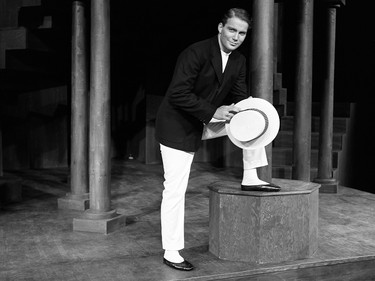
In one of his first big roles, he played the Duke of Gloucester in Stratford’s production of Henry V, which starred Christopher Plummer. Shatner was his understudy. When Plummer was struck with a bout of kidney stones on Aug. 10, 1956, Shatner was thrust into the lead with little notice.
Critic Sydney Johnson of the Montreal Gazette marvelled at Shatner’s ability to perform without rehearsing while appearing “perfectly at ease.”
“Shatner rose magnificently to the occasion,” Johnson wrote.
Shatner called it one of the greatest moments of his life: “That’s the night I knew I was an actor,” he said.
His star rose at Stratford and he earned leading roles in Julius Caesar, The Taming of the Shrew and The Merchant of Venice. A Stratford production of Christopher Marlowe’s Tamburlaine the Great attracted the interest of Broadway, and Shatner was among the cast when it opened at New York’s famed Winter Garden Theatre.
Article content
MGM offered him a long-term movie contract — at more than $500 a week — but, with his stardom seemingly assured, Shatner demurred. He didn’t want to give up control of his career to studio executives.
“My ambition was to be a serious actor,” he said.
Shatner returned to Toronto, worked on CBC radio dramas, and married fellow actor Gloria Rosenberg. The young couple moved to New York City. There, Shatner quickly established himself as a versatile, dependable actor capable of playing just about any role on stage or television. He appeared in live TV dramas, along with roles in Alfred Hitchcock Presents, The Twilight Zone and Boris Karloff’s Thriller.
Some stage and movie actors eschewed television, but Shatner embraced the work — and the steady paycheques. Religiously, as soon as one job finished, he went in search of the next.
Yet stardom proved stubbornly elusive. In 1961, when Shatner secured his first major film role in Judgment at Nuremberg, his agent told him, “This is the one.” The film, a fictionalized account of the postwar trials of Nazi officials, starred Hollywood legends Spencer Tracy, Burt Lancaster, Marlene Dietrich and Judy Garland. Shatner played a military aide to a tribunal led by Chief Judge Dan Haywood (Tracy). The film received 10 Oscar nominations, but did not make a star of Shatner.
Article content
In 1964, he accepted the lead role in an ABC series, Alexander the Great. Convinced this was the one, Shatner worked out, learned to ride bareback and to shoot a bow and arrow. But the pilot was never picked up by network executives. Shatner starred in a well-regarded TV courtroom drama, For The People, but it was cancelled after 13 episodes.
“It was terribly frustrating,” Shatner wrote in Up Till Now, “several of the young actors with whom I’d started in television were becoming major movie stars, fine actors like Paul Newman and Steve McQueen, while I was still doing one shots on TV series and making primarily low-budget movies.”
By the mid-’60s, the roles that could make him a movie star had started to dry up.
Then, out of the darkness, came Star Trek.
Roddenberry’s fourth choice for Kirk
Shatner was not the first actor chosen to captain the U.S.S. Enterprise by Star Trek creator Gene Roddenberry; he was the fourth.
According to Shatner, Roddenberry wanted Lloyd Bridges for the role of Capt. Christopher Pike, but Bridges turned it down, and the role ultimately went to lesser-known Jeffrey Hunter. NBC executives didn’t like the initial Star Trek pilot — they called it “too cerebral” — and told Roddenberry to find a new captain.
Article content
Roddenberry offered the role to Jack Lord, who would go on to Hawaii Five-O fame, but the two couldn’t come to terms on a contract. So Roddenberry approached Shatner, who was then acting in a play.
Shatner liked the pilot, but declared some of the actors “too ponderous,” and told Roddenberry he would like to bring more humour to the role of the captain, now named James T. Kirk. Roddenberry rewrote the second pilot to better suit him.
The show was picked up and Star Trek beamed into the lives of viewers for the first time on Sept. 8, 1966. Shatner’s life would never be the same.
“Star Trek was the most wonderful thing that ever happened to me,” he writes in Up Till Now. “I look back upon it as the miracle that changed my life.”
Initially, at least, Leonard Nimoy, the actor who played Spock, the half-Vulcan first officer, was Star Trek’s breakout star. He was nominated for three consecutive Emmy awards, and Shatner was jealous. The two sometimes clashed on set, but they would eventually become close friends.
Recently, at Calgary Expo, he said: “My relationship with Leonard Nimoy, I characterize it as the brother I never had.
“We talked to each other into the night. We shared so many things. We were born four days apart. He was born in Boston, I was born in Montreal. Montreal and Boston are not dissimilar … We had divorces about the same time. He raised two children, I had three. Divorces, death, pain, success, failure. Had he been a girl, I would have married him.”
Article content
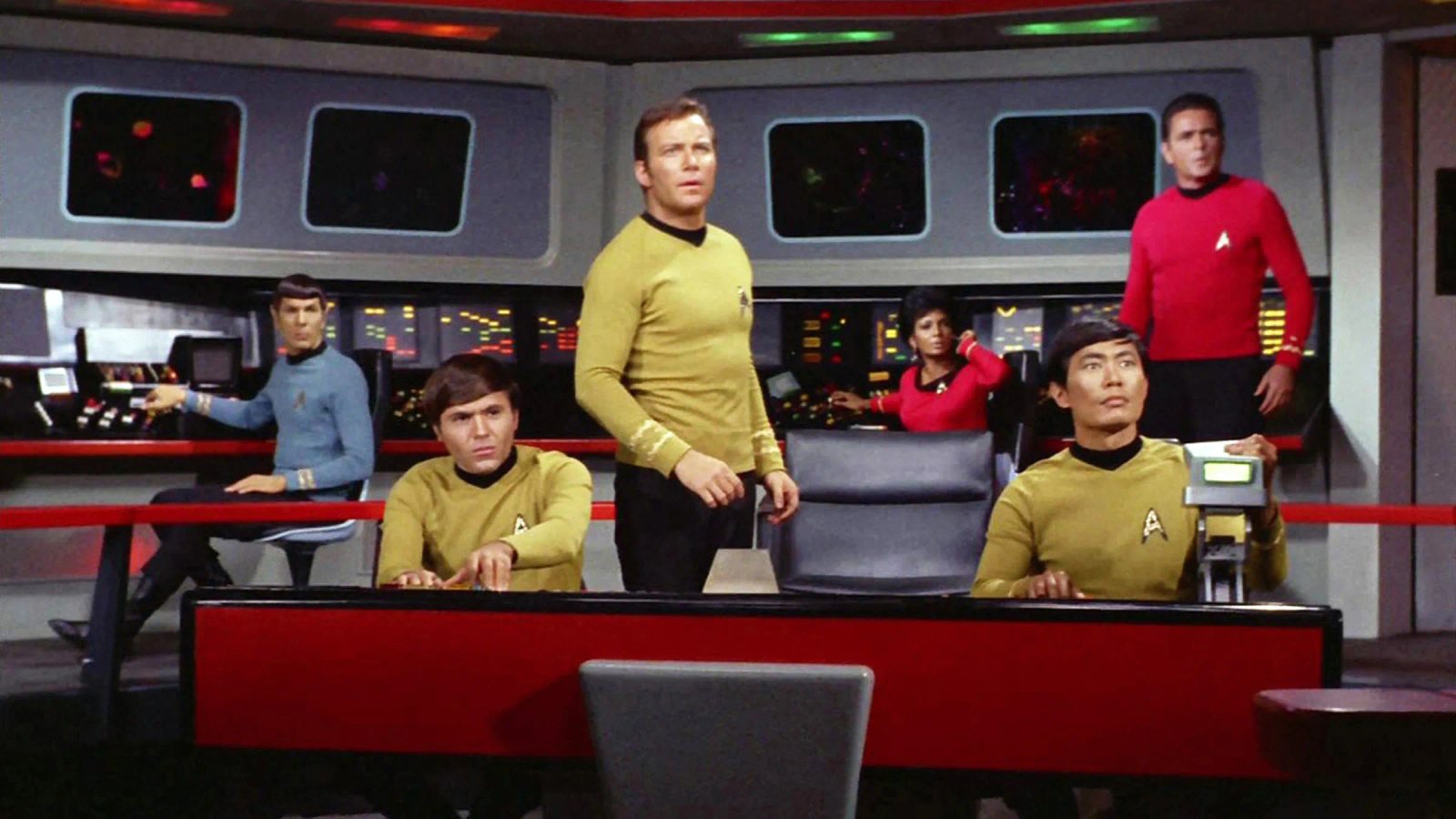
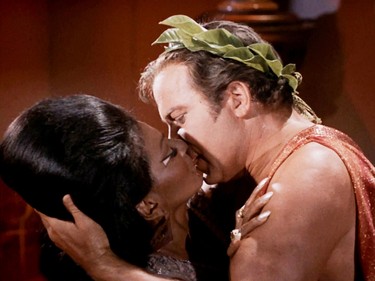
Star Trek was unlike anything else on television. Roddenberry insisted that the U.S.S. Enterprise be manned by a racially diverse crew, and that each episode operate both as an adventure story and morality play. Shatner said Roddenberry once told him the real mission of the Enterprise was “to search for intelligent life on the other side of the television set.” The show explored themes tethered to the social upheaval of the late 1960s: racism, sexism, classism, human rights. Shatner and Nichelle Nichols, the actress who played Lt. Nyota Uhura, shared the first interracial kiss on American television.
Years later, Nichols would tell Shatner that she “despised him” during the making of Star Trek for, among other things, taking screen time away from his fellow actors. He was shocked, as he was to learn that other cast members, including James Doohan (Chief Engineer Montgomery Scott) and George Takei (helmsman Lt. Hikaru Sulu), shared her view of him as selfish, egocentric and aloof. In his own defence, Shatner has said all actors have healthy egos, and that he was engrossed in his own world and unaware of his effect on his colleagues.
Star Trek built an intensely loyal fan base, but not a broad audience, and by the middle of the second season, rumours held that the show was to be cancelled. A letter-writing campaign from fans convinced NBC executives to reinstate it. But there would be no reprieve at the end of season three: after 79 episodes, Star Trek was headed for the deep space of syndication.
Article content

To make matters worse for Shatner, his life had all but fallen apart during the Star Trek years. He had finalized a painful divorce, and had buried his father; he was near broke and in desperate need of acting jobs to support his ex-wife and three children.
What’s more, the role of Capt. Kirk had not attracted any weighty new job offers. “I really had to start all over again,” he remembers.
Shatner joined the cast of a British sex comedy, There’s a Girl in My Soup, bought a pickup truck, and lived in its camper shell while the play toured the U.S. “It was depressing beyond any imagination,” he wrote in his memoir. “I was absolutely broke, terribly lonely, terrified of failure and starring in a comedy.”
He did more stage plays, some B-movies and made guest appearances on TV shows such as The Virginian, Marcus Welby M.D., Ironside and Mission: Impossible. He was in imminent danger of becoming what his father had warned against: a hanger-on. But once again, seemingly out of nowhere, the U.S.S. Enterprise would rescue him.
The cultural phenomenon of Star Trek
Star Trek’s long second act came as a complete surprise: nothing like it had ever happened before in TV history.
“I had assumed that the day we finished shooting Star Trek was the end of my association with Capt. Kirk, the Enterprise, and its crew, forever,” said Shatner. He thought it was just another failed TV show.
Article content
But a cultural phenomenon was slowly taking shape, impelled by an obsessive fan base that wanted to gather, examine and celebrate the series, and by legions of new fans who encountered Star Trek on after-school and late-night television. For the first time, a TV rerun was a monster hit.
In January 1972, the first official Star Trek convention was held in New York City. The following year, Roddenberry called Shatner and asked him to voice Capt. Kirk for an animated version of Star Trek.
Shatner was gratified at the chance to reprise his role. “I liked Kirk,” Shatner wrote. “He was a heroic figure — he had a bit of Alexander’s nobility — but with a nice sense of irony, and an appreciation of a lovely Earthwoman.”
There was soon one Star Trek convention every week in North America. Across the country, Shatner was approached by fans who quoted long streams of Star Trek dialogue to him, or wanted to discuss the properties of antimatter. In November 1975, he attended his first Star Trek convention drawn both by a sense of curiosity — and an awe-inspiring paycheque.
“We were treated like rock stars,” he said.
With each passing year, Shatner became more ensconced in popular culture. He became a quiz show regular on programs such as Hollywood Squares, To Tell the Truth and The $25,000 Pyramid. He was hired to host documentaries and specials about science, nature, technology and the cosmos. Commodore hired him to sell its new personal computer. He toured a one-man show in which he performed dramatic readings of science-fiction backed by a full orchestra, and landed a lead role in a short-lived TV series, Barbary Coast.
Article content
In the mid-’70s, Paramount realized there was more money to be extracted from the Star Trek franchise, and commissioned a feature-length movie. Star Trek: The Motion Picture was released in December 1979. Long on special effects, and short on plot, the movie received only middling reviews, but it was a hit with audiences.
A steady procession of Star Trek movies followed, including two directed by Leonard Nimoy and one by Shatner, Star Trek V: The Final Frontier.
Firmly back in the limelight, Shatner landed the lead role in T.J. Hooker, a police procedural that ran for five seasons on ABC and CBS. In December 1986, he hosted Saturday Night Live, and portrayed himself at a Star Trek convention where he beseeched his obsessive fans to “get a life, will you people!”
Although the sketch caused some backlash in Star Trek circles, the performance brought Shatner new offers for comedic acting, including a recurring role as Big Giant Head on the sitcom 3rd Rock From the Sun. Big Giant Head earned Shatner his first Emmy nomination.
He won his first Emmy for “outstanding guest appearance” for his portrayal of lawyer Denny Crane in the legal drama, The Practice. “I was so moved because I’ve always felt like an outsider in this business: I’ve never felt like I belonged,” he wrote in Up Till Now.
Article content
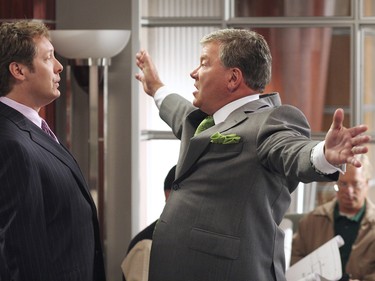
Shatner’s Denny Crane would become part of a popular spinoff, Boston Legal. The role would earn Shatner another Emmy as best supporting actor and four more nominations for the same award.
Shatner would later learn that producer David E. Kelley wrote the eccentric character of Denny Crane for him after seeing his commercials for Priceline.com — a job he secured because a copywriter loved his strange 1968 album, The Transformed Man, which was released to take advantage of his Star Trek fame.
It meant that, in his 70s, Shatner was wealthy, famous, validated, and still in demand — all thanks to a TV show that had failed 40 years earlier.
Love of horses
For years after the original Star Trek aired, Shatner sought to put the series behind him, to move on to braver, newer worlds. He worried about being typecast.
That sentiment faded long ago: “I had to realize all the wonderful things being Captain Kirk had done for my life,” he wrote in Up Till Now. In addition to twice resurrecting his career, Capt. Kirk created a fountain of wealth that bought him a house overlooking the San Fernando Valley, a Kentucky ranch and a stable of horses.
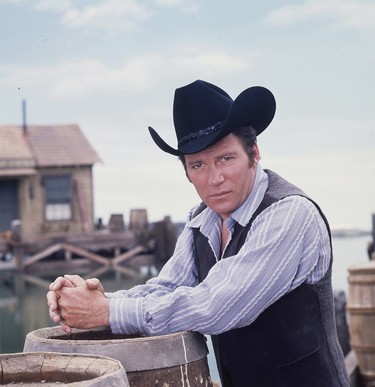
His love of horses took Shatner by surprise: it made no sense for a Jewish kid from Montreal. But with each new role that featured horseback riding — Alexander The Great, Comanche Blanco (a spaghetti western), Rawhide — he became more enamoured with horses. He bought his first horse after waving to a friend at an auction.
Article content
Article content
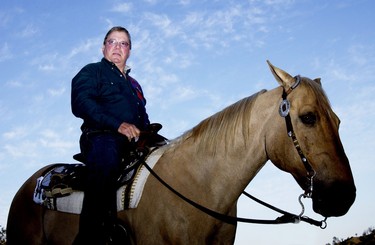
“This happy accident led to a part of my life that has brought me so much joy I can scarcely believe it; it sometimes makes me cry to think about,” he says in Boldly Go.
He has bred and shown American saddlebreds and quarter-horses, competed in a host of riding disciplines, and launched the Hollywood Charity Horse Show, still an active annual event, to raise money for children’s charities.
He also found comfort in horses after the tragic death of his third wife, Nerine Shatner.
An alcoholic, Nerine drowned in the family swimming pool on Aug. 9, 1999, while Shatner was visiting his grandchildren. Devastated and lonely in the aftermath of his wife’s death, Shatner found solace just being in the company of horses.
He found love again with Elizabeth Martin, a professional horse trainer, and they married in 2001. (Although divorced in 2019, Shatner has since reunited with Martin.)
Married four times, a father of three, and grandfather to five, Shatner points to his family as his most enduring legacy. But he will also leave behind a distinct acting style: a way of pausing. Dramatically. Between words. The Shatnerian style.
Jamie Portman, the longtime arts correspondent for the national newspaper service Southam News, says Shatner has not always been appreciated by film and TV critics, many of whom found it difficult to penetrate the actor’s bonhomie and bluster. Shatner was the sort of star, he says, who would greet you like a long-lost friend but be unable to remember your name.
Article content

“So here’s the question: How much of the off-screen Shatner was just another performance?” asks Portman, who has interviewed him. “I’m really not sure. But that concern should not diminish the fact that he was a more skilled and resourceful screen presence than perhaps we gave him credit for.”
For Portman, Shatner’s finest performance came in the 1962 Roger Corman film, The Intruder, in which he played a Southern bigot rallying the local citizenry against school integration. “He was in his later years a larger-than-life personality and an engaging presence on screen, but I think The Intruder offers clues, possibly, about his full potential,” says Portman.
For his own part, Shatner once told The New York Times that he never thought of himself as a great actor like Laurence Olivier, but as a working actor. He played so many different roles, big and small, good and bad, on TV, stage and screen, that the public couldn’t define him and critics wouldn’t forgive him.
“I took whatever work came my way to pay the bills,” Shatner said, “even if it wasn’t a decent role.”
Former Ottawa Citizen arts editor Peter Simpson contends Shatner, by repeatedly taking risks with his career, proved himself a “master of all media.”
Article content
“He’s boundlessly energetic and endlessly entertaining,” says Simpson. “I think it says a lot that he can be almost ubiquitous, but you never get tired of him: He’s just so self-deprecating and fun.”
U.S. entertainment journalist Ian Spelling, a leading Star Trek expert, says Shatner’s greatest role may well be William Shatner: a character of enormous ego, energy, daring and chutzpah.
“He’s a fascinating guy and I think he knows it,” says Spelling, the former editor-in-chief of StarTrek.com, the official Star Trek site, and co-author of the book, Star Trek: A Celebration.
“I don’t think he ever thought it would go this way. But, you know, he created this character of William Shatner — and he’s writing it for all that’s worth. It’s phenomenal.”
‘At 95, I’m still smokin”
Weeks before turning 95, William Shatner underwent shoulder surgery for an injury he suffered falling from a horse. He tried to roll on his shoulder like he did so many times in the movies, but landed hard.
“I’m not a young stuntman anymore,” he told reporters in March at the Academy of Science Fiction, Fantasy and Horror Films as Star Trek was inducted into its hall of fame.
On his birthday, March 22, Shatner celebrated with a cigar and a sunset. “At 95, I’m still smokin’,” he told his legion of social media followers.
Article content
Shatner lives with chronic tinnitus — the result of being too close to a staged explosion on the set of Star Trek — and has survived melanoma. Not able anymore to downhill ski, Shatner dreads the day he will no longer be able to ride a horse or manage his own life.
“I fear incapacity,” he admits in Boldly Go.
Shatner is not religious — he doesn’t believe in God — but rather defines himself as spiritual. He believes we’re all connected to each other and to nature, that there’s “synchronicity” in the universe.
It’s one of the things he absorbed during his emotional journey into space aboard Blue Origin’s New Shepard rocket in 2021. “Going into space made me so aware of how fragile our lives are here on Earth, how we need each other, and need to continue to strengthen the bonds that connect us to each other,” he writes in Boldly Go. “Because out there, there is no life. There is no us.”
Long lived and prosperous, Shatner hates the idea of leaving it all behind. “I love life,” he says, “every precious moment of it.”
Still, he’s planning for his end. Shatner recently spent five days offering stories and answers on tape to a firm called StoryFile, which partnered with another company to create a talking Shatner hologram. It means he’ll be able to answer the questions of Trekkies and other fans well into the future.
Article content
“Using a combination of holographic technology and artificial intelligence software,” he says in Boldly Go, “you will be able to press a button, and I will pop up, and you can ask me your questions: ‘Bill, what was it like growing up in Montreal?’”
Shatner thinks he might even be able to go on tour — five years after he’s left this Earth.
— With a file from the Calgary Herald.
Main image: An image from the Stark Trek episode Spock’s Brain, which aired Sept. 20, 1968. From left, Leonard Nimoy as Mr. Spock, Walter Koenig as Pavel Chekov, William Shatner as Capt. James T. Kirk, Nichelle Nichols as Uhura, George Takei as Hikaru Sulu and James Doohan as Montgomery “Scotty” Scott on the bridge of the Starship Enterprise. (Photo: CBS via Getty Images)
Article content
