
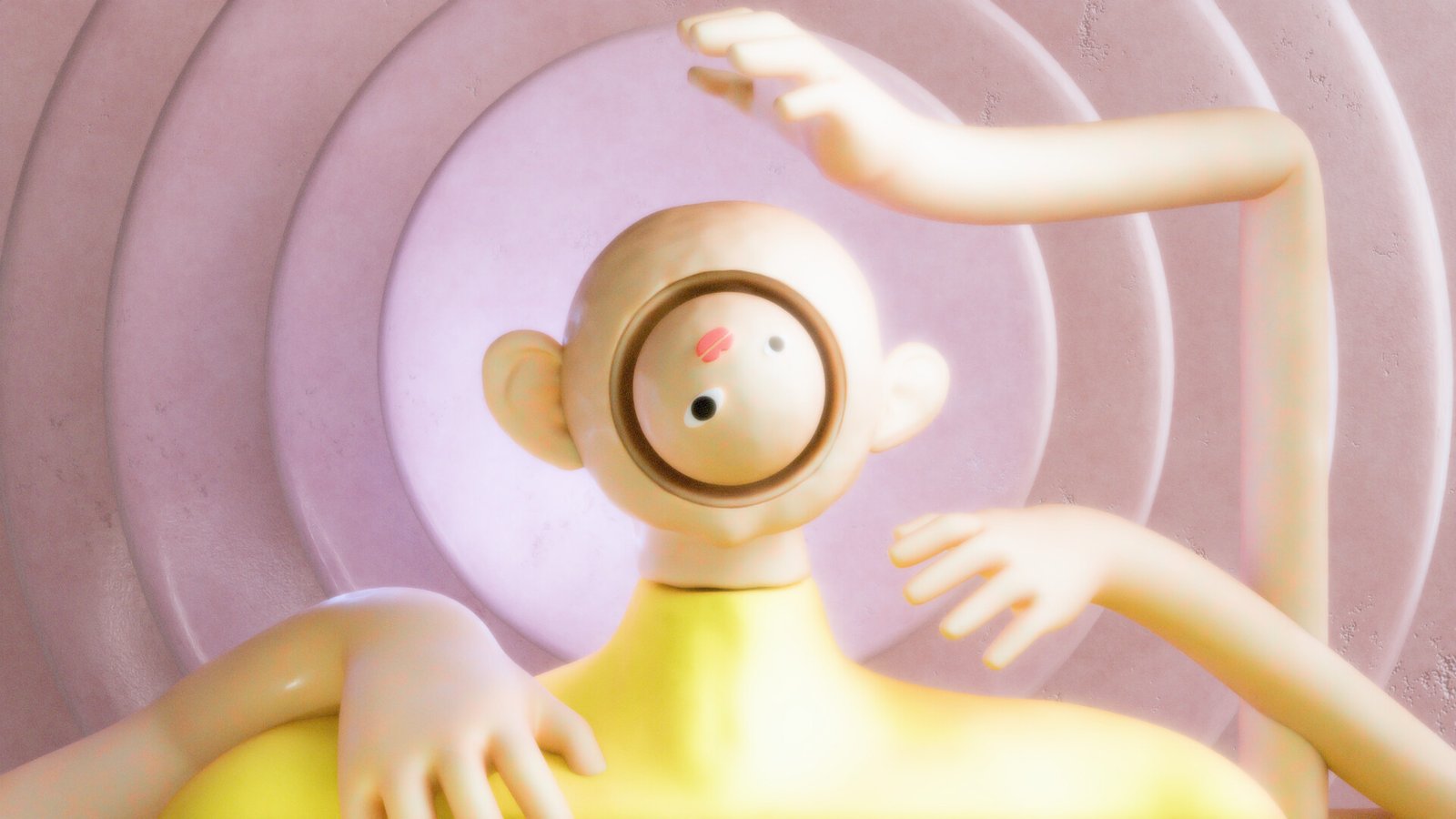
– Taiwanese director Eddy Wu’s queer animated docushort explores the fluidity of gender identity through imagery centred on the body
Immature is an enlightening animated documentary dealing with issues of gender and identity. Through the perspective of emerging Taiwanese writer-director Eddy Wu, the film looks closely at the relationship between a transgender man – reflecting the filmmaker’s own identity – and his body. The latter, repeatedly and fluidly morphing, is set within an undefined space and time, solely centred on the ongoing process of embracing his truest self.
Selected for the international competition at Fest Anča in Žilina, this six-minute film shows a fascinating and original approach to depicting gender dysphoria and euphoria. Despite its brevity, Immature’s CGI animation manages to communicate the struggles of the director when dealing with societal and gender norms.
The film starts with images of a deconstructed body, belonging to the director himself, as his voice-over conveys his discomfort at feeling incomplete and misunderstood. To capture this need to become oneself, the animation becomes an effective tool to convey transformation, cleverly used to alter and reshape different parts of the physique. It presents shapeshifting in a positive light, playing around with concepts of what various organs and limbs should look like and how big or small they should be – unbound from the rigid constraints of gender performance.
Throughout this process of becoming, Wu’s voice-over is essential to understanding his journey toward accepting his own identity. He achieves this by making personal and intimate confessions about his childhood. From his complicated relationship with his bodily form, to borrowing a boy’s clothes and experiencing gender euphoria, the story suggests that becoming oneself is a persistent act of strength – a type of resilience that requires the one who is experiencing it to define their own physicality on their own terms.
In the end, Immature does not offer a fixed conclusion. Instead, it moves in a state of perpetual change, one that starts from a deeply intimate and personal voyage toward a universal experience of authenticity and self-identity. It asks the audience to challenge conventional views on identity and to rethink their own self-perception and relationship with their corporeal selves.
