
SEOUL, South Korea — The Okefenokee Swamp in Georgia, an ornate 13th-century Buddhist temple in Thailand and tidal flats in western South Korea were among several sites added to the World Heritage List on Saturday at a U.N. committee meeting in South Korea.
The UNESCO meetings in Busan, which continue through next Wednesday, are reviewing dozens of other nominations, including the D-Day landing beaches in France, Mount Olympus in Greece and the ancient Japanese capitals of Asuka-Fujiwara.
The Okefenokee Swamp boasts impressive biodiversity
The Okefenokee Swamp is regarded as one of the world’s largest freshwater ecosystems, encompassing a vast network of wetlands that supports exceptional biodiversity and serves as the source of two major rivers. Its largely undisturbed peat beds preserve a 5,000-year record of environmental change, making the swamp both a globally significant natural habitat and a valuable source of information on long-term environmental change, according to a UNESCO description.
While the World Heritage designation places the Okefenokee National Wildlife Refuge alongside iconic U.S. landmarks such as the Grand Canyon, some locals have opposed the listing, fearing it would increase U.N. involvement in managing the site.
“We accept this inscription not as a finish line, but as a commitment to keep the Okefenokee wild, resilient, and thriving for generations to come,” said Kim Bednarek, executive director of the nonprofit Okefenokee Swamp Park that’s worked with the U.S. government on the refuge’s nomination package.
A Thai 13th-century Buddhist temple with unique architecture makes the list
Wat Phra Mahathat Woramahawihan, a 13th-century Buddhist temple in southern Thailand known for its 78-meter (255-foot) stupa and distinctive architecture, was also inscribed on the World Heritage List, becoming Thailand’s ninth site.
UNESCO has described the temple as an outstanding example of Theravada Buddhist architecture that remains a living place of worship, preserving religious traditions that draw large gatherings of devotees. The temple was first proposed to UNESCO in 2012, and has gone through more than a decade of preparation to meet the nomination requirements.
While the World Heritage listing is expected to dramatically increase visitors to the temple, Kanop Ketchart, mayor of Nakhon Si Thammarat City, said officials are prepared to address potential infrastructure and capacity challenges.
“We have prepared our infrastructure, buffer zoning and evacuation plan to fit all the requirements of UNESCO,” he said in an interview with The Associated Press this month. “More importantly, the people are getting used to all this process for almost 10 years. So they are very much looking forward to (it).”
Religious, environmental and historic sites join the World Heritage List
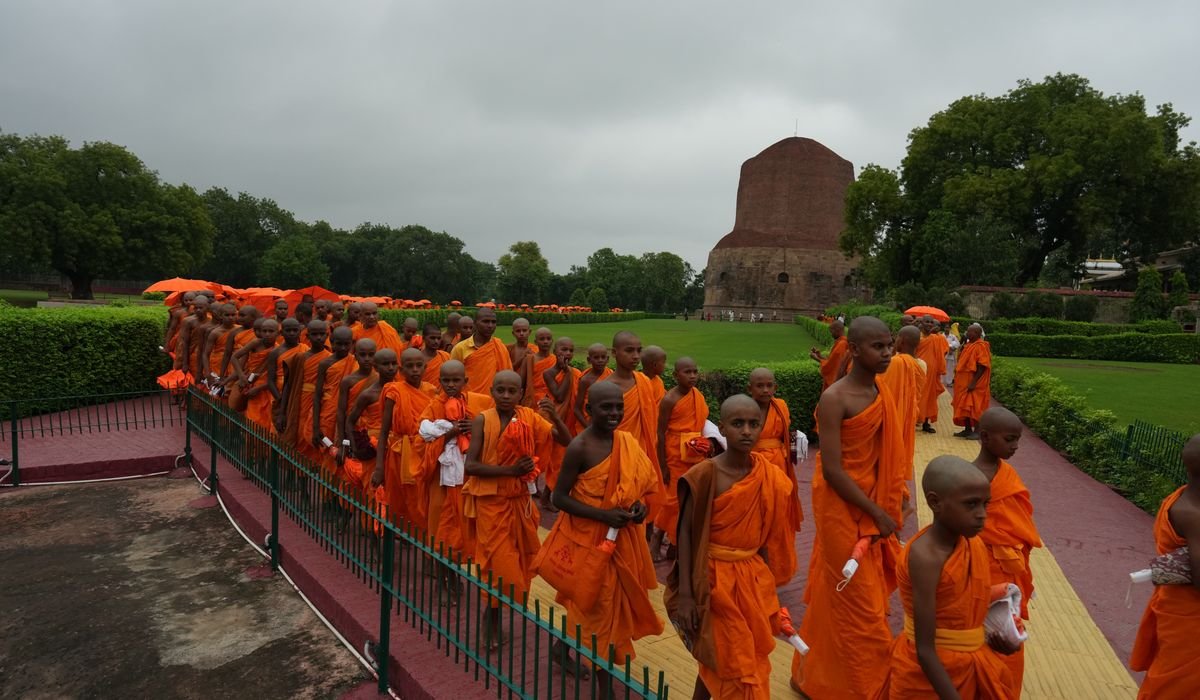
Sarnath, an ancient Buddhist site in the northern Indian city of Varanasi, was another Asian religious location newly added to the World Heritage List. Recognized as the sacred location where the Buddha delivered his first sermon, the site’s architectural and archaeological properties remain deeply significant despite periods of decline and revival, UNESCO said.
The committee also decided to expand the World Heritage listing of the South Korean “getbol” tidal flats with four additional coastal wetlands in Seosan, Goheung, Muan and Yeosu in the country’s west. UNESCO had previously inscribed four other South Korean tidal flats in 2021 for their biodiversity and crucial role as a stopover for migratory birds.
South Korea’s Foreign Ministry said the expanded designation of the tidal flats “reaffirms the importance of international cooperation for the conservation of the Yellow Sea ecosystem and the East Asian-Australasian Flyway,” a major migratory bird route that stretches from the Arctic through Asia to Australia and New Zealand.
Another new addition to the World Heritage List was centuries-old handicraft porcelain industry sites in the eastern Chinese city of Jingdezhen. The sites trace the evolution of handcrafted porcelain production in China from the 10th to the 19th centuries, showcasing innovations that helped make Jingdezhen a leading center for fine porcelain, with its blue-and-white porcelain becoming a global symbol of Chinese craftsmanship, according to UNESCO.
The Indian Ocean island nation of Comoros secured its first World Heritage listing after the committee inscribed six historic towns dating to the 11th century that later emerged as the principal urban centers of the country’s sultanates. UNESCO says the towns reflect centuries of cultural exchange through Indian Ocean trade networks while preserving distinctive urban traditions shaped by African, Arab and Islamic influences.
