
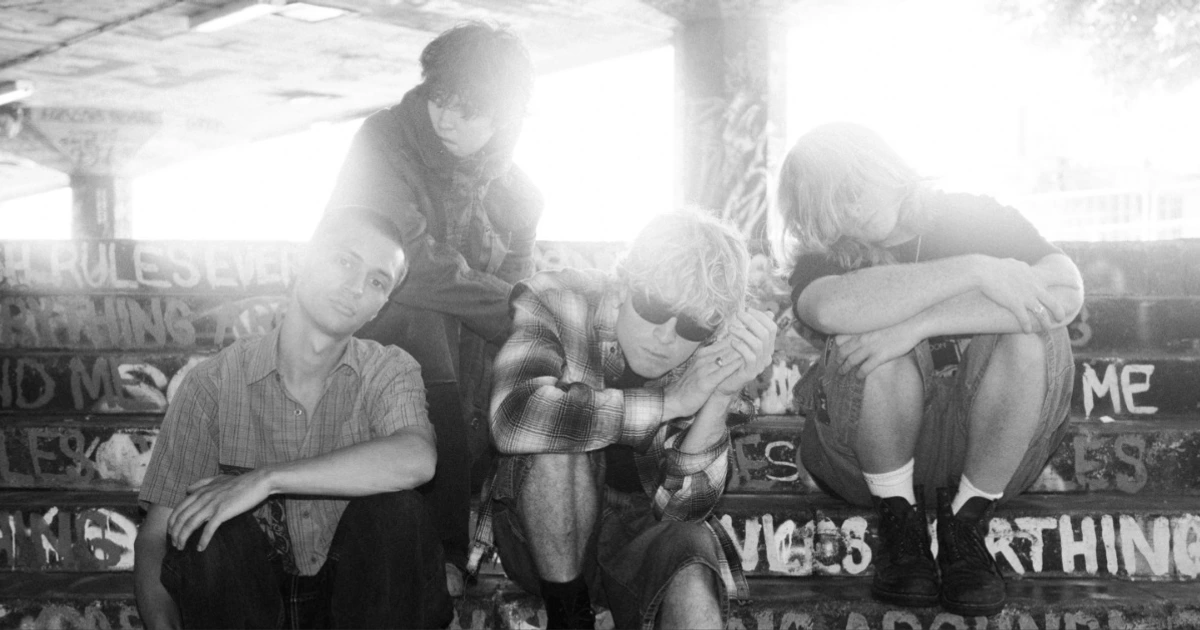
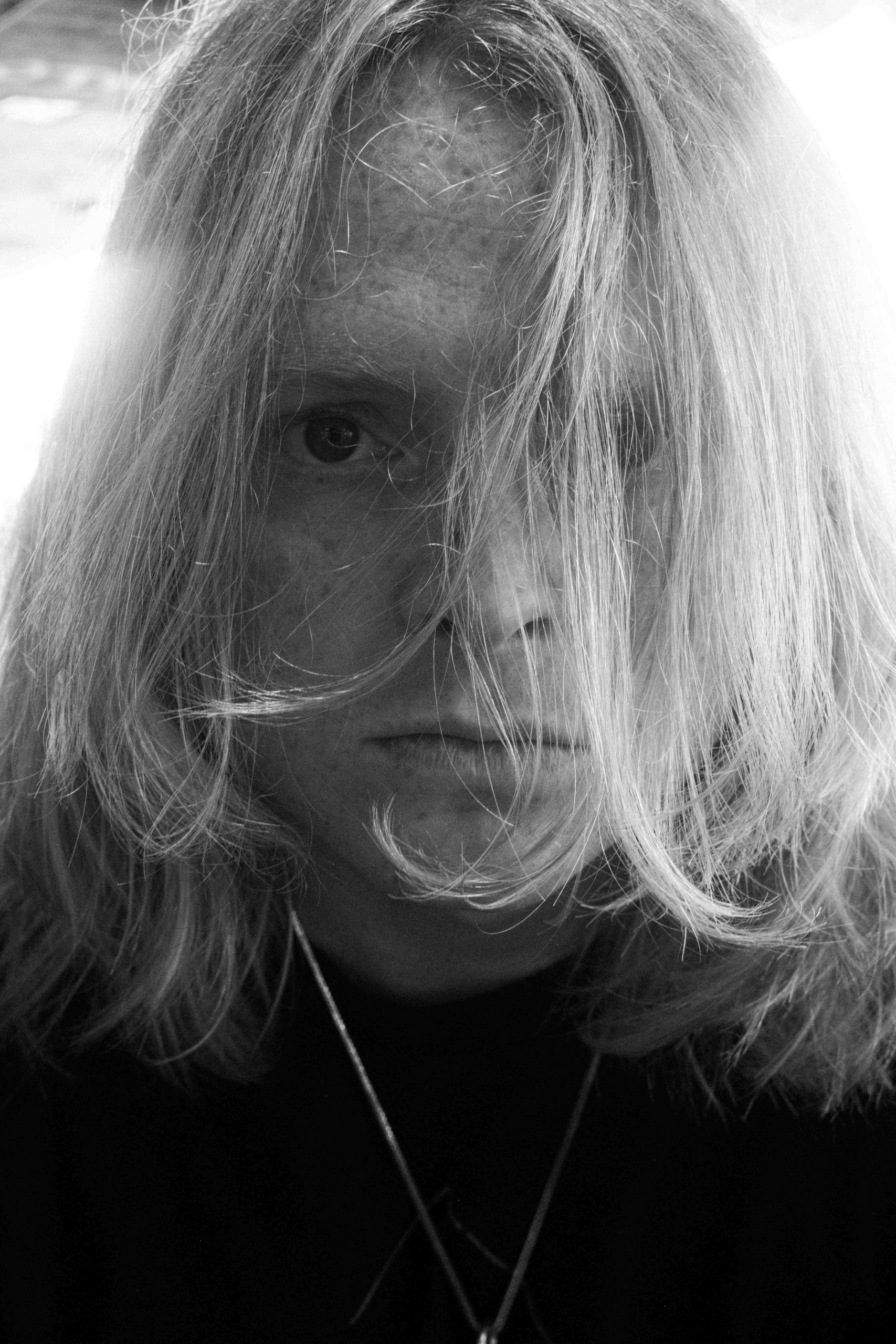
Finn Keogh is at home in London, a day after his AltPress photo shoot. It’s been a busy time for Finn, and he’s hardly had a second to stop or be in one place for some time. Between traveling around Europe — and beyond, taking his first flight across America — with his namesake band Keo, managing the mounting opportunities being handed to them, and preparing for the September release of their debut album, Put a Smile on for Me, there’s been a lot on his plate.
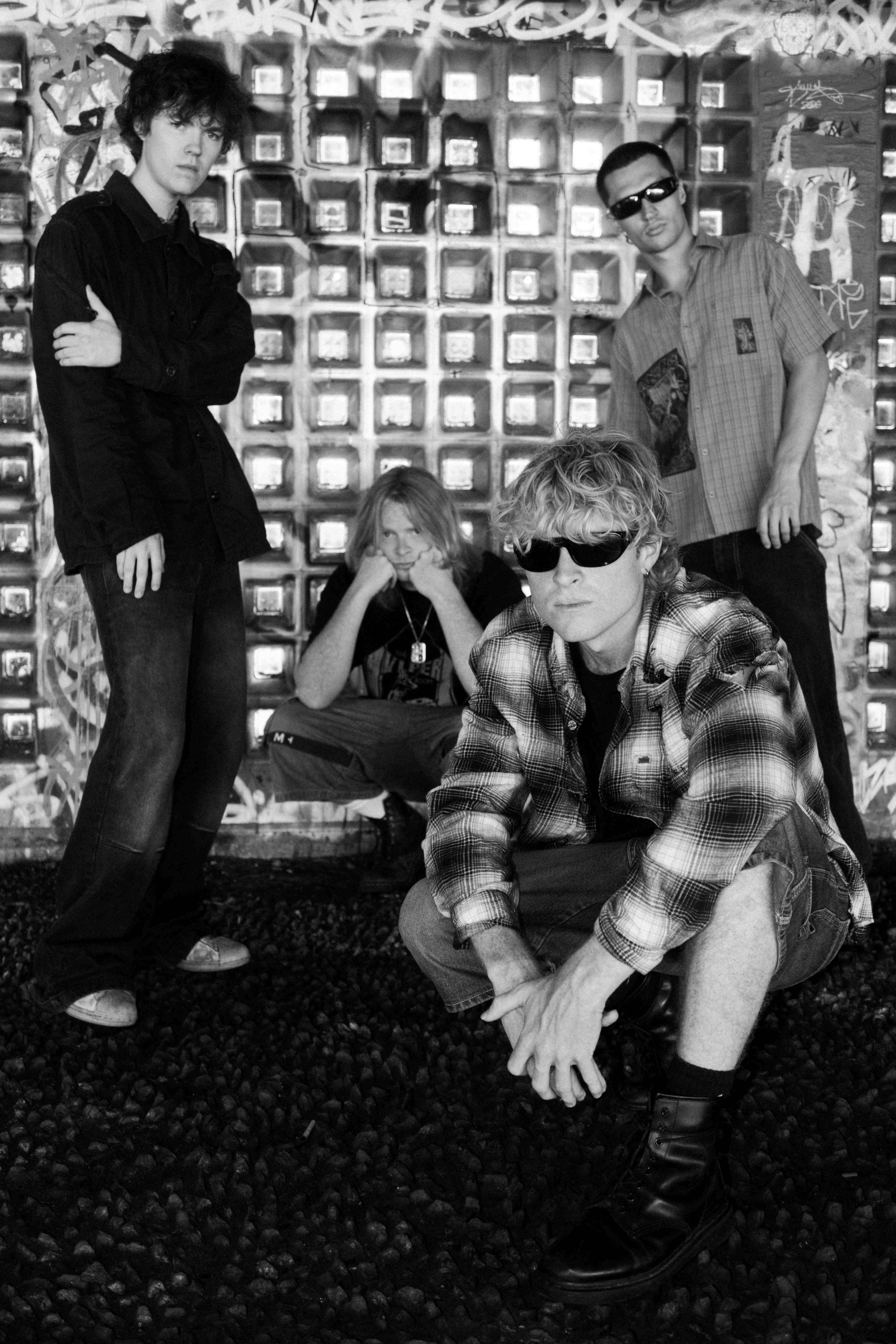
Over the last five years, Keogh, his bassist brother Conor, drummer Oli Spackman, and guitarist Jimmy Lanwern have rarely left the stage. From the start, local shows quickly gained steam. Though the Keoghs grew up playing alongside their father — globetrotting Irish folk artist Davey Keogh — in their off time, it wasn’t necessarily those comedic folk anthems they listened to. Instead, it was Pearl Jam and Nirvana. Conor favored the latter. Finn, more reserved, gained an appreciation for Radiohead and dove into ’90s folk. These influences made their way into Keo’s earliest, heavy guitar-driven sound and lyrics about lost love — evoking post-grunge artists like Candlebox and Silverchair.
Read more: 15 greatest supergroups across rock, punk, and metal
However, by the time their debut EP, Siren, arrived, Keo had evolved, both beyond genre limitations and from those small, local bar and club shows. Tracks that would later become hits, “Fly” and “I Lied, Amber,” harnessed their fans’ response to their reckless energy and fearless honesty, and they had grown into a group capable of performing everywhere from packed clubs to Hyde Park festivals, as well as sharing the stage with major rock acts like Kings of Leon. But for the band, this success was also mirrored in their personal and artistic growth. “To reach more than your potential, it’s important to be in a band that is more than the sum of its parts,” Finn says.
Josh Beech
Much of Put a Smile on for Me springs from the idea of carefree joy. But Finn, having traveled the world with his musician father, is remarkably mature at just 22, instincts that have influenced his work with the band. “The album is actually a sarcastic commentary on contentment and happiness, and how it comes and goes,” Finn explains. Seeking pleasure is a Sisyphean battle for the frontman. Singular moments vanish, fleeting against the relentless march uphill. He continues, “It’s one of those things where the more you think about it, the worse it gets, the more it loses its spark that initially interests you. Maybe happiness is just a phase you go through in life that you can never fully understand. Sometimes we’re the passenger. Sometimes we’re steering the ship.”
Finn mentions legendary producer Rick Rubin’s 2023 book, The Creative Act: A Way of Being, as instrumental in helping him write the album, viewing creativity not just as a skill but as a universal, fundamental way of life. “The songwriting on this album happened to me while I was practicing a bit of empathy with myself and others, and also focusing on my feelings,” he says.
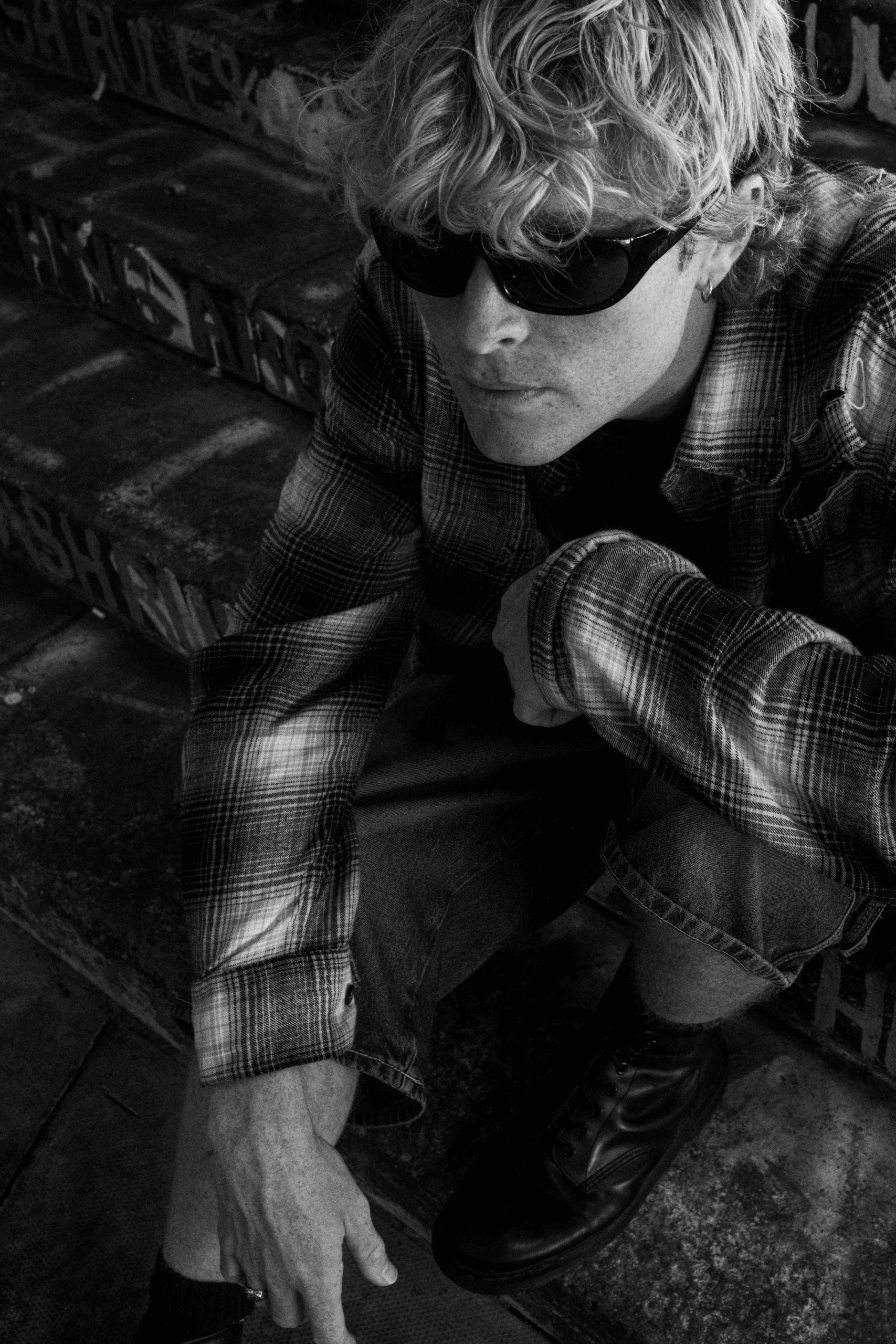
Josh Beech
Imagine each of the songs on the album as maturely existing within a finely crafted, reactive Venn diagram of subtle, surfaced emotions. They don’t feel like spontaneous responses to the upheavals of daily life. Instead, the songs feel carefully considered rather than imposed.
Asked about songwriting as confession, Finn extends the metaphor: A song can be a truth that frees or a confessional booth that brings resolution and relief. “These are thoughts that fell onto the page instead of me having to fish for them,” he expresses.
Now, as a result, five years into developing their artistry, Finn and the band are no longer just known for anthems ideal for yelling about heartbreak at the clouds. Instead, they are recognized for deeper artistic exploration. “This album is much more of a therapeutic self-study of not just looking at the man in the mirror, but understanding and making sense of how and why he feels the way he does about everything,” Finn opens up further. “I’m a sensitive soul [who errs] toward always seeing things as heavy and weighted as they can be perceived. I’m not one of those people who can let their emotions just go with the wind. I’m a thinker and an analyzer.”
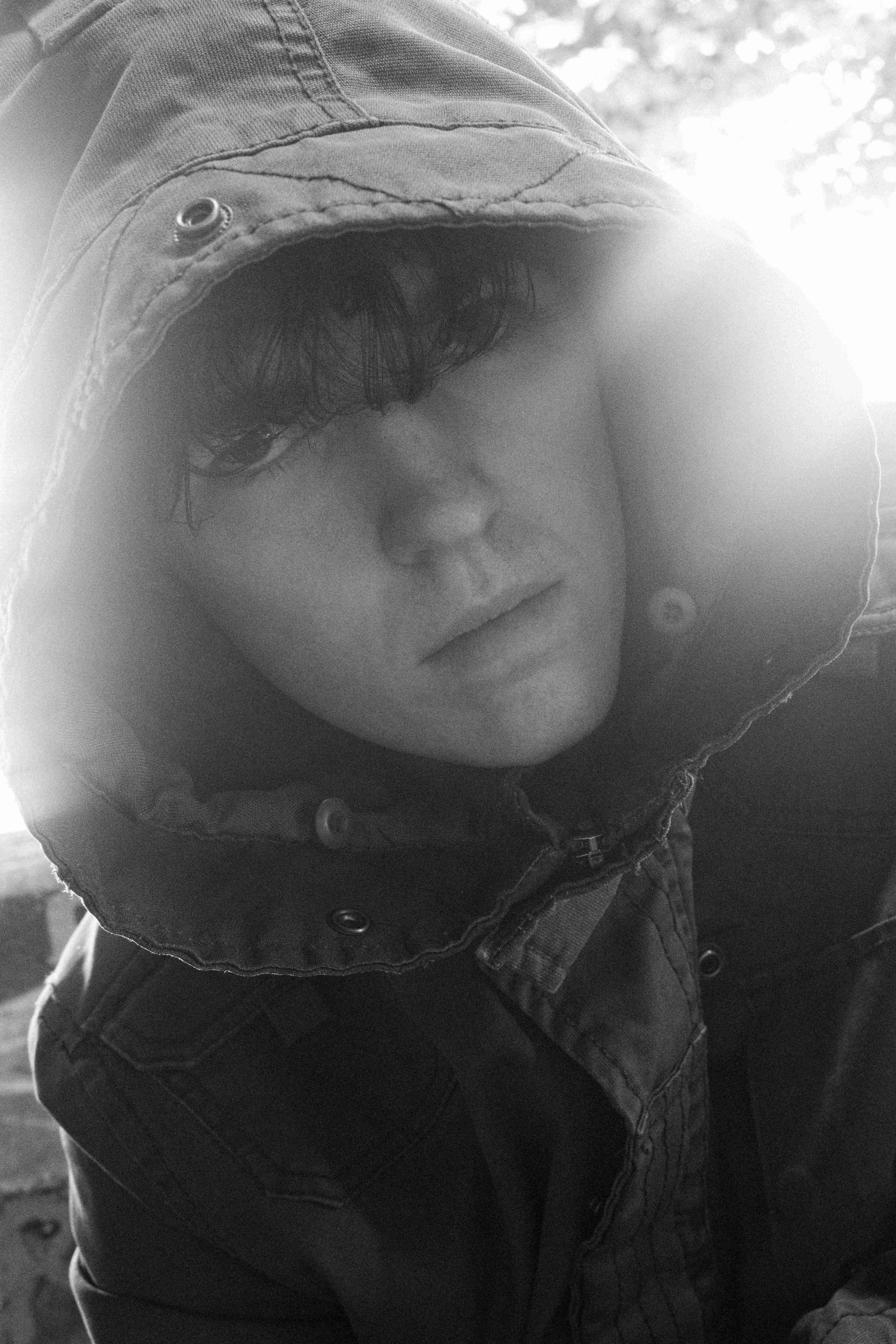
Josh Beech
Put a Smile on for Me follows what Finn calls “an emotionally heavy, unstable time” during 2025’s festival season. Imagine taking your first headline run at age 21. Critics note that you and your bandmates’ style of heavy rock is “visceral and uncompromising.” It leads to selling out what feels like a sea of 500-person-capacity venues across the United Kingdom and Ireland in hours.
But what often gets lost in translation as fame grows is the lack of communication and tenderness between people who, because of time constraints, shift from friends or even lovers to acquaintances and allies. Thus, he calls recording the album — namely, tracks like “Pistol” (an apologetic, shoegazey stadium rocker) — a “freeing and liberating process that used songwriting in a way I couldn’t use conversation.”
Insofar as the album’s jet-fueled, sharp grunge anthem “That’s Me,” it’s possibly the most direct song related to the causes of last year’s angst. “The weight of a secret can sometimes be heavier than the result of people knowing it,” Finn adds. “I didn’t want to drag my guilt around any longer. I felt like I could finally let myself off the hook through writing ‘That’s Me.’”
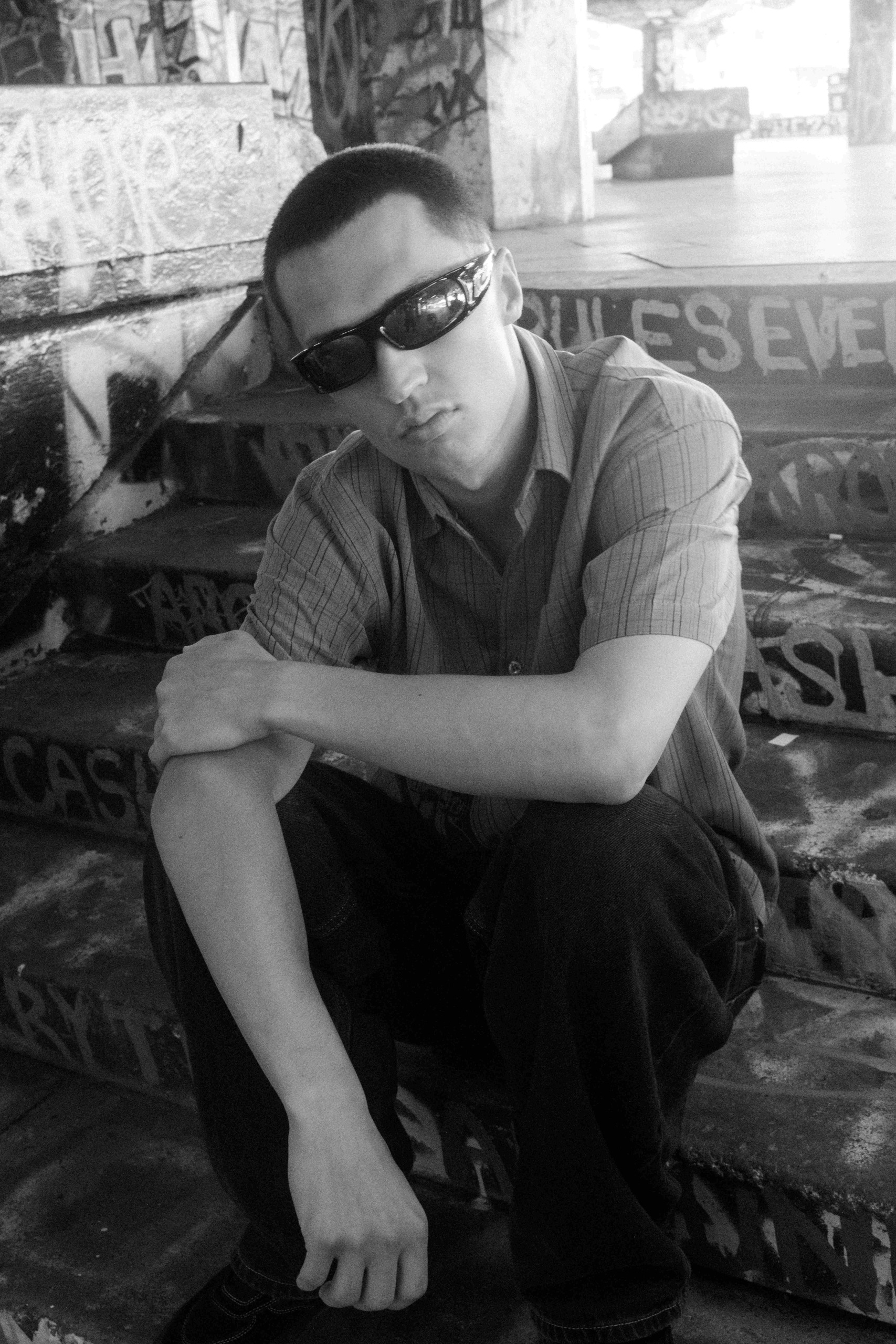
Josh Beech
During such times, a band can lose touch with themself and their purpose. In a different era, rising bands like Keo would have been taken off the road and put into studios to record hit songs for a major album, often for a quick cash grab. Today, social media and bands’ ability to develop independently, without strict A&R oversight, allows Keo to pursue a more natural, organic path. This pressure shapes the lens through which Put a Smile on for Me is judged. Instead of arid staleness — a “sophomore slump” and a sigh from fans — this debut is a heart’s last stand, as the Who might call “dying before you get old.”
Finn credits “discipline” as the key to keeping the band relevant in the mainstream as the pressures of success and touring mount — and notes that focusing on “ambitious music that feeds on what people want” rather than writing hits resulted in a song like “That’s Me.”
With Put a Smile on for Me, Keo are making music that isn’t just about matching the moment’s energy but also reflects a new patience — and finding a place where both the band and its fans can meet, and aim for success, together. Finn describes writing “That’s Me” as sitting with an electric guitar and deliberately not trying to craft a “slow-burner ballad.” Instead, by inviting more harmony and melody into the songwriting process, the band built an interestingly “brighter and lighter” energy.
Josh Beech
A conversation about what’s next for the band offers a fascinating glimpse into Keo’s greatest strength. Finn’s development as a lead vocalist has been rapid, and the band’s cohesiveness has only continued to grow. Guitarist Lanwern’s work was already solid, and Conor’s steady bass playing is significant. Additionally, some consider drummer Spackman to be the band’s true standout virtuoso.
The lead guitars alternate emotively between shredding and droning. Minor chords signify the emotional pull of a glass-half-empty view that now, by the chorus, and with the aid of the band as a strong, multifaceted unit, balances and resolves itself as a glass half full. As well, Spackman’s drumming creates the colors, shapes, and gradations of emotion that one expects from bands who typically use intricate chord progressions to signify emotional depth.
Adrenaline, instead of pathos, crafts a unique sonic energy that is at times loud and jagged, but also oftentimes overflows the bottom end of the sonic register. Ironically, but out of creative necessity, the songs intentionally land heavy and hard on the soul. “We’re a band still learning how to navigate the constant struggle between the songs I write feeling like exactly how I imagined them, and providing a vehicle for the band’s self-expression,” Finn says.
“I’ve never experienced anything so mentally challenging,” he admits about the process, which became clear during the recording. “There were moments I seriously just thought about stepping back, handing control over to someone else. I almost wanted to compromise the music just to relieve the pressure. But I didn’t believe anyone else would get it right.” For Finn, the somber, blissfully fuzzed-out album track “Bird on the Wire” was still one he demoed and recorded all the parts himself before presenting to the band.
Josh Beech
When asked about the band’s greatest value as a unit, Finn describes something akin to the Beatles as a young band in Hamburg, figuring things out and tightening their sound, rather than the band that eventually played live on The Ed Sullivan Show. “Together, as a team, we’ve not yet achieved anything flashy,” he says. “Instead, we’re focusing on learning how to consistently produce the most emotionally fulfilling music we can. We just want our fans to feel something.”
The first half of this year saw them perform headlining gigs in intimate, tastemaker-beloved rooms in Los Angeles and New York City, major festival slots at Rock Werchter, TRNSMT, Latitude, Reading & Leeds, plus massive U.K. opening slots for Wolf Alice. The rest of 2026, after their album release, sees the band traveling Europe.
It’s a wild notion to consider, but given the moment that grunge-friendly noise rock is having in the United Kingdom, other dates and venues could and should be in the back of Finn’s mind: The next Glastonbury Festival, taking place in June 2027, at Worthy Farm in Pilton, Somerset, U.K.
Oasis’ headlining years were separated by a decade in 1995 and 2004. Arctic Monkeys? 2013 and 2023. Similar for Coldplay in 2016 and 2024. There’s a clear lineage where a band like Keo, rapidly discovering both their sound and sustainability, could eventually fit. The question emerges simply enough. “U.K. grunge at Glastonbury? What does it mean and why?” Finn laughs. Then he ponders it more seriously. “Right now, a super-tight community of bands in the United Kingdom is making a classic sound feel very modern. I know Glastonbury is eventually going to happen, and that’s super exciting.”
