
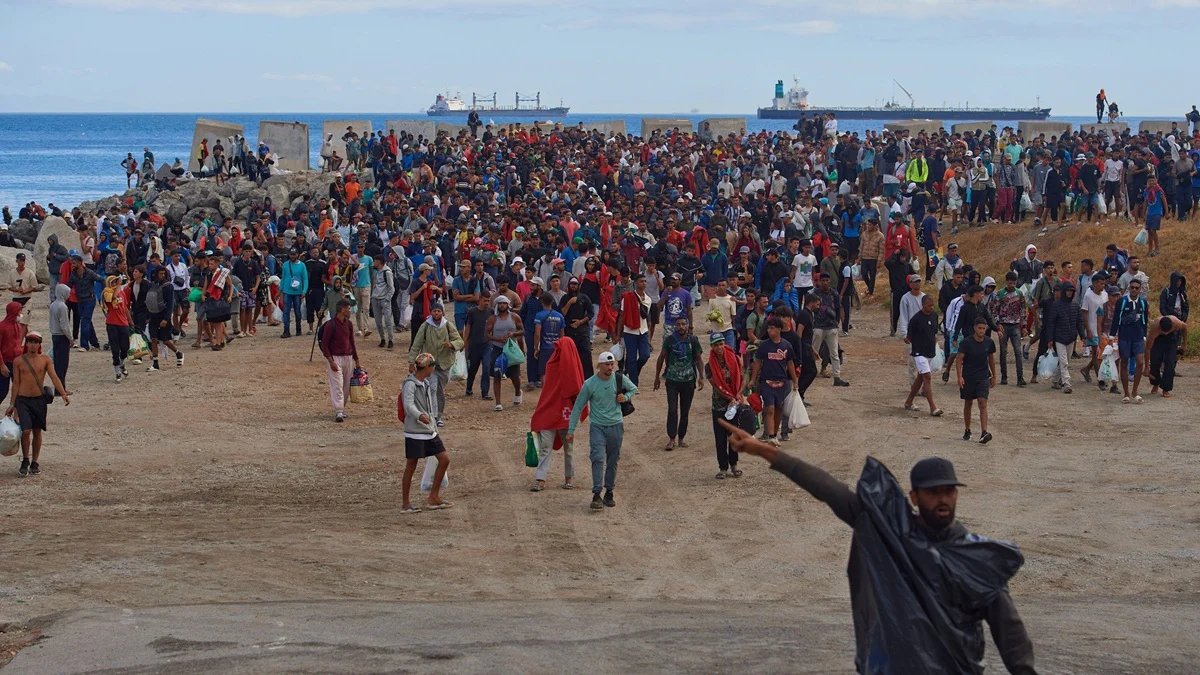
SPAIN is sending 45,000 vaccine doses to its North African enclave of Ceuta to prevent the spread of diseases among the migrant population.
The emergency shipment will include 15,000 doses against measles, mumps and rubella, plus 30,000 doses covering diphtheria, tetanus, chickenpox and polio.
Spain’s health ministry and regional governments agreed to send the doses through a solidarity scheme after more than 72,000 migrants arrived from Morocco on July 30 and 31.
The vaccines will be available to unvaccinated migrants as well as Ceuta residents, with authorities stressing the move is preventative and that there is currently no public-health emergency in the enclave.
Health services in Ceuta have been under intense pressure for weeks following the influx.
More than 5,800 people were treated in connection with the crisis between July 31 and August 14, according to Spain’s National Institute of Health Management.
A further 2,500 were treated by a Red Cross medical unit stationed in the enclave.
Health problems linked to overcrowding and poor sanitary conditions have also emerged, including gastroenteritis, scabies, impetigo and tuberculosis.
Experts insist the biggest health risks are faced by migrants themselves, particularly those living in cramped or unsanitary conditions, rather than the wider Ceuta population.
READ MORE: Spain to transfer 500 migrant girls from Ceuta to mainland amid welfare concerns
Health minister Monica Garcia said the most urgent priority was providing migrants with adequate accommodation, clean water, food and basic hygiene facilities, arguing this would control most of the potential risk of outbreaks.
The vaccination drive comes amid a political row over how authorities should respond to the health situation.
Opposition leader Alberto Nuñez Feijoo, of the right-wing Partido Popular (PP), has called for migrants with infectious diseases to be confined.
However, health experts have rejected a one-size-fits-all approach, saying measures should instead be based on the specific disease and how it spreads.
Ceuta has been at the centre of escalating political tensions since the late-July mass crossing, in which more than 90 migrants died while attempting to enter the enclave from Morocco.
Multiple social media accounts then encouraged a second mass crossing on August 15, though Moroccan and Spanish police managed to drive back the swarm.
Click here to read more Health News from The Olive Press.
