
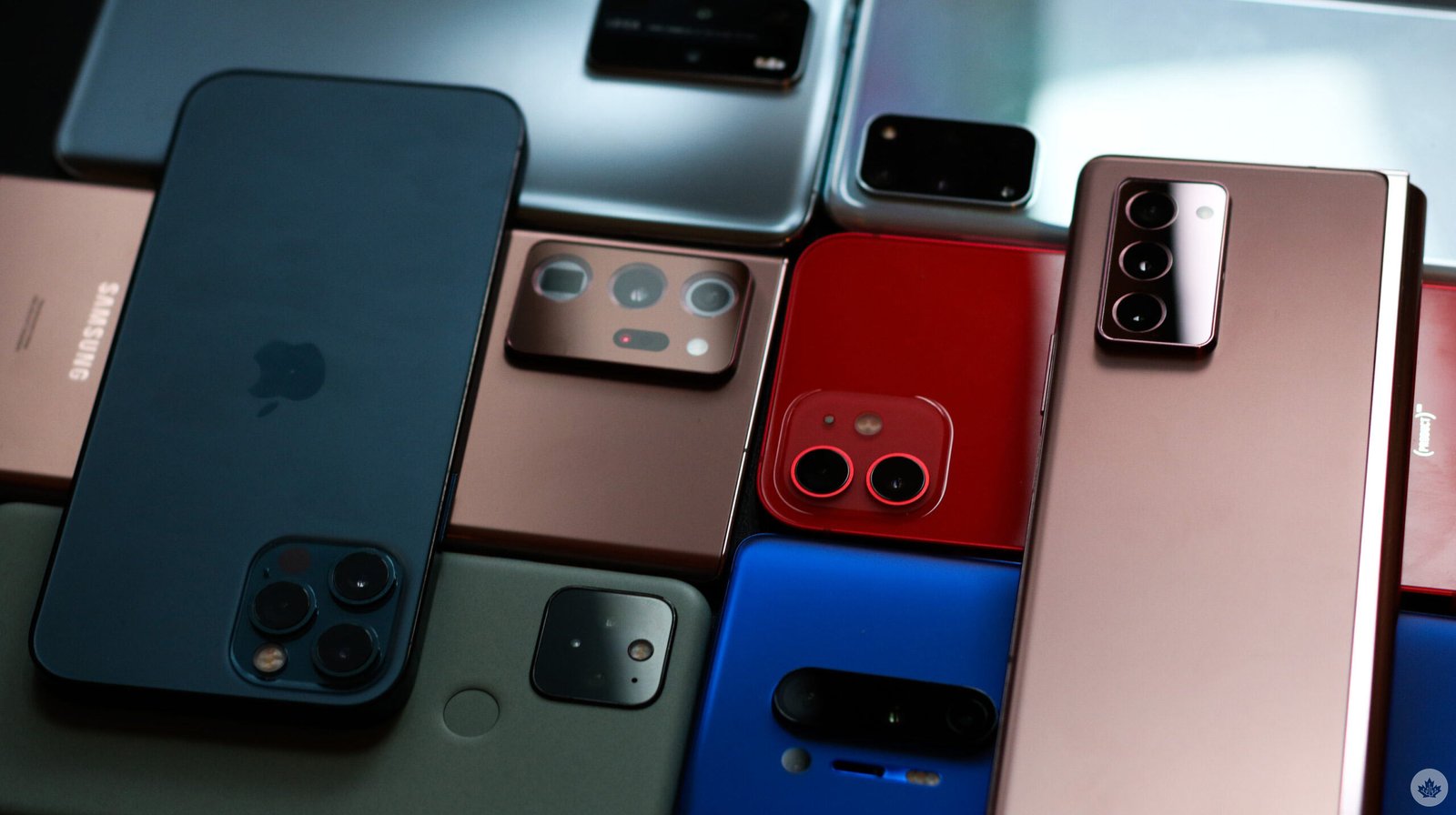
Canada will soon apply new tariffs on U.S. goods amid the ongoing trade war, including tech like phones. But that likely won’t mean your next iPhone will cost more — at least, it won’t be because of tariffs.
Starting Sept. 8, 2026, Canada’s counter tariffs will come into effect for tons of U.S. goods in response to tariffs the U.S. placed on Canadian goods in President Donald Trump’s inane trade war. Canada’s retaliatory tariffs will focus on sectors most impacted by U.S. tariffs, including steel, dairy, appliances, and more. Crucially for us in the tech world, electronics are also getting hit by tariffs.
A list of Canada’s counter tariffs published (and updated) this week includes items like phones, game consoles, monitors and projectors at the 50 per cent tariff rate. But don’t panic — Canadians probably don’t need to worry about already-pricey electronics getting even more expensive. At least, not because of tariffs.
“What I would say to most Canadians is, don’t be too worried that suddenly [you’re] going to see 50 per cent price hikes,” said Kevin Jia, co-founder and CEO of Canadian custom PC builder Quoted Tech, in an interview with MobileSyrup. “If somebody is telling you, ‘hey, by the way, this is 50 per cent more expensive because of the tariffs,’ I would question that.”
All about the country of origin
The key factor with tariffs is the country of origin, and how governments determine the country of origin will impact what does and doesn’t get tariffed. Canada’s counter tariffs specifically apply to goods “originating from the U.S.,” but with the fluidity of the situation and the size of the policy, it’s not immediately clear what will and won’t count as originating in the U.S.
“I think people often get very confused with how tariffs work. Really what it hinges on is whether something is treated as the country of origin of where that product comes from,” Jia explained.
Jia went on to use his own company, Quoted, as an example, explaining that while most of the assembly work is done in Canada, when the company ships products to the U.S., they’re treated as originating from Vietnam instead of Canada. Why? Because that’s where the CPU is assembled, and the soldering work is completed. Jia says the U.S. considers that work as the “critical transformation of the product,” and because it happens in Vietnam, that country is considered the origin of the goods.
“The question is, ‘where is the country of origin,’ and I think the vast majority of products, especially in gaming and consoles, are not the country of origin in Canada or the United States, despite the fact that there’s assembly work that happens in these two countries,” Jia said.
Mistakes are likely
However, Jia also acknowledged that things are still being finalized and much is still up in the air. Ultimately, it will come down to practical enforcement.
“These are major, major policy shifts that happen very quickly, and agencies just kind of scramble,” Jia said. “The tariff book is massive… there are millions of tariff codes, and they’re all wrapped up together. It can be hopelessly confusing as a business, let alone an individual consumer.”
And that’s not even getting into the potential for errors, which Jia notes can happen often. Agencies can make mistakes, misinterpret a rule, or a business can misdeclare something, which together can create chaos.
MobileSyrup also reached out to Apple, Google, and Xbox about the tariffs. Neither Apple nor Xbox responded before publication, while Google said it didn’t have anything to share about the potential tariff impact on its products.
Real price pressure comes from AI
But while Canadians might not need to worry about tariffs spiking the cost of their next iPhone, there are other issues putting more pressure on tech costs.
“Right now, the bigger problem is chip-flation because of AI datacentres,” Jia said. “That’s going to cause a major, major price — more than anything the tariffs can cause truthfully — on the actual movement of pricing.”
When it comes to avoiding rising costs, Jia advised Canadians should only buy tech when they need to. But if you are looking to get something, right now, sooner is better than later because of chip-flation.
