
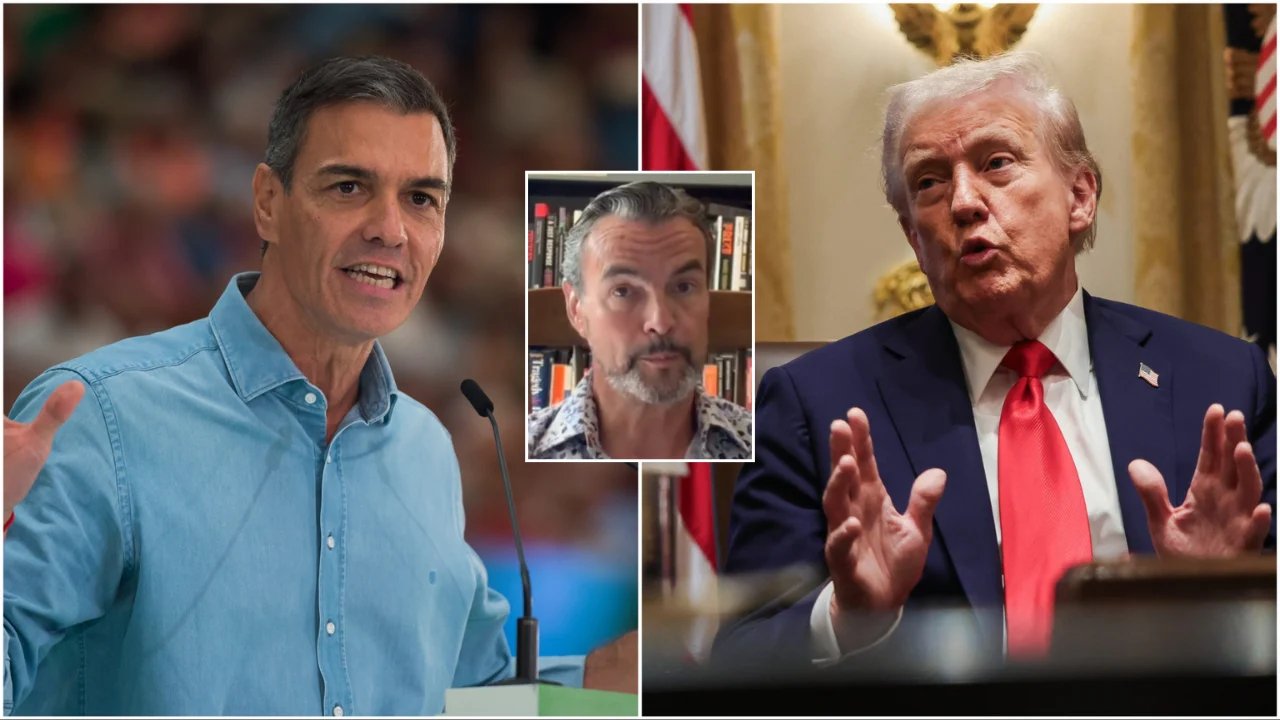
YOU moved to Spain for the sunshine, lifestyle and food, but the world came with you.
The rising cost of living, spiking energy bills, political instability and now, if you’ve been following the news, something else: a public confrontation between the governments in Madrid and Washington.
It came to a head after Spain refused to commit 5 per cent of GDP to NATO defence spending, citing its social programme needs.
It also refused American requests for military access to its air bases for operations against Iran.
Washington’s response was immediate and public – criticism, trade pressure and the unmistakable implication that Spain is ‘failing its obligations’ to the Western alliance.
Most coverage has treated this as a diplomatic disagreement.
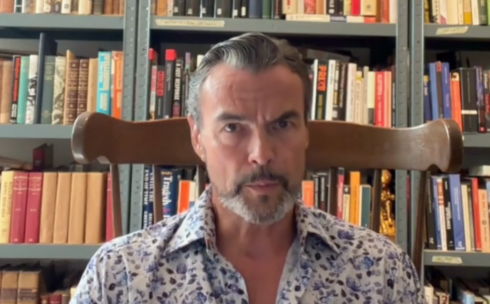
It isn’t, argues Richard Cowl. It is the long game operating in plain sight.
For the past two years, Cowl has been writing and recording a documentary podcast series, The Long Game, under the channel name The Iceberg Below.
The series asks a simple question: what is really driving world events beneath the news cycle, political speeches and official explanations?
His answer is a financial and institutional architecture that most people never see – because it operates well below the waterline.
Cowl traces its roots to late 19th-century Oxford University and the ideas of John Ruskin.
His 1870 inaugural lecture inspired a generation of students to view British imperial values as a civilising mission worth perpetuating.
Among those influenced was Cecil Rhodes, who later funded the Rhodes Scholarships to build a transatlantic network of like-minded leaders.
The Round Table movement that followed – connecting British and American elites through shared institutions, values and financial interests – became, Cowl argues, a blueprint for organisations including the Council on Foreign Relations, Chatham House and the Bilderberg Group.
The result, he claims, is an institutional architecture that continues to influence Western foreign policy today.
What looks like democratic governance operating independently in Washington, London and Brussels is, in significant part, the long-term output of a network designed more than a century ago in Oxford common rooms and London clubs.
The pressure on Spain makes more sense, Cowl argues, once that architecture is understood.
He links the dispute to the dollar’s position as the world’s reserve currency and the strategic importance of the Middle East.
The Strait of Hormuz, through which around 20 per cent of the world’s oil passes, is a critical global energy chokepoint.
When Spain declines to contribute militarily to US-led operations, Cowl argues, Washington sees it as refusing to share the cost of maintaining a system underpinning the global economy.
He believes that helps explain the sharpness of the criticism – and why mainstream coverage rarely frames the Western alliance in financial as well as military terms.
Then there is Russia.
In March 2022, the US and its allies froze around $300 billion of Russian central bank reserves following the invasion of Ukraine.
Cowl argues the move sent a message to governments worldwide that dollar-denominated assets could be vulnerable to geopolitical decisions.
Central banks subsequently increased their gold purchases, while BRICS countries continued developing alternative payment mechanisms.
“These are not conspiracy theories,” Cowl says. “They are documented facts.”
The information, he argues, is available in declassified cables, congressional reports, IMF assessments and public statements. The challenge is knowing where to look – and how to interpret what you find.
That is the purpose of The Iceberg Below.
The series takes its name from what Cowl describes as one of the most useful metaphors in geopolitics.
Above the waterline are the wars, elections, financial crises and diplomatic confrontations we see every day.
Beneath it lies the far larger mass: institutions, money flows, alliances and the permanent players operating across electoral cycles and generations.
For Cowl, what is happening between Spain and the United States is therefore more than a diplomatic spat.
It is the hidden architecture becoming briefly visible.
And, he argues, that is always the most instructive moment – when the long game breaks the surface.
The Long Game: Power, Money & the World They Don’t Want You to See is available now on YouTube.
