
Many of the historic figures of Chavismo, the political movement founded by former Venezuelan president Hugo Chávez, backed Delcy Rodríguez’s interim government after Nicolás Maduro was extracted by U.S. special forces.
The months since the January 3 operation have, however, revealed a growing rift within the Chavista camp. From among Chávez’s former military comrades, Francisco Arias Cárdenas, who, alongside Chávez, helped lead the failed coup attempt of February 4, 1992, has emerged as a prominent defender of the movement’s founding ideals. “An agreement dictated by the United States and involving only participants selected by the United States is worse than a capitulation,” he wrote on X.
The former governor of Zulia state and former ambassador to Mexico has called for direct talks between Delcy Rodríguez and Venezuelan opposition leader María Corina Machado, rather than a negotiating team chosen entirely by Washington. Arias has also said that U.S. President Donald Trump should be “an ally, not a meddling ‘father figure,’ for Bolívar’s homeland.” But Arias is far from the only dissatisfied Chavista.
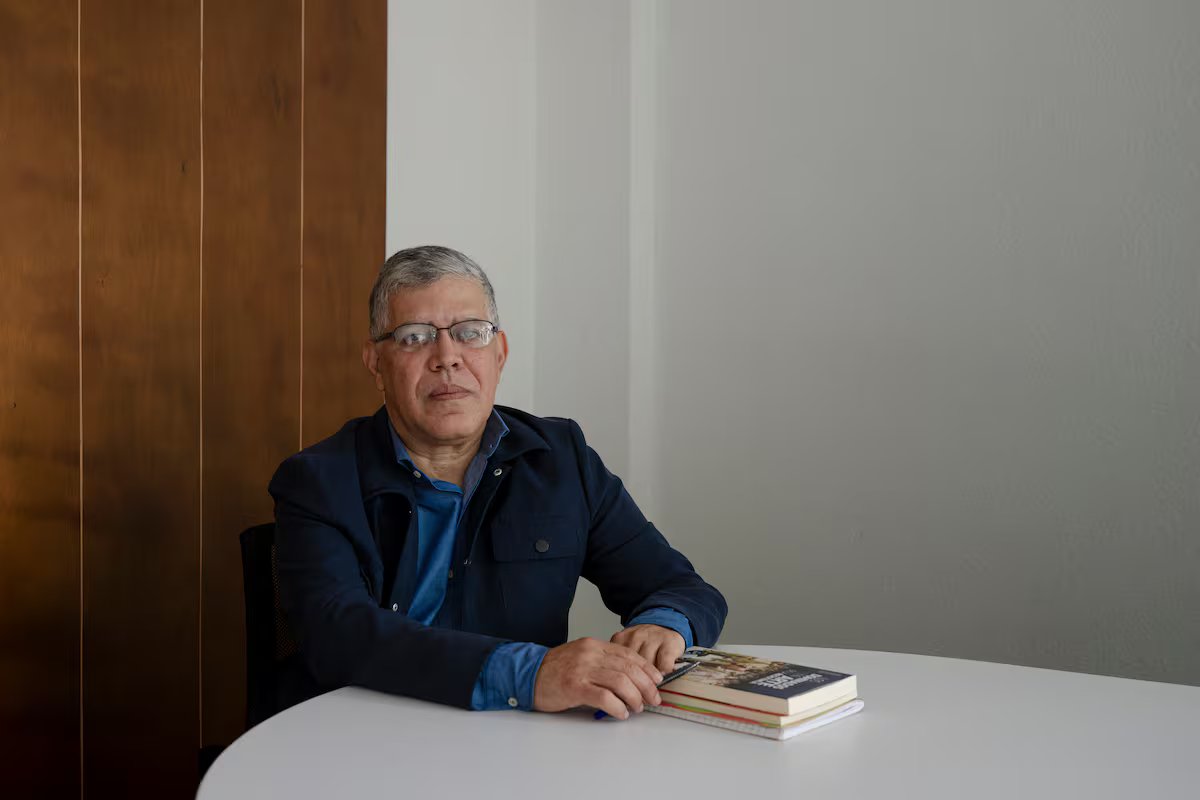
The voice of former vice president Elías Jaua, 56, has also been heard loud and clear. In January, he condemned the “cowardly kidnapping” of Maduro and Cilia Flores by the United States, but stopped short of fully backing the troika led by Delcy Rodríguez, her brother Jorge, and strongman Diosdado Cabello. In fact, he has maintained a certain distance from the Chavista leadership over the past five years.
In April, Jaua, who is under sanctions from both the United States and the European Union, sharpened his criticism, using terms such as “occupation,” “domination,” “colonialism,” and “coercive tutelage” to denounce the political and economic subordination that, in his view, the Trump administration has imposed on Venezuela. Through the Center for Studies on Socialist Democracy (CEDES), he has sought to promote a left-wing debate aimed at finding a way out of the current crisis through the construction of a pluralistic democracy. However, the ghost of Chávez continues to loom large.
Question. How would you describe the moment Venezuela is going through, and what is the main threat?
Answer. This is one of the most serious moments in the country’s history. Why? Because as of January 3, we lost our status as an independent nation. The republican order was brought down by force: missiles, the imposition of control over the management of our resources, forced interference in our legislation, and the implementation of a political plan that does not reflect a decision made by the Venezuelan people. The greatest threat facing Venezuela today is the loss of its national independence and its ability to determine its own future.
Q. You have proposed a national agreement to restore that sovereignty. What would it need to acknowledge?
A. First, the ability of Venezuelans to democratically manage a conflict that has been decades in the making. Second, the need to reach a basic consensus among all national stakeholders that would make possible a project shared by the majority of the country’s political currents. And third, it must acknowledge the harsh reality of a coercive occupation, which will require a long and complex process of negotiation with the occupying power in order to restore our status as a republic.
Q. What happened for Venezuela to lose the conditions necessary for democracy?
A. Because of the persistent exclusion of one or more political actors. The representative democracy that emerged in 1958 excluded left-wing forces from the Puntofijo Pact. As the two-party system evolved, important sectors were left behind in terms of their ability to influence events and to feel part of the model. That led to the rupture of 1989 with the Caracazo [a wave of deadly anti-government riots and protests against measures announced by then-president Carlos Andrés Pérez], then to the military uprisings and, ultimately, to Chávez’s victory in 1998. That began a process that aimed to be inclusive. A fundamental element of the 1996 Bolivarian Alternative Agenda was the inclusion of all sectors. But from 2002 onward, following the coup attempt [against Chávez], we experienced a form of aggression that made that effort at full inclusion more difficult. After Chávez’s death, a mistaken bet was placed on consolidating a party-state model, which ultimately exceeded democratic limits. That was when the collapse came: not only of democracy, but of the republic itself.
Q. When Chávez won reelection in 2006 with 63% of the vote, there was an expectation of a truce. Instead, what followed was a rapid deepening of the process, from Bolivarianism to 21st-century socialism. What could have been different?
A. After 1992, Chávez and a large part of our movement chose the democratic, peaceful and electoral path over the idea of military rebellion, and we tried to remain consistent with that choice. But after the 2006 victory, we once again faced violent aggression in the streets in 2007. Beginning in 2004, there was an agreement negotiated with the Carter Center that led to the recall referendum, and in 2010 the opposition returned to the National Assembly. On January 15, 2011, Chávez personally welcomed each of the opposition leaders, including María Corina Machado and Andrés Velásquez, and warned them: if we continue without limits, we are going to lose the country. Look at Syria, look at Libya. Chávez called for a truce. There is an important element of self-criticism there regarding the mistakes that were made by failing to create a space for coexistence. Then came Chávez’s death, and by 2014 all constitutional parameters had been exceeded on both sides.
Q. You were part of the government. Looking back from within Chavismo, what would you criticize about your own role?
A. I should have made a greater effort to secure that space for coexistence, which could have spared the country the tragedy it is experiencing today. I took part in all the dialogue processes: beginning in 2014 with UNASUR, then with the Vatican, and later in the Dominican Republic, the last one in which I was involved. Unfortunately, that effort was lost. What remains is the bitter feeling that we could have built greater political support within Chavismo to make it happen.
Q. My sense is that the real break came between the 2007 referendum, when voters rejected Chávez’s proposal to allow indefinite reelection, and the 2009 referendum, when they approved the removal of those limits.
A. For Hugo Chávez, the possibility of alternation in power was always real, in keeping with what had been decided in 1995. On several occasions, he said that losing an election was an opportunity to grow or to engage in self-examination. I say that with complete political honesty.
Q. When Chávez lost the 2007 referendum, he described it as a “shitty victory.”
A. He accepted it. He did not deny it. At the meeting held on the day of the referendum, where I was tasked with speaking on behalf of the National Directorate, our position was that if we lost by even a single vote, we would recognize the result. Chávez’s response was immediate: “I don’t want a victory like that. We’re going to recognize it.” That is the historical truth.
Q. You place control over oil revenue at the heart of sovereignty. What rules would you propose?
A. Without economic autonomy, no country can pursue any model of development. It is one thing to acknowledge the problems of mismanagement, corruption and the lack of effective oversight, a structural problem throughout 20th-century Venezuela, and those issues must form part of a national agreement. But it is absolutely inconceivable, under international law, that one country should arrogate to itself the right to administer another country’s resources, under any circumstances or pretext.
Q. Are you saying that Venezuela does not control its own resources today?
A. At this moment, Venezuela’s national revenues are held in a sub-account of the U.S. Treasury Department, and only the United States has authority over it.
Q. Trump says the war has already “paid for itself” several times over through Venezuelan oil.
A. A great deal of money has been made, which amounts to theft. “The winner takes the spoils” is the bluntest expression Trump has used. That is pillage. And pillage is a practice that civilized nations have long since left behind; it is prohibited under United Nations resolutions. Just because one country wins a war against another does not give it the right to plunder it.
Q. Delcy Rodríguez says she has a “cooperative” relationship with the Trump administration. Is it cooperation or vassalage?
A. That is a question for them to answer. But from the outside, it looks like a decision to cooperate in the face of a specific situation: the possibility of a bombing campaign and of responding militarily to such a bombing.
Q. Are Delcy and Jorge Rodríguez betraying the values of Chavismo? They, too, speak of restoring democracy.
A. First, there has to be a restoration of the full force of the Constitution in order to restore the republican order and guarantee democratic participation for all political actors. All of them.
Q. Does “all” include María Corina Machado?
A. María Corina Machado represents a segment of society that shares her views, just as every political leader represents a particular current of opinion. Excluding any of those currents creates the conditions for a new period of instability.
Q. She represents a fairly large segment: 93% of the opposition primary vote, perhaps 70% of the 2024 election.
A. Electoral support at a given moment is one thing; representing the thinking of an entire society is another. We won 63% of the vote with Chávez, but that did not mean we represented all of the country’s thinking. This is not a right-wing society, nor is it particularly liberal.
Q. Nor did that 63% necessarily support “21st-century socialism.”
A. But socialism was Chávez’s electoral platform that year. When people voted for him, they were voting for that proposal.
Q. When you speak of “democratically managing the conflict,” what needs to happen for an election result to be recognized as legitimate?
A. There must be a political willingness to respect popular sovereignty. That has been lacking since 2002: in 2004 with the recall referendum, in 2006 when part of the opposition refused to recognize Chávez’s victory, and in 2013 with Maduro, although [opposition leader Henrique] Capriles ultimately accepted the result. The winner wins; the loser loses. That has to be accepted. Secondly, there must be pluralism. I am concerned that this dialogue may be laying the groundwork for a two-party system, and that will not be the solution. Venezuela needs a pluralistic, multi-party democratic model. Venezuelan society does not feel represented by the two forces that appear to be the only relevant political actors.
Q. Do you believe that neither María Corina Machado’s opposition nor the faction sitting at the negotiating table represents the majority?
A. I am saying that neither represents “the majority” in the fullest sense. Nor is there pluralism within the governing Chavista camp: it was born as a movement made up of different currents, and those currents are not being recognized today.
Q. With political prisoners, exiles, banned candidates, 200 blocked domains and 94 affected media outlets, what specific guarantees are needed to restore pluralism?
A. All of that must be overcome, along with the conditions that distort the country’s economic life: sanctions and the restoration of control over sovereign revenues. Those in government also have a right to govern. There must be political conditions for everyone.
Q. What would you add to what is already on the negotiating table?
A. First, and most importantly, the recovery of independence; second, the inclusion of all political forces that have not been barred from participation; and third, ensuring that any agreement leads to a long-term national project decided by Venezuelans themselves, rather than under the tutelage of any foreign power. Because it is impossible to know whether what is being discussed is a proposal crafted by the two sides or a document that Mr. Marco Rubio has placed on the table.
Q. What would you do if you were sitting on the other side of the table?
A. I would propose to all political currents a path for the democratic, peaceful and electoral management of the conflict, and I would engage with the international community to ensure that Venezuela receives support without any form of intervention. I know people will say that international law no longer exists, that Trump recognizes no principles of coexistence, but Trump will not be around forever. The most serious problem right now is that this political will is nowhere to be seen: most actors are trying to win the favor of whoever holds tutelary power.
Q. Is it possible to recover some degree of sovereignty through those negotiations?
A. There has to be a political willingness to try. If nobody tries, there is no way of knowing whether it is possible. What we are seeing is a broad acceptance of the “three-phase plan”: neither the government nor the opposition contains anyone willing to challenge it or to put forward a negotiating process aimed at restoring sovereignty. It will not be easy. It will be complex, and it may well outlast Trump. But it has to be put on the table. What Venezuela needs today are statesmen willing to set aside their own ambitions and, on the basis of a national agreement, pursue the recovery of the state’s independence.
Q. What would be the three minimum sovereignty conditions Venezuela should demand from the United States?
A. First, the right to political self-determination: the plan must be drawn up by Venezuelans. The most serious problem today is that, by accepting the Rubio plan without debating it, the country’s leadership is effectively acknowledging that it is incapable of reaching agreements among itself. Beyond Trump’s aspirations regarding oil, that created fertile ground for tutelage.
Second, the full restoration of control over our national revenues, subject to the fiscal oversight mechanisms established by the Constitution.
Third, autonomy in foreign relations. I am concerned that the United States could push Venezuela into its geopolitical agenda in the Middle East: recognition of Israel, a deterioration in relations with Iran, withdrawal from the International Criminal Court. Venezuela should avoid becoming entangled in a geopolitical conflict that is not its own.
Beyond that, there are more practical matters. If the United States’ primary interest is energy, then let’s talk about it without undermining national sovereignty.
Q. You were his vice president. What do you think Hugo Chávez would do if he were facing these negotiations today?
A. I’m not going to engage in speculation. I would refer instead to the speech Chávez gave to the National Assembly on January 15, 2011, in the context of the civil wars [then emerging] in Syria and Libya. Chávez feared that Venezuela could be driven into a similar situation. I believe he would have made every effort to avoid a breakdown of the democratic space, however much pressure he might have faced from the far right. In that speech, he said: the nation comes first; we may think differently, but we must neither kill one another nor break the democratic rules of the game. The essence of that speech was the preservation of the nation.
Q. What was lost from that spirit under Maduro’s government?
A. What I value in Chávez is his ability to understand democracy as an agonistic conflict, not an existential one. He knew how to manage conflict within certain parameters of coexistence, and when he felt those boundaries were being exceeded, he made efforts to correct any authoritarian drift before it was too late.
Q. And did that stop happening afterward because, as Diosdado Cabello once put it, Chávez kept “the crazies” under control?
A. Yes. After 2014, the ropes were taken off the ring, there was no referee, and we tore into each other, ignoring Chávez’s warning that the integrity of the nation must come before our differences.
Q. You belong to the generation that founded and governed the Bolivarian process. What historical responsibility should it assume for the deterioration of Venezuela’s institutions?
A. We need to break the story down into stages. It was not a single, monolithic “Chavismo,” but different phases of Chavismo. In the first phase, with Chávez at the helm, we carried out the Bolivarian Alternative Agenda, our political program: a constituent process, grassroots democratization, participatory inclusion and the renationalization of previously privatized industries. There were management failures, certainly, but we also built a new institutional framework and achieved broad social inclusion. And yes, in the context of polarization, we also pursued exclusionary policies toward sectors that could have been handled differently.
Q. Large-scale corruption flourished under Chavismo and has been extensively documented. What is your criticism of it?
A. Yes, that is true, and we must acknowledge it as a promise left unfulfilled, despite efforts to contain it. It was tied to ambitions for wealth accumulation. Our mistake, as a party, was that we were not effective enough in establishing ethical controls. The structural scourge of corruption is linked to oil revenues and to a private sector that has also been corrupt. The problem will persist unless we tackle it at its roots.
Q. Wasn’t there, within the oil-based model and the one-party system, a structural incentive for corruption?
A. There was always a firm commitment to fight it. But the sheer scale of public policies sometimes overwhelmed the state’s capacity for fiscal oversight. The priority became meeting people’s needs, at the expense of fiscal rigor, and things slipped through.
Q. Chavismo based its legitimacy on elections, participation and the Constitution. Does it still possess that legitimacy today?
A. At the most recent congress of the PSUV, we expressed disagreements between those who have governed and those of us who believe that the viability of a democratic revolution depended on broad popular participation and public freedoms. In his message of December 8, 2012, before leaving for Cuba, Chávez himself said that the revolution had to continue along a democratic path, with full freedoms. That was our original current. From 2018 onward, it was replaced by a more controlling state that justified itself on the grounds of external aggression. But we believed the response should have been more democracy.
Q. What would you have done before Juan Guaidó, who self-proclaimed himself president of Venezuela in 2019?
A. I would have made every effort to sign the agreement negotiated in the Dominican Republic, which was a good agreement. By vetoing certain actors, we contributed to it not being signed; but the opposition was divided and had also vetoed some actors, and did not agree on a candidate. That is the truth.
Q. On July 28, 2024, the National Electoral Council (CNE) declared Maduro the winner without publishing the voting tallies. The Carter Center concluded that the election failed to meet democratic standards. Do you acknowledge that Maduro lost legitimacy, and that this rupture left Venezuela more exposed to external tutelage?
A. The problem of Maduro’s legitimacy did not begin in 2024. The failure to publish the tallies created reasonable doubts, but even in earlier elections, when the tallies were published, the results were still contested. In the end, all that remained was the constitutional ruling of the Supreme Court, which conferred legal validity on Maduro’s mandate.
Q. So there was no fraud, then?
A. That is a loaded question, because the tally sheets were never published. I did not have access to them either.
Q. But the government controlled both the National Electoral Council and the Supreme Court.
A. Those elections should not have been held under those conditions, because they were not preceded by a political agreement guaranteeing that the result would be recognized, whoever won. They were carried out in a haphazard manner. But I do not believe the explanation for the military intervention lies in the July 2024 elections. It is more deep-rooted and is tied to the United States’ evident interest in Venezuela’s energy reserves.
Q. Before January 3, there were negotiations in Qatar between Miraflores and the White House that failed to produce an agreement. Could there have been a different outcome?
A. Speculation is the last thing I would do. I believe there should have been a political agreement that prioritized the integrity of the revolution and prevented Venezuela from being attacked and brought under military subjugation.
Q. Do you accept that Venezuela will not recover its sovereignty vis-à-vis the United States unless it regains domestic legitimacy through elections, human rights, pluralism and accountability?
A. My opposition to repression has always been public, clear and unequivocal. As revolutionaries, we cannot endorse excessive repression. The state has the right to exercise authority. There were insurrectionary processes during this period, and attempts against Maduro’s life. But a revolutionary state is obliged to respond while preserving the integrity of human rights. To say that Chavismo, as a political model, violates human rights is not true. Each individual must assume their own responsibility.
Q. The General Directorate of Military Counterintelligence (DGCIM), the Bolivarian National Intelligence Service (SEBIN) and the National Guard were deployed, institutions that were used to repress the population.
A. During Chávez’s government, respect for human rights was a matter of state policy. There were isolated excesses, but they were always corrected, punished and even publicly denounced by the president himself.
Q. What are you willing to do to contribute to that domestic legitimacy?
A. Domestic legitimacy is necessary, but it is not enough. A new electoral process by itself will not resolve the issue of tutelage. What will resolve it is a broad national agreement. Venezuela cannot look to the future as a country whose resources are administered by another state, that has to ask permission to make political decisions, that legislates with a gun to its head in favor of interests contrary to its own, and that is constantly humiliated by the statements of another country’s president. That cannot be Venezuela’s future. On that point, I do believe the overwhelming majority of Venezuelans agree.
Q. It is important to have this debate and for there to be respect
A. It is important for the international community to understand that it is a mistake to think of Venezuela solely in terms of two opposing actors, “the government” and “María Corina Machado.” They are the principal actors today, but they are not the only ones, and in the future they will not necessarily be the most influential.
Sign up for our weekly newsletter to get more English-language news coverage from EL PAÍS USA Edition
