
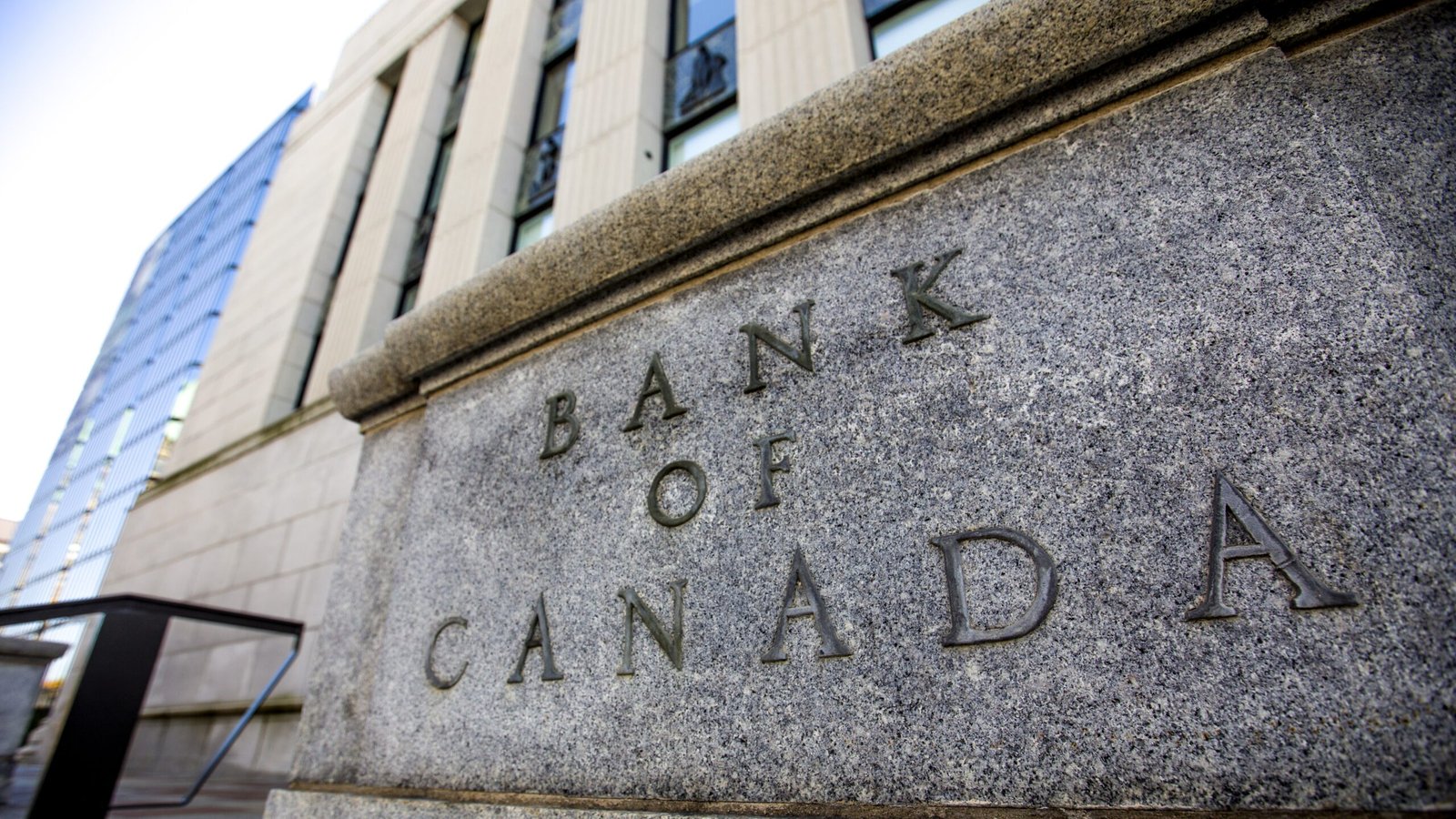
The Bank of Canada held its key interest rate at 2.25 per cent on Wednesday following the recent breakdown of trade talks with the U.S. and subsequent economic uncertainty due to new tariffs.
Any further tariff escalation could push inflation upward while threatening the economic recovery that has just begun to take hold in Canada.
This creates an uncomfortable predicament the central bank: raising rates could thwart growth, while lowering rates could further raise inflation still.
Bond yields around the world have also risen recently—including in Canada—due to ongoing energy price uncertainty amid the war in the Middle East.
Our baseline forecast is that the Bank of Canada will hold its policy rate again in December before hiking in March 2027 given the dual risk of higher inflation from retaliatory tariffs and subdued growth from ongoing trade tension.
Alternatively, if trade tensions between Canada and the U.S. keep rising, a rate cut might be possible to lower borrowing costs and support the economy.
Stability amid storms
Canada has faced extraordinary and unprecedented uncertainty regarding trade relations over the past two years.
The Bank of Canada’s latest decision is another marker of the country’s consistent stability and reliability in both fiscal and monetary policy—which plays a role in Canada’s financial conditions remaining moderately accommodative.
That stability is also attractive for business investment, a critical consideration for Canada’s economic growth amid global economic disruptions.
The central bank has held its overnight rate at 2.25 per cent for seven consecutive meetings amid ongoing tension in Canada-U.S. trade relations; the last rate change was a 25 basis-points cut in October 2025.
The central bank has since acted as a stable anchor that households and markets can rely on amid the volatility south of the border—a message the bank’s governor emphasized on Wednesday.
Keeping the policy rate constant is a wise move, particularly as inflation (excluding energy) and all core inflation measures remain squarely on target. While headline inflation is elevated at 3 per cent, it stems solely from higher energy prices and currently shows no signs of becoming broad-based.
Economic rebound faces external threats
After a drag early this year, an economic rebound is visible in both job and growth numbers.
Canada added 75,000 jobs in July and growth hit 3.3 per cent in the second quarter of 2026—the fastest in the last three years. Business investments, exports and wages are all going up, which paints a picture of recovery.
However, the fallout from trade tensions means that Canada’s growth forecast has been revised downward, and continued optimism is not guaranteed.
Ongoing tariff volatility could discourage consumer spending, household and business borrowing, and business investments—which means there was little need to raise interest rates at this juncture.
But lowering rates was not an option either due to current global energy uncertainty and the possibility that Canada’s next round of counter-tariffs on U.S. goods that is scheduled to begin Sept. 8 could raise consumer prices.

