
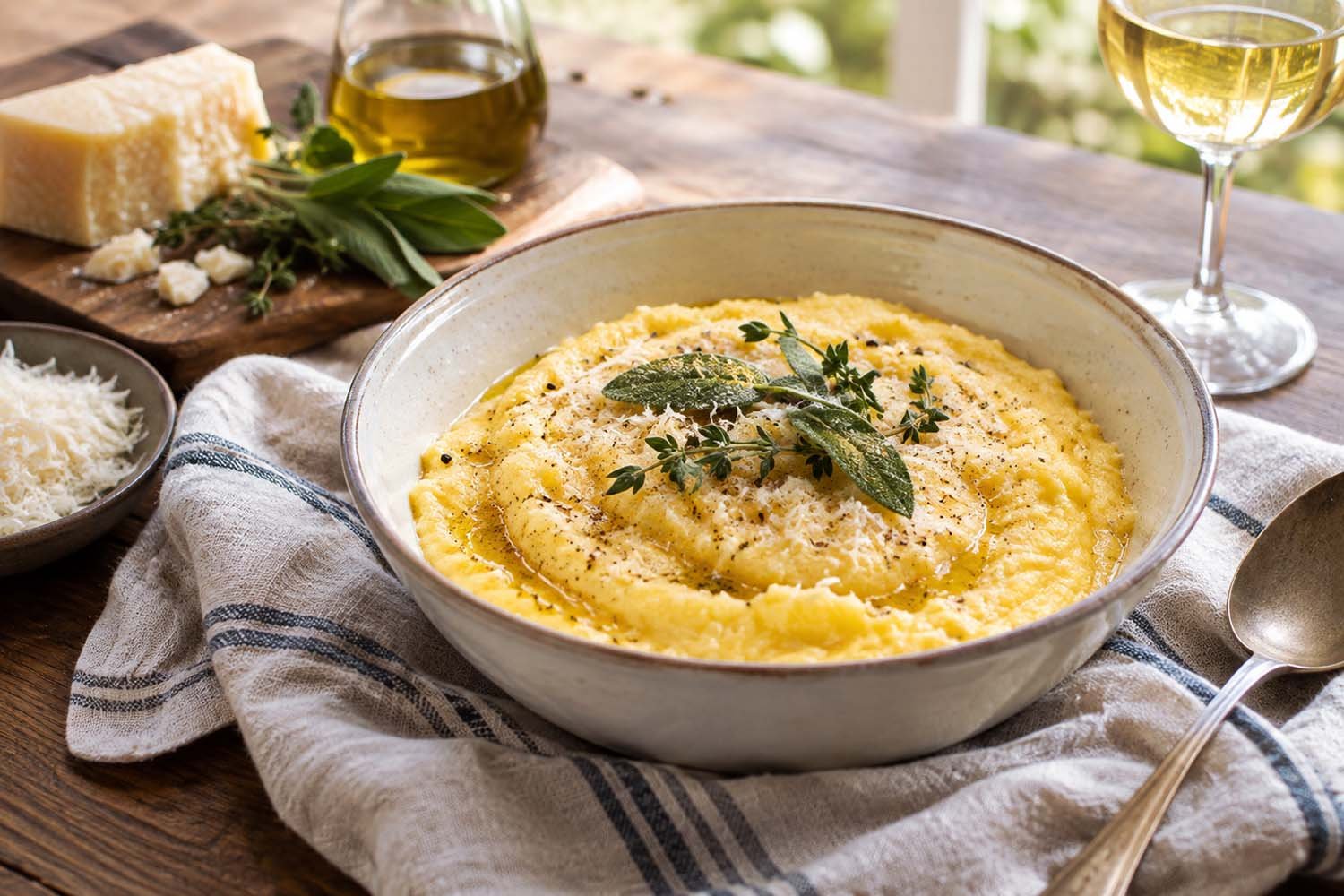
Polenta shows up in three very different forms in most kitchens: a bag of dry cornmeal waiting to be cooked, a shelf-stable tube of the precooked stuff ready to slice and pan-fry, and a pot of the finished, creamy dish itself. Each one goes bad in its own way and on its own timeline, and one of the most repeated pieces of polenta storage advice online is actually the opposite of what the people who make the stuff recommend.
Does polenta go bad?
The short answer: Yes, but how depends entirely on which form you have. Dry polenta meal is essentially coarse cornmeal and is shelf-stable for a long time in a sealed, dry pantry, generally longer if it’s degerminated and shorter if it’s whole grain or stone-ground, since the corn germ contains fat that eventually turns rancid. Precooked, shelf-stable tube or tub polenta is unopened-pantry-stable for months and, once opened, is best refrigerated and used within about 5 to 7 days; despite what a lot of storage advice says, the maker of one major brand specifically recommends against freezing it, since the cold pulls water out of the corn and leaves it crumbly. Cooked, homemade polenta follows standard leftover rules: refrigerate within 2 hours and use within about 5 to 7 days. Separately, corn products in general carry a documented, FDA-monitored mycotoxin risk when stored improperly, which is worth knowing regardless of which form of polenta you keep in the kitchen.
For general guidance on storing pantry staples, see the food storage guide, and since polenta is essentially a coarser grind of the same grain, see the closely related guide to whether cornmeal goes bad for more on how corn products age.
📋 Does Polenta Go Bad: At a Glance
| Dry polenta meal, unopened pantry | Roughly 1 to 2 years, shorter for whole grain or stone-ground |
| Dry polenta meal, opened, airtight, pantry | Around 3 to 6 months for best quality |
| Precooked tube/tub polenta, unopened pantry | Commonly around 10 months from the production date, per at least one major brand |
| Precooked tube/tub polenta, opened, refrigerated | About 5 to 7 days |
| Cooked (homemade) polenta, refrigerated | About 5 to 7 days |
| Cooked polenta, room temperature | No more than 2 hours |
| Freezing precooked tube polenta | Not recommended by at least one major maker; texture turns crumbly |
| Separate risk to know about | Mycotoxins in corn products stored in warm, humid conditions |
Key Takeaways
- Polenta isn’t one product with one shelf life; dry meal, precooked tube polenta, and cooked polenta all age differently and need different storage.
- Dry polenta’s fat content lives mostly in the corn germ, which is why whole grain or stone-ground polenta, which keeps the germ, goes rancid faster than finely milled, degerminated polenta.
- Precooked, shelf-stable tube polenta is designed to live in the pantry, not the fridge or freezer, according to at least one major manufacturer; cold temperatures pull moisture out of the corn and leave it crumbly rather than creamy.
- Once cooked, any form of polenta becomes a moist, perishable food and needs to follow the same 2-hour room temperature limit and refrigeration rules as any other cooked grain dish.
- Corn-based foods, including polenta, are one of the food categories the FDA specifically monitors for fumonisin, a mold-produced toxin that becomes more likely when corn products are stored somewhere warm and humid.
Why Polenta Ages the Way It Does: The Corn Kernel’s Two Faces
The Science: Starch Stores Well, Fat Doesn’t
A corn kernel is really two different ingredients bundled together. Most of it is starchy endosperm, which is essentially inert once dried and stores extremely well; it’s what makes dry, finely milled, degerminated cornmeal and polenta so shelf-stable. The much smaller germ, the part of the kernel that would sprout into a new plant, is where nearly all of the kernel’s natural oil is concentrated. That oil is nutritionally valuable, which is why whole grain and traditional stone-ground polenta, which keep the germ intact, are often preferred for flavor and nutrition, but it’s also unsaturated fat, and unsaturated fat oxidizes over time the same way it does in any nut, seed, or whole grain. This is exactly why whole grain or stone-ground polenta has a meaningfully shorter shelf life than a finely milled, degerminated version of the same corn: more retained germ means more fat exposed to air, heat, and light, and a faster path to the stale, slightly bitter taste of rancidity. Precooked and cooked polenta introduce a second, separate variable entirely, since adding water and heat creates the moist environment bacteria need to grow, which is why those forms follow standard perishable-food timelines rather than the long shelf life of the dry meal.
The Three Forms of Polenta, and Why Each One Behaves Differently
Dry polenta meal
This is essentially coarse cornmeal sold specifically for making polenta, and it behaves the same way any dry corn product does: shelf-stable for a long time if kept dry and sealed, with degerminated versions lasting longer than whole grain or stone-ground versions because of the fat difference described above.
Precooked, shelf-stable tube or tub polenta
This is fully cooked corn meal, water, and salt, packaged to sit on a grocery shelf unrefrigerated, ready to be sliced and pan-fried, grilled, or baked. It behaves more like a shelf-stable prepared food than either dry polenta or homemade cooked polenta, which is exactly why its storage advice differs from both.
Instant or quick-cooking polenta
A partially pre-cooked, finely ground dry product designed to thicken in just a few minutes rather than the 30 to 45 minutes traditional polenta needs. In its dry, unopened form it stores similarly to standard dry polenta meal, since it’s still a dehydrated, low-moisture product.
Cooked, homemade polenta
Once you’ve actually cooked dry or instant polenta into the finished, creamy (or firm, once cooled) dish, it is a perishable, moist food, no different from cooked rice or oatmeal in terms of the food safety rules it needs to follow.
Tip: Don’t assume the fridge or freezer is always better
According to the owner of one major precooked polenta brand, interviewed about the product’s shelf life, unopened shelf-stable tube polenta is better kept in the pantry than the refrigerator or freezer. Very cold temperatures draw water out of the corn and leave the texture crumbly rather than creamy, and refrigeration can cause water to collect between the polenta and its plastic wrapping. Once a tube or tub is opened, though, it does need to go in the refrigerator, since an opened package is no longer protected from contamination the way a sealed one is. Just how conservative that printed date can be: the same brand owner mentioned finding an intact package on a shelf seven years after its production date, sending it to a lab out of curiosity, and getting back a clean result with nothing harmful detected, though he was quick to add that finding wouldn’t make him recommend actually eating seven-year-old polenta.
How to Store Each Form of Polenta
Dry polenta meal and instant polenta
Keep the sealed bag or box in a cool, dry pantry away from heat and direct light. Once opened, transfer it to an airtight container to keep out moisture, which is what eventually leads to clumping and, in humid conditions, mold.
Precooked tube or tub polenta
Store unopened in the pantry per the package directions. Once opened, wrap the unused portion tightly or transfer it to an airtight container and refrigerate, using it within about 5 to 7 days.
Cooked polenta
Let it cool briefly, then refrigerate within 2 hours of cooking in a shallow, airtight container; a longer wait at room temperature gives bacteria more time to multiply in a warm, moist starch. Refrigerated this way, cooked polenta is generally good for about 5 to 7 days. It also freezes reasonably well for a few months, though the texture will be a bit softer or more watery after thawing, so it’s often best reheated with a splash of extra liquid.
Signs Polenta Has Actually Gone Bad
What to Look, Smell, and Taste For
In dry polenta meal, the main signs are a rancid, slightly paint-like or bitter smell rather than polenta’s normal mild corn aroma, along with clumping or visible mold if moisture has gotten in. In precooked tube polenta and cooked, homemade polenta, watch for any mold growth, a sour or off smell rather than a mild, faintly sweet corn scent, a slimy surface, or noticeable discoloration. Any of these mean it’s time to discard the batch rather than try to salvage it, especially with cooked or precooked forms where bacterial growth, not just staleness, becomes the concern.
The Risk Storage Advice Usually Skips: Mycotoxins in Corn
Why This Is Worth Knowing, Even Though the Risk Is Low
This is unrelated to ordinary staleness, but it’s a genuine reason proper dry storage matters beyond flavor. Corn is one of the food crops the FDA specifically monitors for mycotoxins, toxic compounds produced by certain molds, most notably fumonisins from Fusarium molds, which commonly infect corn in the field and can continue developing if the grain is later stored somewhere warm and humid. The FDA has published guidance levels limiting how much fumonisin is allowed in corn-based human food, generally in the range of 2 to 4 parts per million depending on the product category, and U.S. corn destined for food use is monitored with this in mind. One detail worth knowing: because fumonisins concentrate mainly in the same corn germ and outer hull that carries most of the kernel’s fat, finely milled, degerminated corn products, including many commercial polenta and cornmeal brands, tend to carry lower levels than whole grain or stone-ground versions that retain the germ. None of this means whole grain or stone-ground polenta is unsafe; commercial supplies are monitored, and the practical risk for a home cook buying from an established brand is low. It’s simply one more reason a torn bag, a humid pantry, or an old container of dry polenta left somewhere damp is worth taking seriously rather than dismissing as just a staleness issue.
| Form | Pantry | Refrigerator |
|---|---|---|
| Dry polenta meal, unopened | 1 to 2 years, shorter for whole grain | Not necessary |
| Dry polenta meal, opened | 3 to 6 months, airtight | Not necessary |
| Precooked tube/tub, unopened | About 10 months from production, per at least one major brand | Not recommended by makers |
| Precooked tube/tub, opened | Not recommended | 5 to 7 days |
| Cooked (homemade) polenta | 2 hours maximum | 5 to 7 days |
Frequently Asked Questions
Does polenta go bad?
Yes, though how depends on the form. Dry polenta meal is shelf-stable for a long time and mostly just goes stale or rancid over months to years. Precooked tube polenta and cooked, homemade polenta are far more perishable once opened or made, and follow standard refrigeration rules rather than long pantry timelines.
How long does dry polenta last in the pantry?
Sealed and kept dry, dry polenta meal commonly lasts around 1 to 2 years, though whole grain or stone-ground versions, which retain the fat-containing corn germ, generally have a shorter useful life, often closer to several months to a year, since that fat is what eventually turns rancid.
Should you refrigerate unopened tube polenta?
Generally no. According to the maker of at least one major precooked polenta brand, unopened shelf-stable tube polenta is best kept in the pantry rather than the fridge or freezer, since cold temperatures pull water out of the corn and leave the texture crumbly instead of smooth. Once opened, though, it should be refrigerated.
Can you freeze polenta?
Cooked, homemade polenta freezes reasonably well for a couple of months, though the texture softens somewhat after thawing. Precooked shelf-stable tube polenta is a different story: at least one major manufacturer specifically advises against freezing it, since it draws moisture out of the corn and leaves a crumbly texture rather than a creamy one.
How long does cooked polenta last in the fridge?
About 5 to 7 days when refrigerated within 2 hours of cooking and kept in an airtight container. This is consistent with standard guidance for cooked grain and starch dishes generally. Reheat until steaming hot before eating.
Is it safe to eat polenta past its best-by date?
Usually yes, for the dry or unopened precooked forms, as long as the packaging is intact and there are no signs of moisture, mold, or an off smell. The best-by date reflects peak quality rather than a hard safety cutoff for these shelf-stable forms; cooked polenta, by contrast, does have a real, shorter safety window once made.
What are the signs that polenta has gone bad?
For dry polenta, a rancid or bitter smell rather than its normal mild corn aroma, along with clumping or visible mold, are the main signs. For precooked or cooked polenta, watch for mold, a sour smell, a slimy texture, or noticeable discoloration, any of which mean it should be discarded.
Why does whole grain polenta spoil faster than regular polenta?
Whole grain and stone-ground polenta retain the corn germ, the small part of the kernel that contains nearly all of its natural oil. That oil is nutritionally valuable but also prone to oxidation, which is why whole grain and stone-ground polenta typically has a shorter shelf life than finely milled, degerminated polenta.
Is polenta gluten-free?
Polenta made purely from corn is naturally gluten-free, which makes it a common substitute for pasta, rice, or bread for people avoiding gluten. Anyone with celiac disease should still check the label, since cross-contamination can occur if a product is processed in a facility that also handles wheat.
Why does old polenta take longer to cook or need more liquid?
Dry polenta gradually loses a small amount of moisture through its packaging over time, even when sealed. Older polenta that hasn’t gone rancid is generally still safe to use, but it may need slightly more liquid and a bit longer cooking time to reach the same creamy consistency as a fresher bag.
What’s the difference between polenta and cornmeal?
They come from the same crop and there’s real overlap, but polenta typically refers to a coarser grind, often from a specific corn variety, and is used for the classic Italian dish. Finer cornmeal is more commonly used for baking, like cornbread. Either can technically be used for polenta, though texture will vary.
Is polenta the same thing as grits?
They’re closely related but not identical. Both are cooked cornmeal porridges, but grits are traditionally made from hominy, corn that has been treated with an alkali in a process called nixtamalization, which gives it a different flavor and texture than the untreated corn typically used for Italian polenta. They store and spoil in essentially the same way, so the storage guidance here applies to both.
Further Reading
Once you know your polenta is fresh, it earns a spot well beyond the classic creamy side dish. These Better Living recipes are natural fits for polenta:
- Classic Meatloaf: a saucy, hearty main that’s traditionally spooned over mashed potatoes but works just as well over creamy polenta, which soaks up the pan juices even better
- Roasted Italian Sausage, Peppers & Onions: sausage and polenta is a classic Northern Italian pairing, and the peppers and onions add exactly the acidity creamy polenta needs
- Portobello Mushroom Steaks: a vegetarian option that leans into the same earthy, savory pairing mushrooms and polenta have shared in Italian cooking for generations
If you’re working with leftover cooked polenta, cutting it into squares and pan-frying or grilling it until crisp on the outside turns yesterday’s side dish into today’s base for any of the above.
Better Living may earn commissions through affiliate links and may occasionally feature sponsored or partner content. If you make a purchase through our links, we may receive a small commission at no cost to you.
