
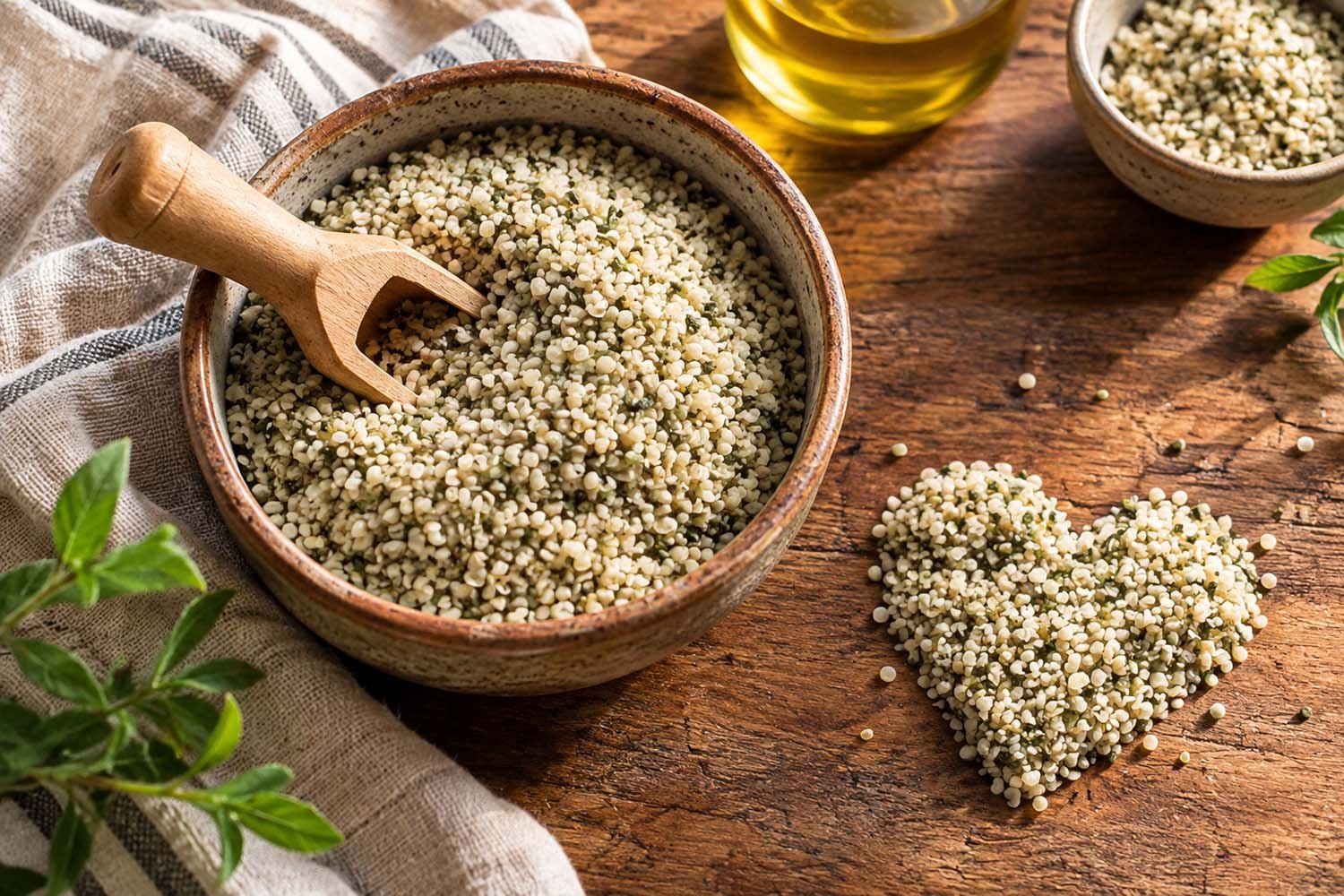
Hemp hearts are the soft, hulled inner kernel of the hemp seed, which is exactly why they’re easier to eat straight off a spoon than whole hemp seed but also why they don’t keep nearly as long. Removing that outer shell removes the one thing that was protecting the oil-rich inside from the air.
Do hemp hearts go bad?
The short answer: Yes, and because they’re shelled, they go bad faster than whole, unhulled hemp seed. Hemp hearts are roughly a third fat by weight, most of it polyunsaturated, which makes them prone to oxidation and rancidity. Unopened and kept cool and dry, they commonly last around 6 to 12 months in the pantry; once opened, pantry storage is best limited to a few months, while refrigerating or freezing extends useful life to about a year or more. Separately, and unrelated to spoilage, hemp hearts come from the same plant as marijuana, and peer-reviewed toxicology research has repeatedly found that eating hemp seed foods can produce enough trace THC in urine to trigger a positive drug test, even though the products themselves are legal and non-intoxicating.
For general guidance on storing pantry staples, see the food storage guide, and for how other high-fat seeds compare, see the guides to whether flaxseeds go bad and whether chia seeds go bad.
📋 Do Hemp Hearts Go Bad: At a Glance
| Unopened, pantry | Roughly 6 to 12 months, cool and dry |
| Opened, pantry | Best within 3 to 4 months |
| Opened, refrigerated | Up to about 1 year |
| Frozen | 1 year or more; nutrients largely unaffected |
| Whole (unhulled) hemp seed vs. hemp hearts | Whole seed lasts longer; the hull is a natural barrier hearts don’t have |
| Signs of spoilage | Bitter or sour taste, paint-like smell, in place of a mild nutty flavor |
| Separate thing to know | Legal hemp hearts can still cause a positive THC drug test in some cases |
Key Takeaways
- Hemp hearts are the hulled, soft inner kernel of the hemp seed, and removing that hull removes the natural barrier that would otherwise slow down oxidation of the seed’s oil.
- With roughly a third of their weight as polyunsaturated fat, hemp hearts are inherently prone to rancidity, and how they’re stored has a big effect on how quickly that happens.
- Refrigeration or freezing meaningfully extends shelf life without hurting the nutrition, and many brands recommend it even though it isn’t strictly required for food safety.
- Hemp hearts are legal, food-grade, and non-intoxicating, but multiple peer-reviewed toxicology studies have found that eating hemp seed products can produce a positive result on a standard urine THC test, particularly with regular or heavy consumption.
- Legal compliance and drug-test safety are two different thresholds: a hemp product can be entirely legal under U.S. law while still containing enough trace THC to affect a sensitive urine test.
Why Hemp Hearts Go Rancid: The Cost of Losing the Hull
The Science: A Lot of Oil With Very Little Protection
Hemp hearts are notably fatty for a seed, roughly 30 to 35 percent oil by weight, and most of that fat is polyunsaturated, mainly linoleic acid (omega-6) and alpha-linolenic acid (omega-3), typically in a ratio around 3 to 1. Polyunsaturated fats have multiple weak points in their molecular structure that react easily with oxygen, which is exactly what makes hemp hearts nutritionally valuable and exactly what makes them prone to rancidity. Whole, unhulled hemp seed has a hard outer shell that acts as a physical barrier, slowing the oil’s exposure to air, light, and moisture. Hemp hearts, by definition, have had that shell removed, which is what makes them soft enough to eat straight from the bag but also removes their main built-in protection. Hemp hearts do contain natural vitamin E (tocopherols), which acts as a mild antioxidant and helps slow oxidation somewhat, but it isn’t enough to offset the loss of the physical hull, which is why hemp hearts have a meaningfully shorter shelf life than whole hemp seed and benefit more from refrigeration or freezing.
How to Store Hemp Hearts
Pantry
Keep hemp hearts in an airtight container, away from heat and direct light. This works reasonably well for an unopened bag, but once opened, pantry storage is best treated as a shorter-term option, generally best used within a few months, since oxygen exposure accelerates once the seal is broken.
Refrigerator or freezer
Cold storage is the most effective way to slow oxidation, and many hemp heart brands recommend refrigerating or freezing the product after opening even though it isn’t a food safety requirement. Refrigerated, hemp hearts commonly stay good for close to a year; frozen, they can last just as long or longer, and freezing doesn’t meaningfully affect their nutritional content.
Tip: Buy whole hemp seed if you want longer pantry storage
If you’re going through hemp products slowly and don’t want to think about refrigeration, whole, unhulled hemp seed keeps meaningfully longer at room temperature than hemp hearts do, precisely because the hull is still doing its job. The tradeoff is texture and convenience, since whole hemp seed has a tough, fibrous shell that most people don’t enjoy eating directly the way they do the soft, hulled hearts.
Signs Hemp Hearts Have Gone Bad
Trust Smell and Taste Over the Calendar
Fresh hemp hearts have a mild, nutty flavor, close to a pine nut or sunflower seed, with little to no smell. Rancid hemp hearts develop a bitter or sour taste and a sharp, paint-like or crayon-like odor as the polyunsaturated fats break down. Because the change happens gradually, it’s easy to miss if you’re not paying attention, so it’s worth tasting a small amount from an older bag before adding a big batch to a smoothie or salad. Rancid hemp hearts aren’t typically dangerous in small amounts, but they’ve lost much of their nutritional value and are unpleasant enough that there’s little reason to eat them once they’ve turned.
The Real Question Storage Advice Skips: Can Hemp Hearts Affect a Drug Test?
Legal Doesn’t Automatically Mean Drug-Test Safe
This has nothing to do with spoilage, but it’s a genuinely useful thing to know about hemp hearts specifically, and it’s almost never mentioned in storage guides. Hemp hearts come from Cannabis sativa, the same plant species as marijuana, just from low-THC cultivars, and by U.S. law, hemp products must contain no more than 0.3% THC in the dry plant material to be legally sold as hemp rather than regulated as marijuana. That 0.3% legal threshold, however, is not the same thing as a threshold for avoiding a positive drug test, and conflating the two is a common mistake. Multiple peer-reviewed studies published in the Journal of Analytical Toxicology have found that eating hemp seed foods can produce enough trace THC in urine to trigger a positive result on a standard workplace drug screen. An early 1997 study found that some volunteers tested positive for marijuana metabolites after eating just one or two hemp seed snack bars, and a more rigorous 2001 follow-up study modeling extended daily consumption found that hemp products with very low THC levels, on the order of a few parts per million, were unlikely to produce a positive confirmatory test even with regular use, while products with higher trace THC levels carried meaningfully more risk. In practice, this means the outcome depends heavily on how thoroughly a given brand cleans and processes its seeds, since adherent resin from the plant, not the seed itself, is the usual source of the trace THC. Reputable brands generally test for and minimize THC content, and for most people eating hemp hearts in ordinary food amounts, the risk of a false positive is low but not zero. Anyone facing a drug test in the near future, especially one with a low cutoff or a job where a positive result carries serious consequences, may want to avoid hemp seed products in the days beforehand as a simple precaution.
| Storage | Unopened | Opened |
|---|---|---|
| Pantry | 6 to 12 months | 3 to 4 months |
| Refrigerator | Not necessary but fine | Up to about 1 year |
| Freezer | 1 year or more | 1 year or more |
Frequently Asked Questions
Do hemp hearts go bad?
Yes. They’re roughly a third fat by weight, mostly polyunsaturated, and lack the protective hull that whole hemp seed has, so they oxidize and turn rancid faster than most other seeds. Proper storage, ideally refrigerated or frozen once opened, significantly slows this process.
How long do hemp hearts last once opened?
In the pantry, plan on using them within about 3 to 4 months for best quality. Refrigerated, they commonly last close to a year, and freezing can extend that further without meaningfully affecting their nutrition, which is why many brands recommend cold storage after opening even though it isn’t strictly required.
Do hemp hearts need to be refrigerated?
Not strictly, since they’re shelf-stable enough to sit in the pantry safely. Refrigeration or freezing isn’t required for food safety, but it does meaningfully extend how long the healthy oils stay fresh, which is why many manufacturers recommend it, especially once the bag has been opened.
Why do hemp hearts spoil faster than whole hemp seed?
Hemp hearts are hulled, meaning the hard outer shell has been removed to expose the soft, edible kernel. That shell normally acts as a barrier against air, light, and moisture. Without it, the oil-rich interior of hemp hearts is directly exposed to oxygen, which speeds up the oxidation process responsible for rancidity.
What are the signs that hemp hearts have gone bad?
A bitter or sour taste and a sharp, paint-like smell in place of hemp hearts’ normal mild, nutty flavor are the main signs. The change happens gradually, so it’s worth tasting a small amount from an older bag rather than assuming freshness based on the date alone.
Can eating hemp hearts make you fail a drug test?
It’s possible, though not common with typical food use. Peer-reviewed research has documented positive urine THC results after eating hemp seed products, particularly with larger or more frequent servings, since trace THC can come from resin adhering to the seed during processing. Products from brands that test and minimize THC content carry lower risk, but it isn’t zero.
Are hemp hearts legal?
Yes, in the U.S. hemp products derived from cannabis plants containing no more than 0.3% THC by dry weight are legally classified as hemp rather than marijuana and can be sold as food. That legal threshold is separate from the much lower trace-THC levels relevant to drug testing, so legality and drug-test risk shouldn’t be treated as the same thing.
Can you freeze hemp hearts?
Yes, and it’s one of the best ways to extend their shelf life. Freezing slows the oxidation process responsible for rancidity without meaningfully affecting the seeds’ nutritional content, and hemp hearts don’t need thawing before use since they can be added straight from frozen to smoothies, yogurt, or oatmeal.
Is it safe to eat hemp hearts past the best-by date?
Usually yes, as long as they’ve been stored properly and don’t show signs of rancidity. The date reflects peak quality rather than a hard safety cutoff for a shelf-stable, low-moisture food like this. Taste and smell a small amount before using an older bag in a larger recipe.
Hemp seed allergy is uncommon but real. A 2019 study identified specific hemp seed storage proteins with documented cross-reactivity to hazelnut, and separate research has described broader cross-reactivity between cannabis sensitization and certain fruits, vegetables, and latex. It’s a different concern from the plant’s connection to marijuana, and anyone with a known seed, tree nut, or latex allergy should introduce hemp hearts cautiously.
What’s the difference between hemp hearts and hemp seeds?
Hemp seeds refer to the whole seed, hard outer shell included. Hemp hearts are that same seed with the shell removed, leaving just the soft, edible kernel. Hemp hearts are easier to eat and digest, but the tradeoff is a shorter shelf life, since the shell that protected the oil inside is gone.
Further Reading
Once you know your hemp hearts are fresh, they’re an easy add-in rather than a recipe centerpiece: stirred into a Mixed Berry Smoothie or a Pre-Workout Smoothie for extra protein and healthy fat, or sprinkled over yogurt, oatmeal, or a salad for a bit of crunch without changing the flavor much.
Better Living may earn commissions through affiliate links and may occasionally feature sponsored or partner content. If you make a purchase through our links, we may receive a small commission at no cost to you.
