
The crowning achievement of Oliver Stone’s still somewhat overlooked biopic of Hustler magazine founder The People Vs. Larry Flynt is its tight grasp on the performative nature of morality. In the claustrophobic home of hypocrisy, all windows are made of glass. With Ink, Danny Boyle’s own shot at profiling a controversial media mogul, the director is so swept up in underscoring his understanding of the slippery concept of press morality, that he ultimately becomes proof of the problem.
The year is 1969. Neil Armstrong takes one small step for a man, one giant leap for mankind; 400,000 people gather in muddy fields at Woodstock to define the next decade’s counterculture; Charley Kline types two letters to Bill Duvall that will balloon into the internet. In London, Rupert Murdoch (Guy Pearce) has dinner with Jack O’Connell’s Larry Lamb at Rules, the oldest restaurant in London. The two sit beneath a Turner depicting a boat docking at sunset – the striking orange paint makes it seem like the world is on fire. When the two media men finally strike a deal, you can hear the kindling catch light.
Get more Little White Lies
Ink chronicles the early days of The Sun under Murdoch’s ownership and Lamb’s editorial reign. Once his hefty check is signed, the new editor-in-chief goes on a poaching expedition, with the film’s official synopsis referring to the resulting group of journalists as “visionaries and misfits”. Those are fancy words for crooks and ghouls – the only ones money-hungry enough to embark on a seemingly impossible mission: to turn the slow-selling, long-mocked tabloid into the best-selling newspaper in Britain.
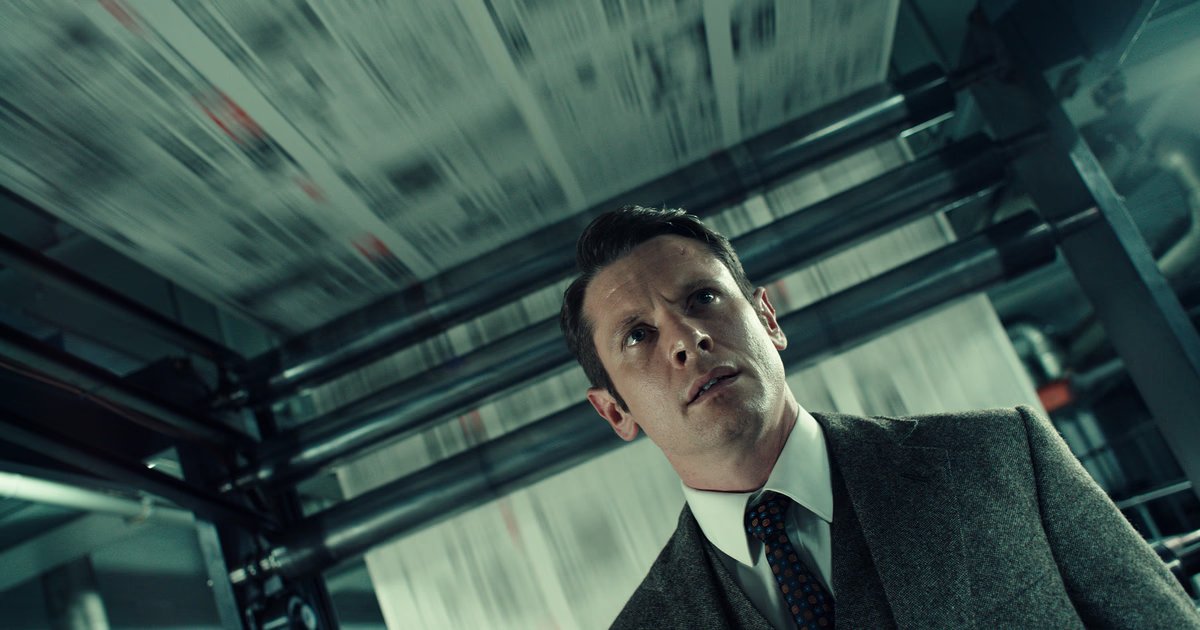
When defining the new visual identity of The Sun, Lamb throws classicism out of the window: we’ll have crooked indents and white text on a black background, thank you, sir. Graphic signs, splashes of red, all either bold or italicised. More, more, more! That same aesthetic principle guides Boyle’s extravaganza; angry guitar riffs blast through the cinema speakers while the camera flips people on their side as the press does to words on paper, characters often held at an angle that amplifies the feeling of disorientation.
Much like the paper it chronicles, Ink is all style over substance. It plays as an ineffective plea by a director regurgitating the fresh transgression of his career-making Trainspotting and tweaking it slightly to malign not just the rampant consumerism that further exacerbates the gaps between the haves and have-nots, but the entire system of power — and its propagandist mechanisms — that form the foundation of this rotted modern world.
Boyle’s hyperbolic form only exacerbates James Graham’s overwritten adaptation of his own stage play, where men repeatedly pontificate questions of press freedom and the place of print journalism while women – with Claire Foy’s pantomime reporter Jules Davies as its main representative – are relegated to delivering zingy lines about sex that are meant to reveal them as fully formed human beings but only further tighten the box of conservatism that entraps them. This old-school structure speaks to Boyle’s rigid view of Britain too – one still mired in clichés of whispered desires, numbers written on folded napkins and a general attitude of we know what we like, and we certainly know what we don’t.
Perhaps most egregiously, Boyle sets the scene for an evisceration of the mighty Murdoch, but never quite lands a killing blow; a stupefying dialogue between Murdoch and Lamb in a flash forward towards the film’s conclusion (directly preceded by a jarring AI-generated Margaret Thatcher) proves we’re going round in circles. Boyle’s reliance on flashy gimmicks over sharp observation becomes even more apparent in a final montage that sees the filmmaker pat himself on the back in one last showcase of self-importance; a sour ending for a film that initially sets out to condemn this very tendency.
