
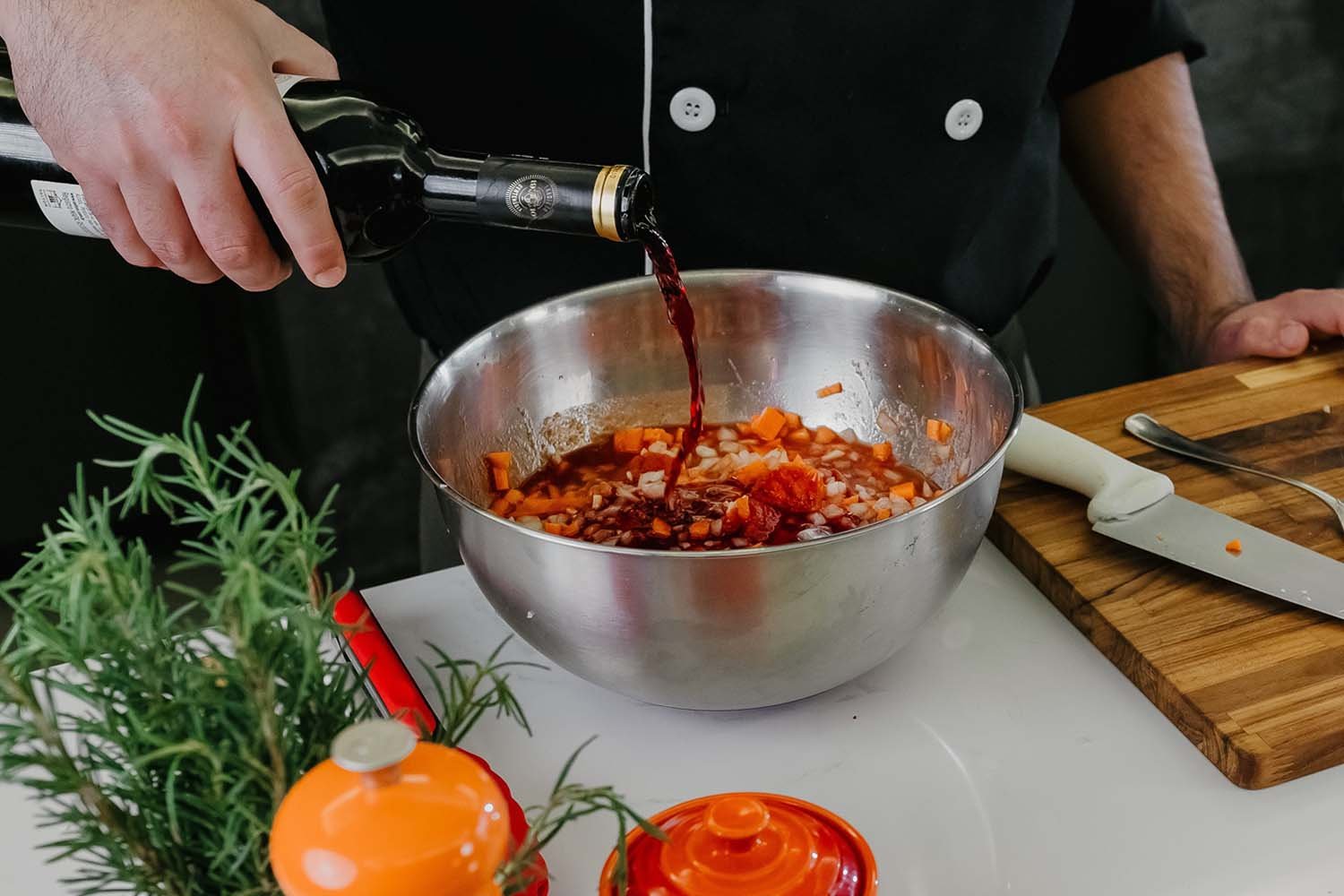
Running out of wine mid-recipe isn’t a reason to abandon dinner, and neither is choosing not to cook with alcohol in the first place. Wine shows up in recipes for a few specific jobs, acidity, depth, a bit of sweetness, and the flavor compounds alcohol helps carry, and once you know which of those a recipe actually needs, picking a substitute stops being guesswork.
What can I use instead of wine in cooking?
The short answer: It depends on what the wine is doing in the dish. For red wine, the closest substitutes are red wine vinegar diluted with water or stock, pomegranate juice, or beef or vegetable broth with a splash of balsamic vinegar. For white wine, dry white vermouth is nearly a direct swap, or use white wine vinegar diluted with water, white grape juice cut with lemon juice, or plain broth. For sherry, Marsala, or port, non-alcoholic versions exist, or you can approximate them with grape juice plus a little vinegar and, for the sweeter styles, a touch of brown sugar. One thing worth knowing regardless of why you’re substituting: the popular idea that “the alcohol all cooks off” isn’t accurate. USDA data shows a dish simmered for 15 minutes still retains about 40 percent of its added alcohol, and even 2.5 hours of cooking leaves around 5 percent behind, which matters if you’re avoiding alcohol for health, pregnancy, recovery, or religious reasons rather than just being out of wine.
If you’re wondering about your current bottle rather than replacing it, see the guides to whether cooking wine goes bad and whether cooking wine needs to be refrigerated.
📋 Wine Substitutes: At a Glance
| Instead of red wine | Red wine vinegar + water/stock (diluted), pomegranate or cranberry juice, tomato juice |
| Instead of white wine | Dry white vermouth (nearly 1:1), white wine vinegar + water (diluted), white grape juice + lemon |
| Instead of sherry or Marsala | Non-alcoholic versions, or grape juice + vinegar + a little brown sugar |
| Instead of port (sweet, for dessert) | Grape or cherry juice reduced with a splash of balsamic vinegar |
| For deglazing a pan | Any broth, or water with a splash of vinegar or lemon juice |
| For a marinade (tenderizing) | Vinegar-based marinade, citrus juice, or buttermilk |
| Common mistake | Using vinegar at full strength; always dilute it, vinegar is far more acidic than wine |
| Alcohol-avoidance note | Cooking does not remove all alcohol, even after hours of simmering |
Key Takeaways
- Wine contributes acidity, a bit of sweetness, and aromatic depth to a dish; identifying which of those a recipe is really after makes picking a substitute much easier.
- Vinegar-based substitutes need to be diluted, since vinegar is considerably more acidic than wine and will overpower a dish if used at full strength in place of it.
- Dry white vermouth is one of the closest matches to white wine in both flavor and function, and it keeps far longer once opened than an actual bottle of wine.
- According to USDA data, alcohol does not fully cook off, even with extended simmering; a dish cooked for 15 minutes retains roughly 40 percent of its alcohol, and 2.5 hours still leaves about 5 percent.
- Bottled “cooking wine” sold in the vinegar aisle is a different product from wine itself, high in sodium and formulated to be shelf-stable, and it isn’t the same thing as substituting for wine.
What Wine Actually Does in a Recipe
The Science: Acid, Sugar, and an Alcohol-Carried Aroma
Wine does several jobs in a dish at once, and knowing which one matters most in a given recipe is the key to picking a good substitute rather than just grabbing the first bottle-shaped liquid in the pantry. First, wine is acidic, generally somewhere in the pH range of 3 to 4, which brightens rich or fatty dishes the same way a squeeze of lemon does, and helps tenderize meat in a marinade by loosening its muscle fibers. Second, wine carries natural sugars and, in reds particularly, tannins, compounds that add a subtle astringency and body that plain acid alone doesn’t replicate. Third, and often overlooked, alcohol itself is an excellent solvent for aromatic flavor compounds, which is part of why a wine-based pan sauce tastes more layered than the same sauce made with water; as the alcohol evaporates during cooking, it carries some of those aromatics through the dish. A good substitute doesn’t need to replicate all three effects, since most recipes lean heavily on just one or two of them; a quick pan sauce is mostly about acid and aroma, while a long braise is more about acid and body developing over time.
Best Substitutes for Red Wine
Red wine vinegar, diluted: Start with roughly one part red wine vinegar to two or three parts water or broth, then taste and adjust; a splash used mainly for a hit of acidity can stay more diluted, while vinegar meant to stand in for a larger volume of wine that will reduce down in a sauce can go a bit stronger. Straight, undiluted vinegar is far more acidic than wine and will make a dish taste sharp rather than balanced, so some dilution is the right starting point either way.
Apple cider vinegar, diluted: A milder, slightly fruitier acid than red or white wine vinegar, apple cider vinegar tends to read as closer to actual wine than a sharp, one-note vinegar does, which makes it a forgiving substitute for people who find straight wine vinegar too harsh. It’s worth having around regardless, since it’s extremely shelf-stable and, unlike wine vinegar, isn’t derived from an alcoholic source in the first place.
Plain white vinegar: Less commonly recommended than the wine vinegars, but a genuinely practical option if it’s what’s already open in the pantry. It’s more purely sour with less of the fruity depth red or white wine vinegar carries, so it works best diluted and in dishes where a little extra sharpness won’t stand out, like a quick pan sauce or a well-seasoned braise.
Pomegranate juice: Naturally tart with real depth and a red wine’s characteristic color, pomegranate juice works especially well in braises and reductions where red wine’s body matters as much as its acidity.
Cranberry juice (unsweetened): A tarter, more acidic option than pomegranate juice, unsweetened cranberry juice can stand in for red wine on its own or balanced with a touch of honey or maple syrup if the tartness is too sharp for the dish.
Tomato juice: Its acidity and reddish color make it a reasonable stand-in for red wine in tomato-based sauces and braises specifically, though its flavor is distinctly different from wine, so it’s worth tasting and adjusting as you go rather than measuring it in blind.
Beef or vegetable broth with balsamic vinegar: For savory dishes like stews or pan sauces, broth provides the body while a small splash of balsamic vinegar adds acidity and a touch of sweetness closer to what red wine would contribute.
Grape juice with red wine vinegar: Straight grape juice is too sweet on its own to stand in for wine, but cut with a splash of vinegar to reintroduce acidity, it works reasonably well in sauces and marinades.
Best Substitutes for White Wine
Dry white vermouth: This is about as close as a substitute gets, since vermouth is wine-based, similarly dry and acidic, and often already in the same kitchen for cocktails. It also keeps considerably longer once opened than a bottle of table wine, since its higher alcohol content and added botanicals make it more shelf-stable.
White wine vinegar, diluted: The same dilute-and-adjust approach used for red wine vinegar works here too, starting around one part vinegar to two or three parts water or broth. It’s a reliable pantry standby for deglazing a pan or brightening a sauce.
Apple cider vinegar, diluted: Slightly sweeter and less sharp than white wine vinegar, apple cider vinegar is a common substitute in lighter dishes like risottos and pan sauces where a milder acidity is welcome. As with the other vinegars, dilute it first rather than using it straight.
White grape juice with lemon juice: White grape juice alone is too sweet to mimic wine, but mixed with a splash of lemon juice for acidity, it’s a common substitute in both cooking and baking.
Plain broth: When a dish is more focused on savory depth than the specific flavor wine brings, chicken, vegetable, or fish broth (matched to the dish) is a straightforward, reliable substitute, particularly for risottos and pan sauces.
Substitutes for Sherry, Marsala, and Port
These fortified and dessert wines are sweeter and more concentrated than table wine, so the closest substitutes lean into that. A combination of grape juice, a small splash of vinegar for acidity, and a touch of brown sugar or a dash of balsamic vinegar for depth gets reasonably close for savory dishes that call for sherry or Marsala. For dessert applications calling for port, a reduction of grape or cherry juice with a small amount of balsamic vinegar approximates its sweet, slightly tannic character. Non-alcoholic versions of these wines also exist and are worth trying if you make dishes like Marsala-based sauces regularly.
The most common mistake: not diluting vinegar
Vinegar is the go-to wine substitute for a reason, it’s shelf-stable, always on hand, and genuinely close in function, but it’s also two to three times more acidic than most wine. Swapping it in at a 1:1 ratio is the single most common way a wine substitute goes wrong, leaving a dish tasting sharp and one-note instead of balanced. Diluting it with water, broth, or juice, starting around one part vinegar to two or three parts liquid and adjusting to taste, gets you much closer to what the wine would have contributed.
Does the Alcohol Actually Cook Off?
Why This Matters if You’re Avoiding Alcohol on Purpose
This is unrelated to flavor, but it’s the most important thing to know if the reason you’re substituting is to avoid alcohol itself, whether for pregnancy, recovery, religious reasons, or personal choice, rather than just being out of wine. The common belief that alcohol “cooks off” completely is not accurate. According to the USDA’s Table of Nutrient Retention Factors, a dish that has alcohol stirred in and is then baked or simmered retains roughly 40 percent of that alcohol after 15 minutes of cooking, 35 percent after 30 minutes, and still about 25 percent after a full hour. Even 2.5 hours of simmering, longer than most home recipes call for, leaves approximately 5 percent of the original alcohol behind. Flambéing burns off even less than most people assume, leaving around 75 percent of the alcohol intact once the flames die out. For most people, this small residual amount is not a health or safety concern; it’s far too little to cause any intoxicating effect. But if avoiding alcohol entirely is the actual goal, the honest fix is a non-alcoholic substitute from the start rather than counting on cooking time to remove it.
A note on “cooking wine”
Bottled “cooking wine,” the kind sold shelf-stable in the vinegar and condiment aisle rather than refrigerated or sold by a wine shop, is a different product from wine itself, formulated with added salt and preservatives specifically so it doesn’t need refrigeration. It isn’t a substitute for wine so much as its own ingredient, and dishes made with it will taste noticeably saltier than the same recipe made with real wine or one of the substitutes above. If a recipe specifically calls for cooking wine, that’s worth knowing before reaching for it as a stand-in for table wine.
Frequently Asked Questions
What can I use instead of red wine in cooking?
Diluted red wine vinegar (start around one part vinegar to two or three parts water or broth), pomegranate or unsweetened cranberry juice, or beef or vegetable broth with a splash of balsamic vinegar are the closest substitutes. Tomato juice also works well specifically in tomato-based sauces. Which one works best depends on whether the recipe needs more acidity, more body, or more of both.
What can I use instead of white wine in cooking?
Dry white vermouth is the closest match in both flavor and acidity. Diluted white wine vinegar, white grape juice cut with lemon juice, or plain broth are all solid alternatives depending on whether the dish leans more savory or needs more brightness.
Can I just leave the wine out of a recipe entirely?
Sometimes, especially in dishes where wine is a small supporting ingredient rather than the base of a sauce. Replacing it with an equal amount of broth or water plus a small splash of vinegar or lemon juice for acidity usually keeps the dish balanced, though it will taste a bit simpler than the original.
Does all the alcohol really cook off when you use wine?
No. USDA data shows a dish simmered for 15 minutes still retains about 40 percent of its added alcohol, and even after 2.5 hours of cooking, roughly 5 percent remains. The alcohol content decreases the longer something cooks, but it never reaches zero through cooking alone.
What’s a good substitute for wine in a marinade?
Since wine’s main job in a marinade is tenderizing through acidity, a vinegar-based marinade, citrus juice like lemon or lime, or buttermilk are all effective substitutes. Buttermilk in particular works well for poultry, since it tenderizes gently without the sharpness straight vinegar or citrus can bring.
Can I use grape juice instead of wine?
Yes, but not on its own. Grape juice alone is too sweet to replicate wine’s acidity, so it works best mixed with a splash of vinegar or lemon juice to bring back some of the tartness wine would have added. This combination works for both red and white wine substitutions, matched to the juice color.
Is non-alcoholic wine a good substitute for cooking?
It can be, particularly for dishes where wine’s flavor matters more than a long reduction. Non-alcoholic wine still carries most of the acidity and some of the flavor character of regular wine, though it typically lacks the depth that develops when real wine reduces over a long cooking time.
What can I use instead of Marsala or sherry?
A mix of grape juice, a small splash of vinegar, and a touch of brown sugar approximates their sweeter, more concentrated character reasonably well. Non-alcoholic versions of Marsala and sherry are also available and are worth seeking out if you cook with them often.
Is bottled cooking wine the same as regular wine?
No. Bottled cooking wine sold in the condiment aisle contains added salt and preservatives that make it shelf-stable without refrigeration, and it tastes noticeably saltier than table wine. It’s a different ingredient from the wine substitutes covered here, not a stand-in for drinking wine in a recipe.
Why does my dish taste too sharp when I substitute vinegar for wine?
This almost always means the vinegar wasn’t diluted enough. Vinegar is considerably more acidic than wine, so using it at a 1:1 ratio in place of wine overwhelms a dish. Starting with about one part vinegar to two or three parts water or broth, then adjusting to taste, gets much closer to wine’s actual acidity level.
Does wine vinegar contain alcohol?
A small amount, yes. Vinegar is made by fermenting an alcohol source into acetic acid, and that conversion is never fully complete. U.S. regulations cap residual alcohol in commercial vinegar at 2 percent by volume, and most brands test well below that, often closer to 0.2 percent. That trace amount isn’t considered intoxicating and is different in kind from cooking with wine itself, but it’s worth knowing if you’re avoiding alcohol as strictly as possible; a non-vinegar acid like lemon or lime juice sidesteps the question entirely.
Does the type of dish affect how much alcohol remains?
Yes, significantly. A wide, uncovered pan and frequent stirring both promote evaporation and leave less alcohol behind, while a covered dish, a smaller pan, or a topping like breadcrumbs can trap alcohol and increase how much remains. A marinade that’s never cooked at all can retain as much as 70 percent of the alcohol added to it.
Can I use apple cider vinegar instead of wine?
Yes, and for a lot of home cooks it’s the most convenient option since it’s already in the pantry. Diluted the same way as red or white wine vinegar, apple cider vinegar has a milder, slightly fruitier flavor than straight wine vinegar, which some people find reads closer to actual wine than a sharper vinegar does. It also isn’t made from an alcoholic source the way wine vinegar is, and it’s about as shelf-stable as a pantry ingredient gets.
Recipes to Try These Substitutes On
These Better Living recipes call for wine, so they’re natural places to practice a substitution or two:
Further Reading
Better Living may earn commissions through affiliate links and may occasionally feature sponsored or partner content. If you make a purchase through our links, we may receive a small commission at no cost to you.
